
What Rising Costs Taught Me About Making at Home
I think most of us were a little stunned in the years following the pandemic by how quickly prices changed. Inflation wasn’t theoretical anymore — it was right there on the receipt. Whether money feels tight or you’re fortunate enough to have some breathing room, it was impossible not to notice that grocery bills nearly doubled. What used to be an $80 shop quickly turned into $140, and it didn’t take long before that shift started to feel hard.
For me, it really crystallized around a loaf of sourdough bread.
I’d been happily paying four or five dollars for a good loaf for years. Then suddenly it was eight. And while I don’t begrudge that price — I understand the labor, the skill, the ingredients — it was the accumulation that caught my attention. Bread. Yogurt. Cream. Tea. Staples. A generous bag of loose-leaf tea from one of my favorite local shops was $15. All small things on their own, but together they added up quickly.
So I started asking myself a practical question: What would it actually take for me to make some of these things at home?
Not because I wanted to opt out of supporting small businesses, and not because I thought everything should be DIY. But because I wanted my household budget to feel intentional again. Grounded. Within my control.
What I didn’t expect was where that question would lead.
It started simply enough. Bread. Yogurt. Sour cream. Things I already used regularly. Things I assumed were complicated, time-consuming, or better left to professionals. And yes — some of them do take time. Sourdough, especially, asks for attention and patience. It isn’t difficult in a technical sense, but it’s layered. It unfolds over hours, not minutes.
I was lucky enough to get a sourdough starter from a local pizza restaurant that uses it for their pizzas — a living thing with history already baked into it. My early loaves were… humbling. There were false starts. Flat loaves. Dense loaves. A few that were better suited to croutons than sandwiches. If someone had been watching me, they might have said, “bless your heart, honey!”.
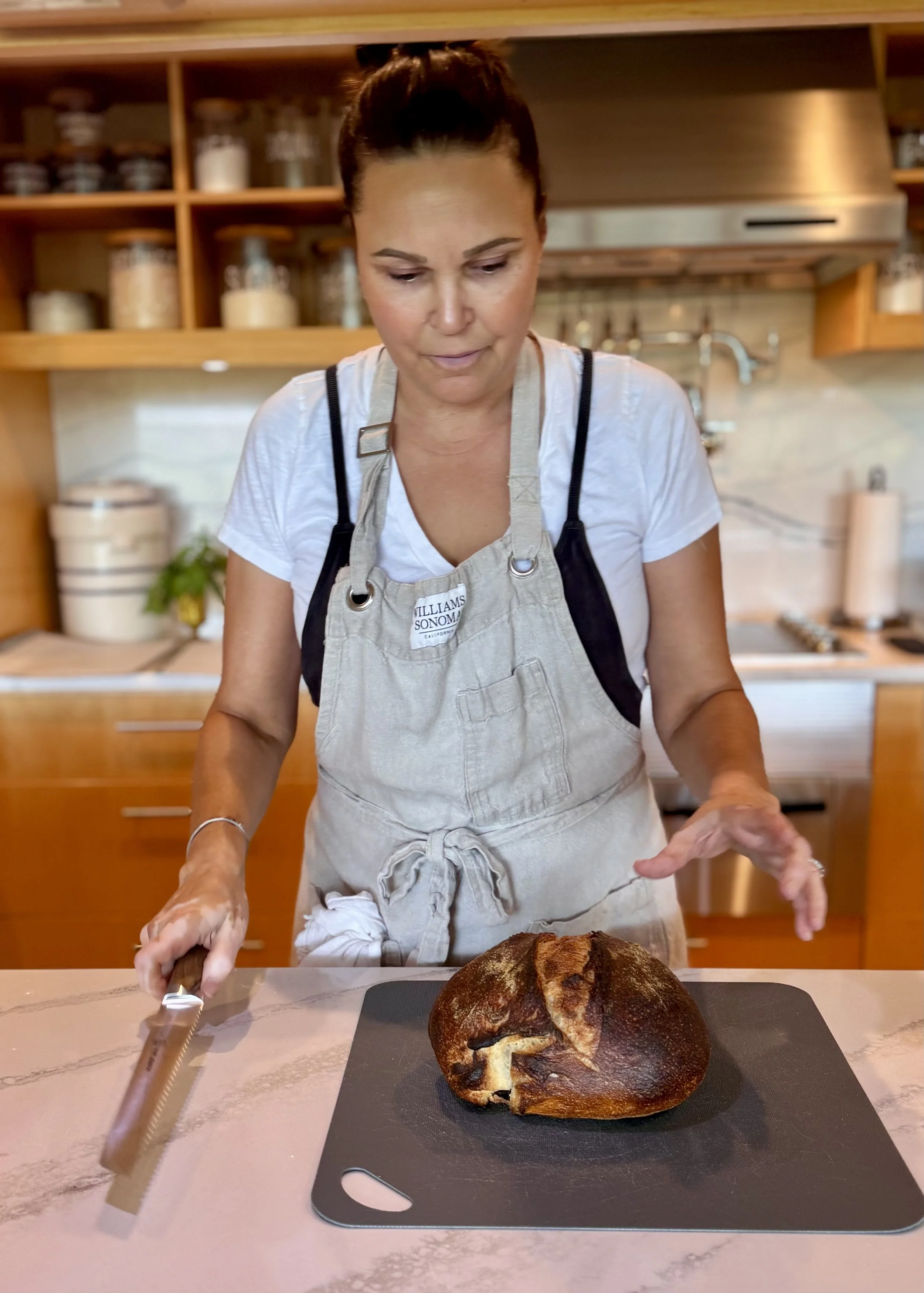
My first ever (bless my heart) sourdough loaf
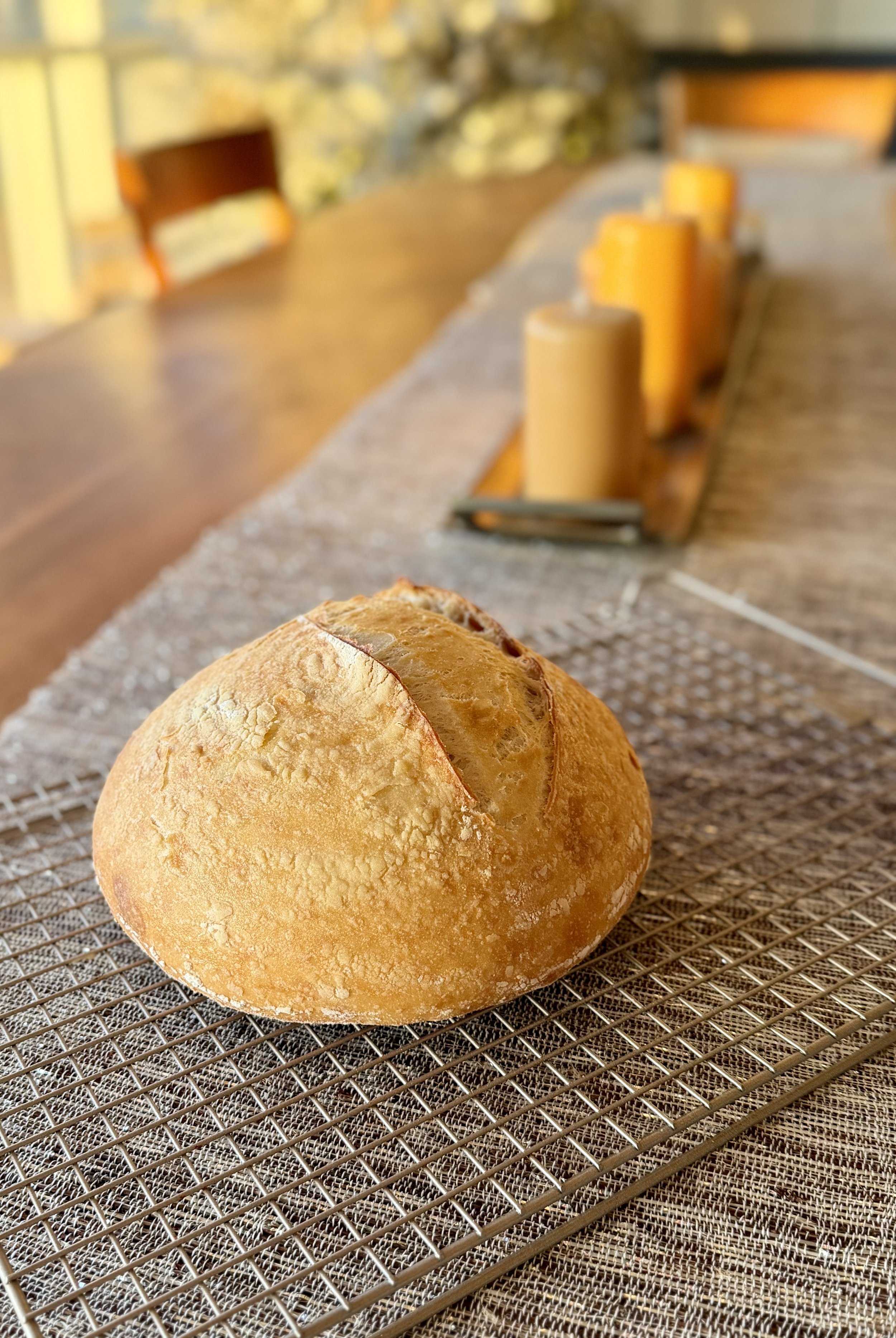
So I did what I tend to do when I want to learn something properly: I committed. I baked a loaf every day for a week. Not perfectly. Just consistently. And somewhere along the way, the process stopped feeling intimidating and started feeling familiar.
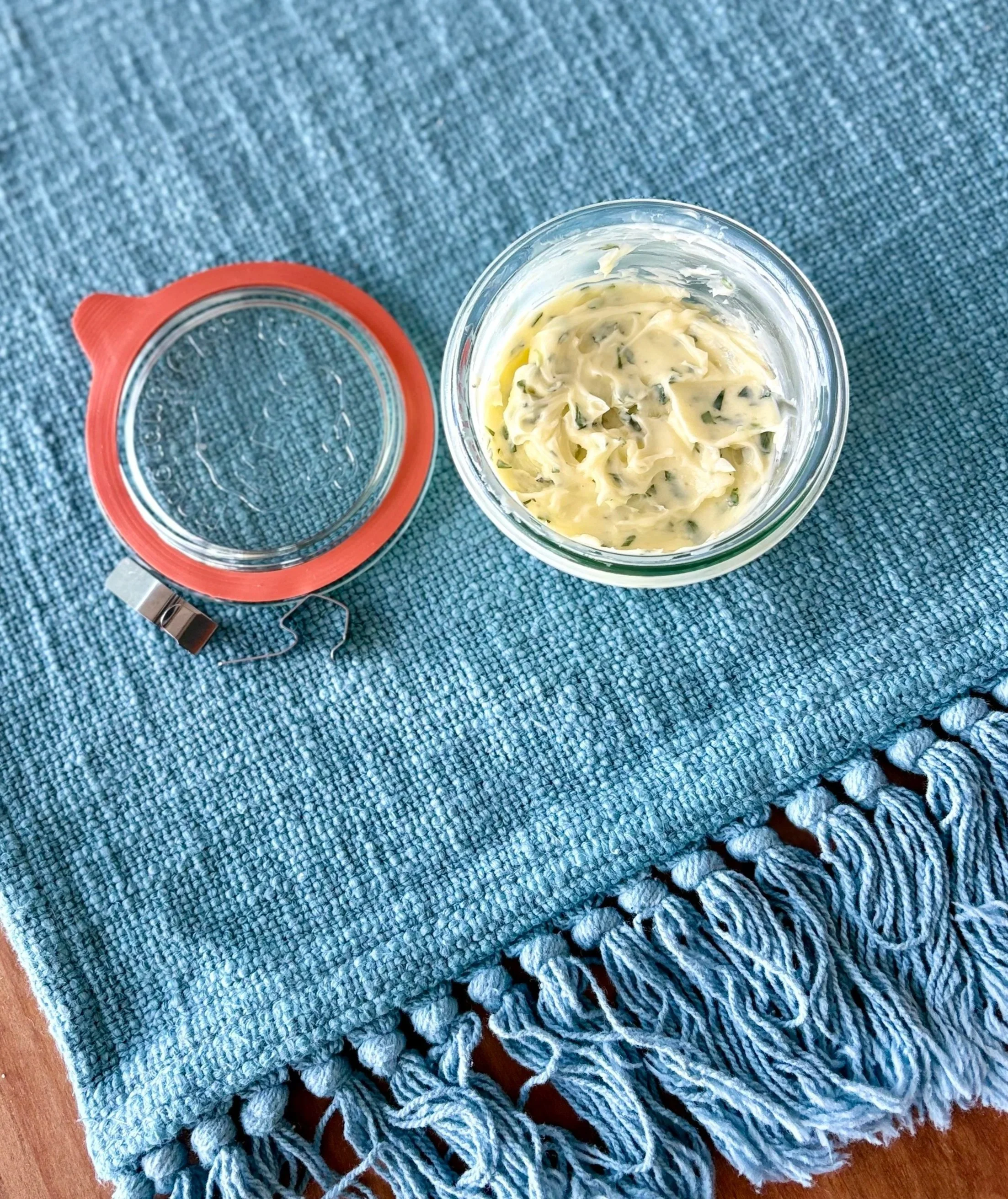
Now, when snowstorms are forecast and everyone rushes to the store to clear the bread shelves, I feel calm. Not smug — just steady. I know I can make bread if I need to. And the butter to go on it. That confidence alone was worth the effort.
From there, things unfolded naturally.
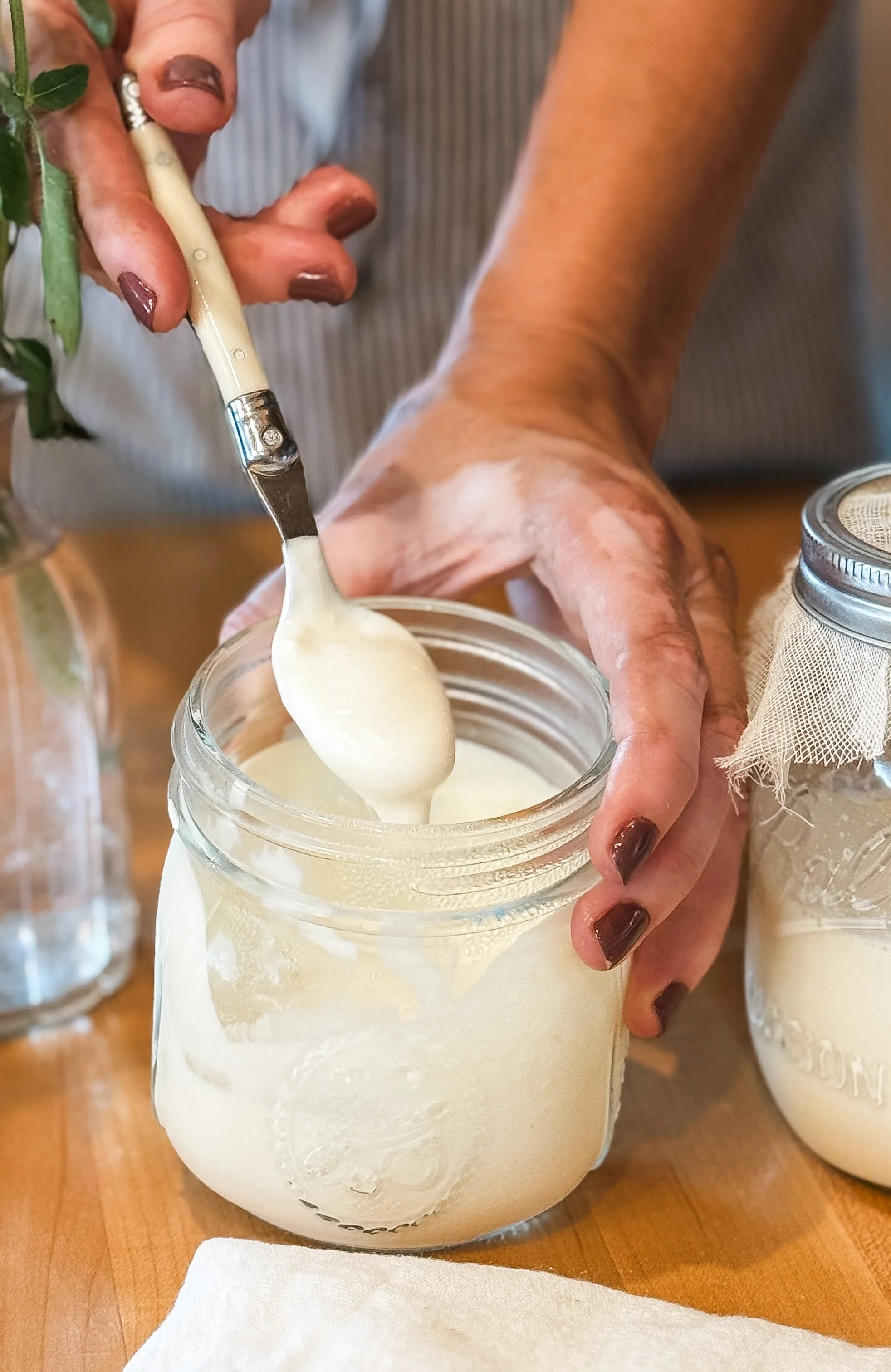
Sour cream was a revelation. I genuinely thought it was something you simply couldn’t make at home. It turns out it’s one of the easiest things I’ve ever learned — minutes of hands-on time, a little patience, and that’s it. Once I understood that, it opened the door to yogurt, crème fraîche, butter, and more. Not because I needed to make everything myself — but because I could.
And then there were the things I hadn’t planned on at all.
Hand salve, for instance. Made from marigold heads steeped slowly in sweet almond oil. Something I learned out of curiosity, not necessity. It turned out to be an incredible burn remedy — something we discovered firsthand when our daughter accidentally burned her hand while filling a hot water bottle. It’s also become a staple for dry winter skin, garden hands, and small everyday injuries.
I also started fermenting foods this year for the first time, making things like fermented pickles, sauerkraut, and hot sauce. It’s a process that feels both ancient and surprisingly simple, and once you start, it’s hard not to be fascinated by it. There’s something especially satisfying about growing the cabbage yourself, preparing it by hand, and then turning it into sauerkraut that lives in your fridge for months. One of my favorite moments was giving a jar to my dad, who—like me—loves anything tangy and sour. It felt less like a product and more like a continuation of the work, shared.
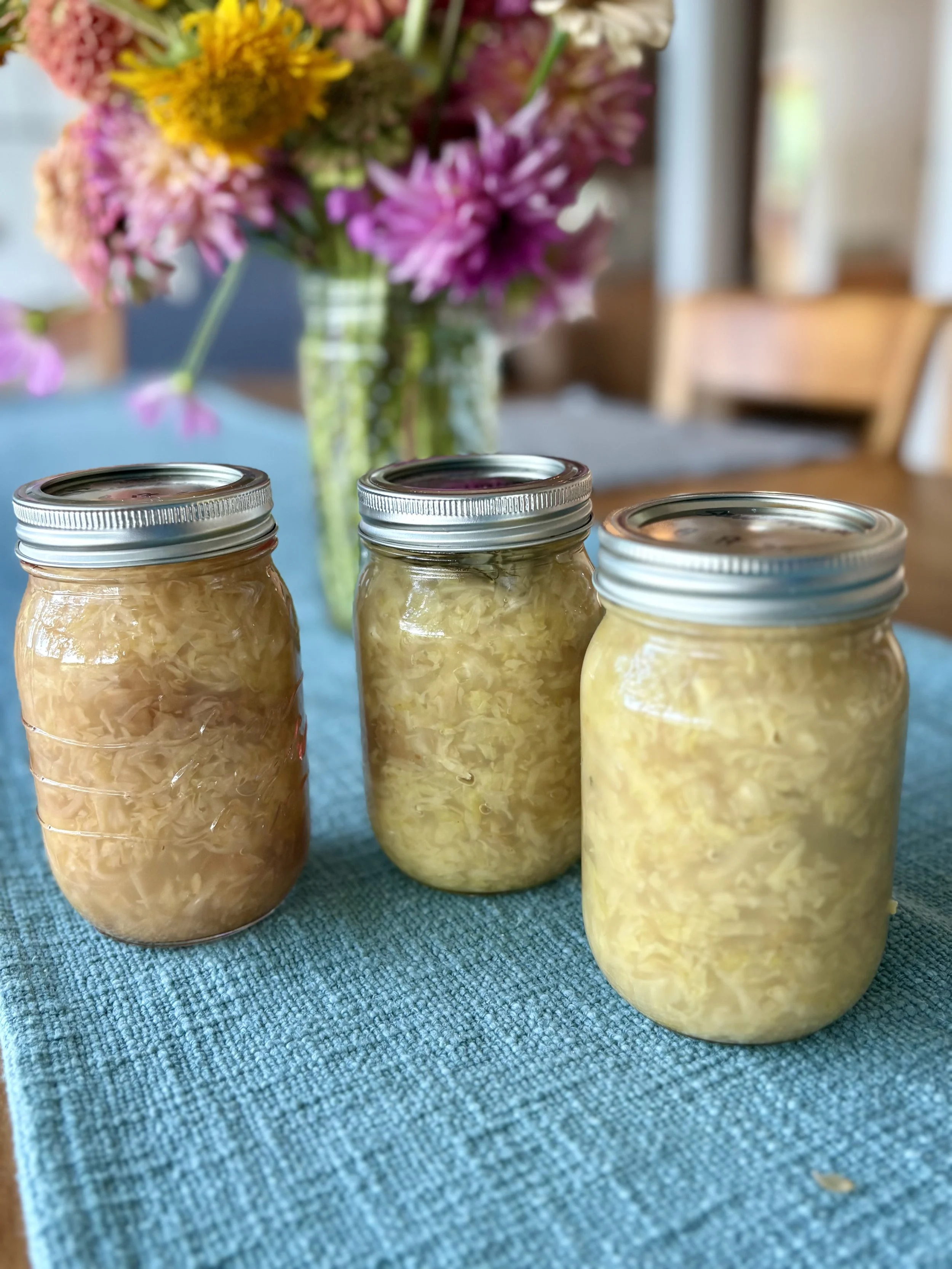
What surprised me most wasn’t the cost savings — though those are real. It was the joy. The satisfaction of learning. The quiet pride that comes from knowing how something works, even if you don’t do it all the time. Some things were easier than I imagined. Others were more involved, but never impossible.
This is where Proper Useful really began for me — not as a curriculum, but as a mindset.
Reclaiming skills. Bringing knowledge back into the home. Letting the garden, the kitchen, and daily life integrate with one another again. Understanding that usefulness doesn’t have to be extreme or all-or-nothing. It can be small. Gentle. Personal.
This journal will be a place where I go deeper into those things — sourdough and dairy, teas and salves, preserving food, using flowers from the garden inside the house. Not as instructions shouted from a mountaintop, but as lived experiences. Things I’ve tried. Things I’ve failed at. Things that have earned their place.
Because at the end of the day, the goal isn’t to do everything yourself.
It’s to know what you can do — and to choose, intentionally, what becomes Proper Useful in your own home.