From Raised Beds to Potager
When we first moved to Hilltop, the previous owners told me there was a vegetable garden. What they meant was that a small section of the yard had been cleared and planted with asparagus and a handful of other things.
Still, I knew immediately that this was where the vegetable garden would live — and that it would be made up of raised beds. At our prior home, I had worked with three or four beds simply because space was limited. Here, the possibilities felt wide open. I wanted to get the garden started as soon as we moved in so it would be ready for fall planting, even before I fully understood the land.
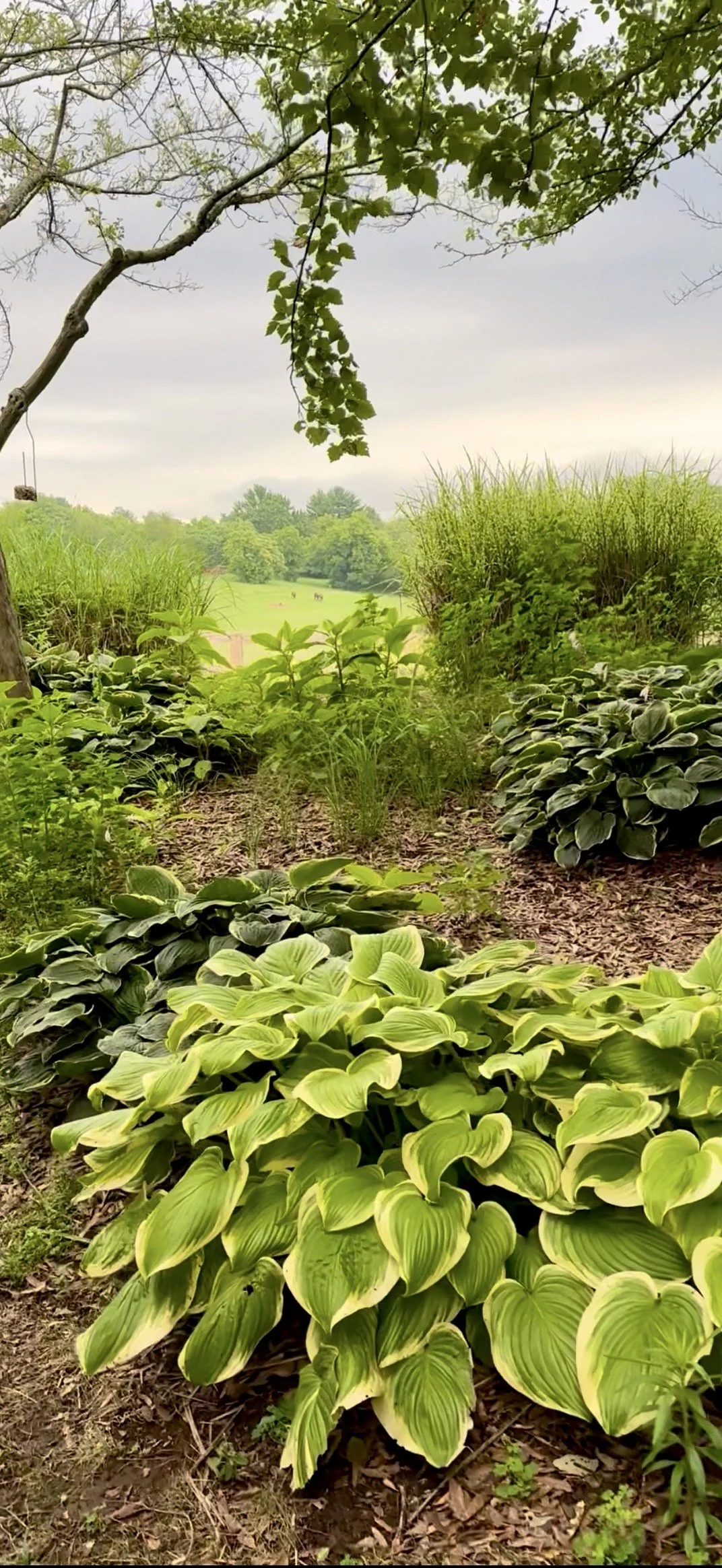
There was another section nearby that I considered using — a curved hill with an oak tree, pampas-style grasses, hostas, and several small trees. At first, I assumed the ground would need to be leveled to make it usable, which felt costly and premature. I put that idea on pause. I’ve learned that while it’s helpful to have a vision when you move into a new place, it’s just as important to live with the land for a while before making irreversible changes — unless you’re absolutely certain. In this case, the vegetable garden was the certainty.
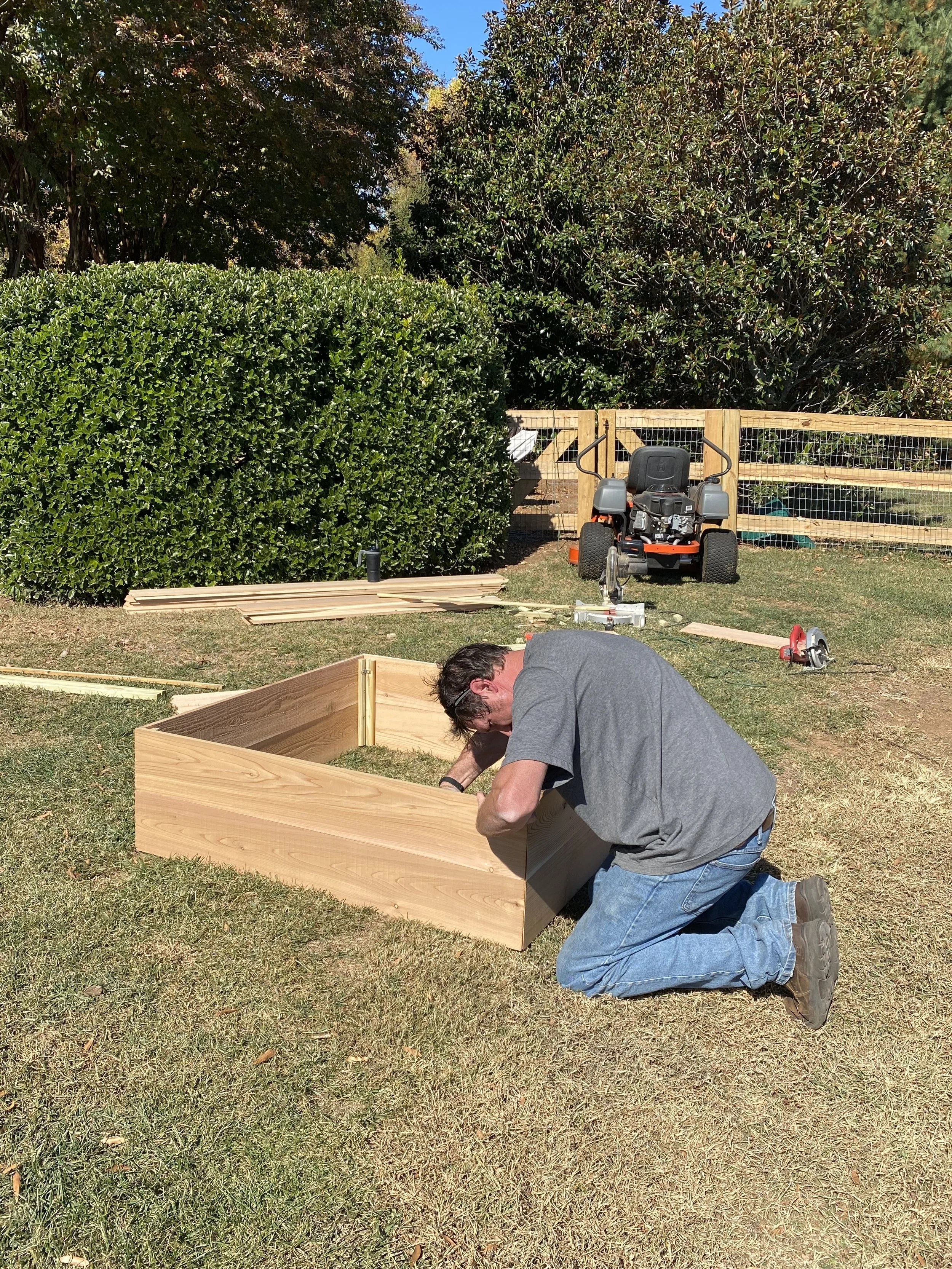
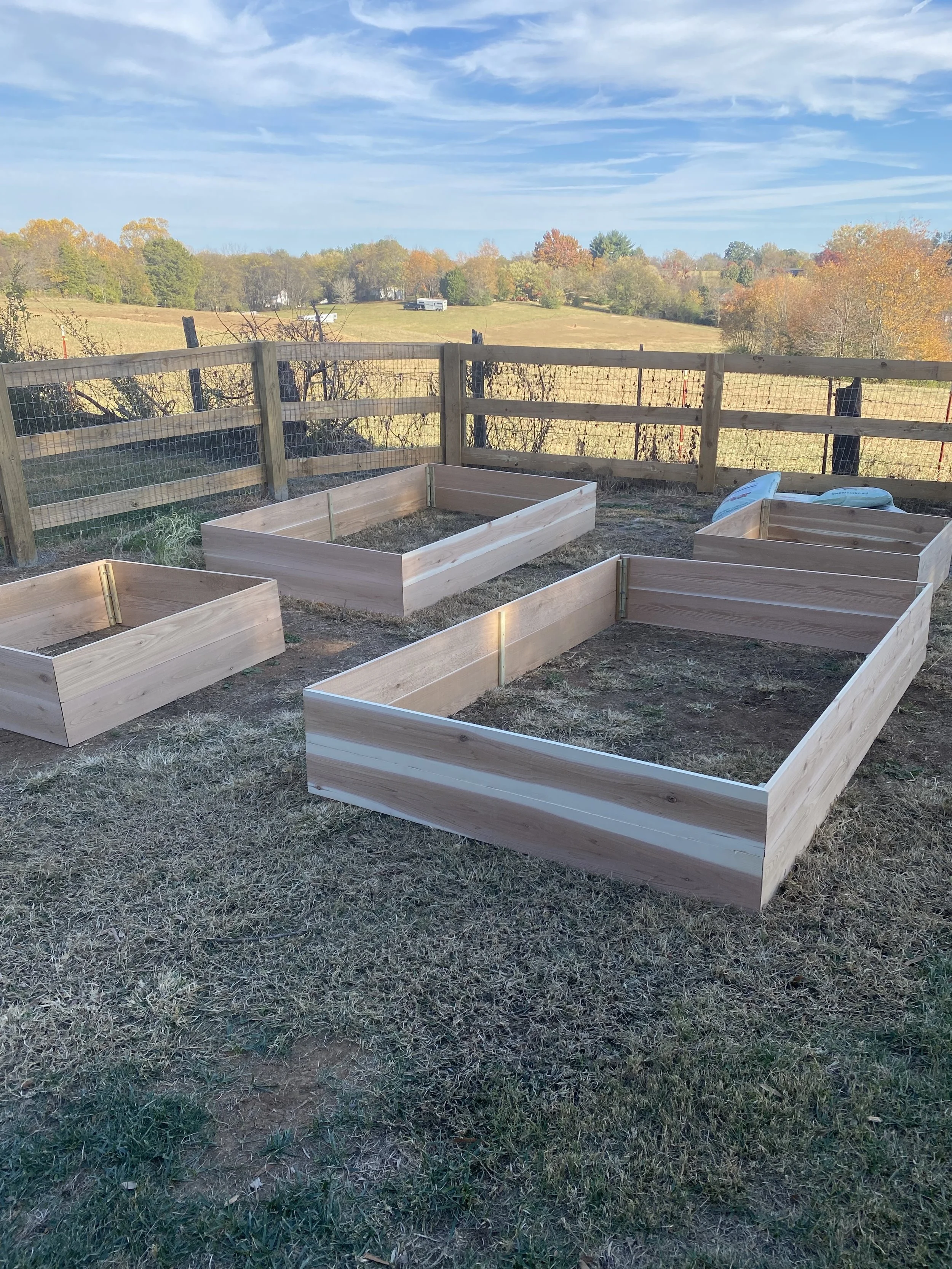
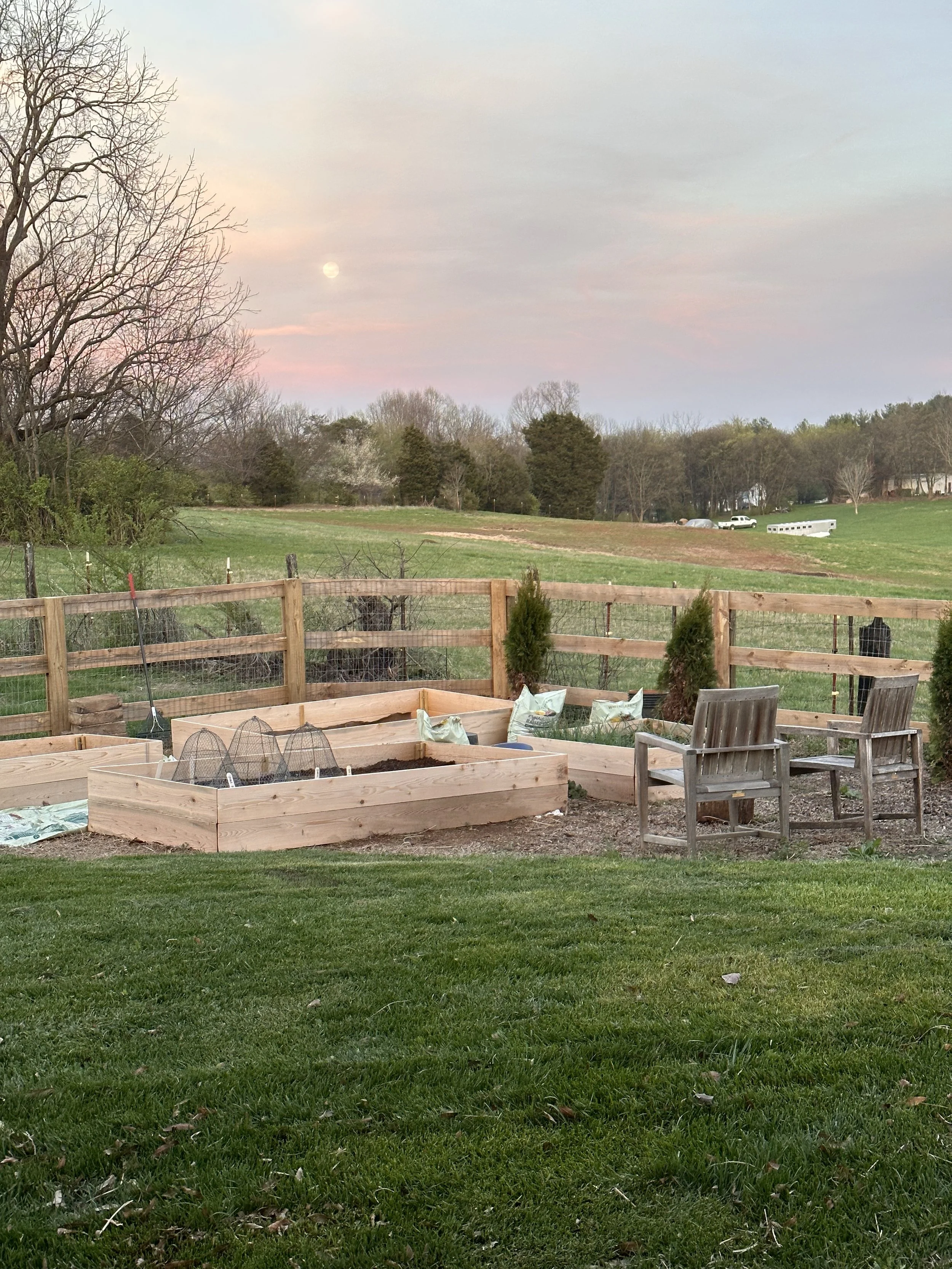
We started with four beds. My friend Rachel’s husband, Joe, came over and built them for me — cedar beds, two smaller and two longer — over a humid September weekend. I still remember how hot it was, and how grateful I felt watching those beds come together. With them in place, I could finally begin filling, planting, and settling into the rhythm of the garden.
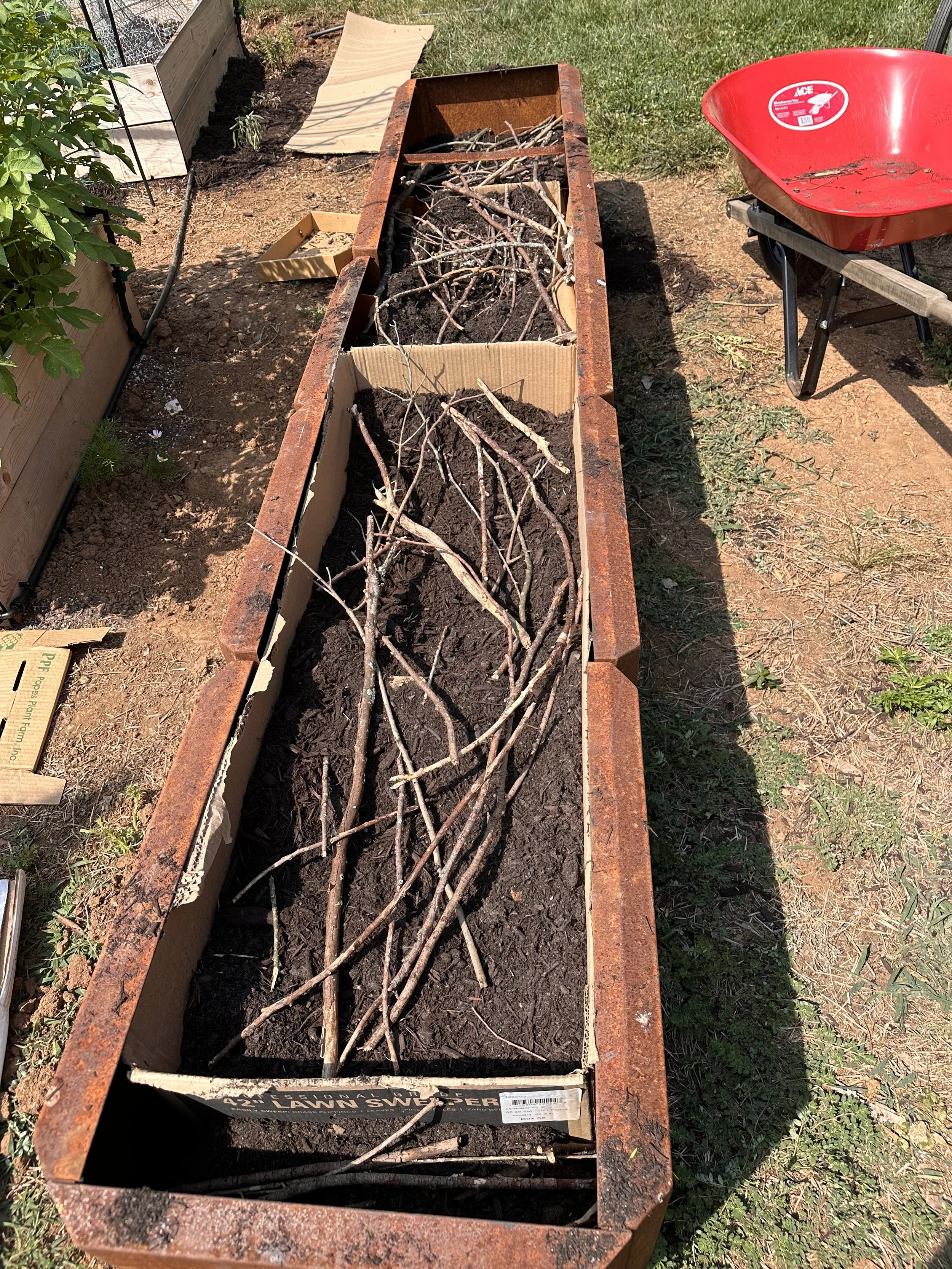
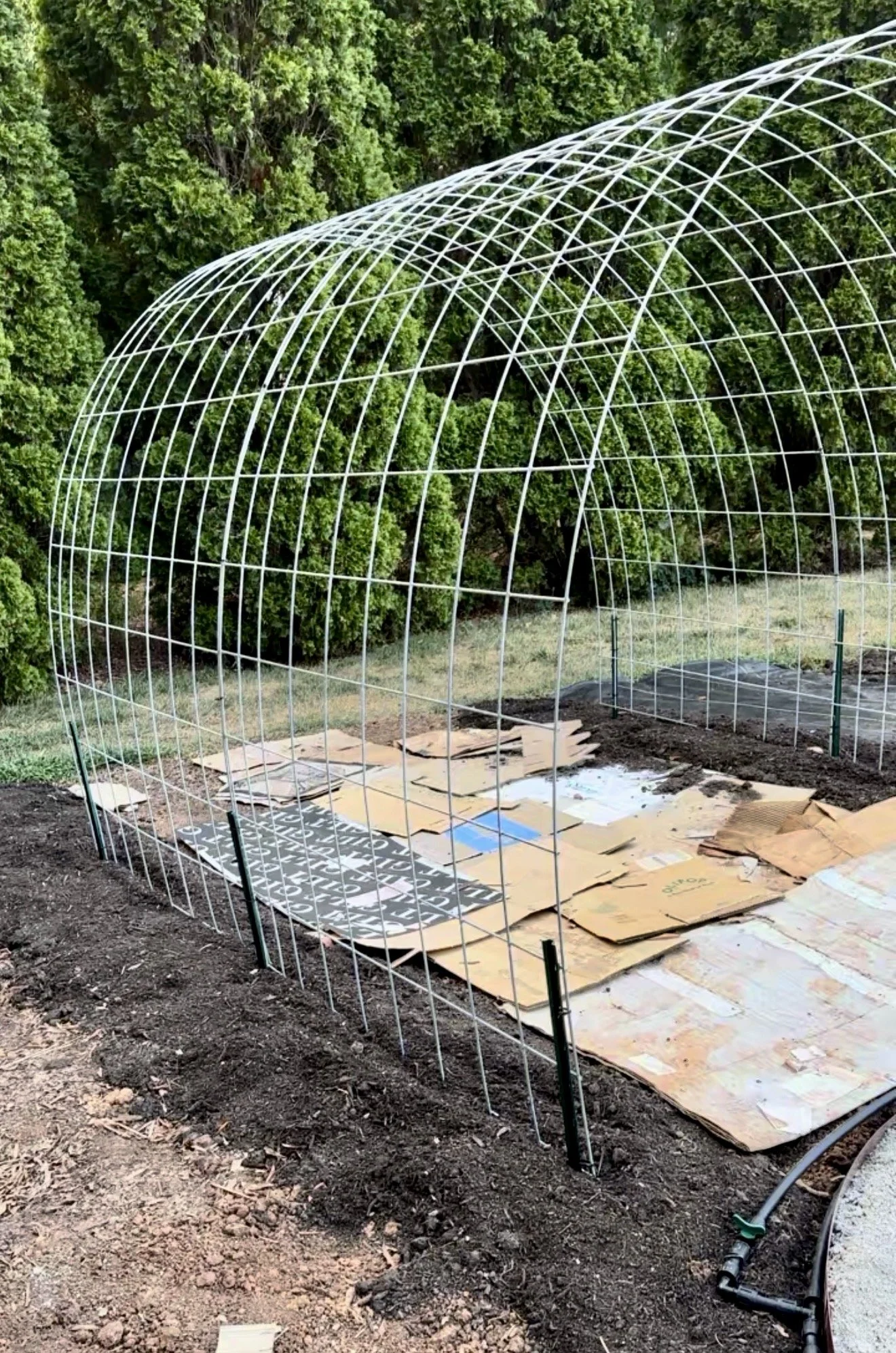
I added a metal planter from our previous house to use as a strawberry bed, and with that much space around me, I felt an excitement I hadn’t known before. As the seasons passed, the garden expanded. Cow panel arches were added for climbing vegetables — tomatoes, beans, peas — and planting crept along the fence line bordering a neighboring horse farm.
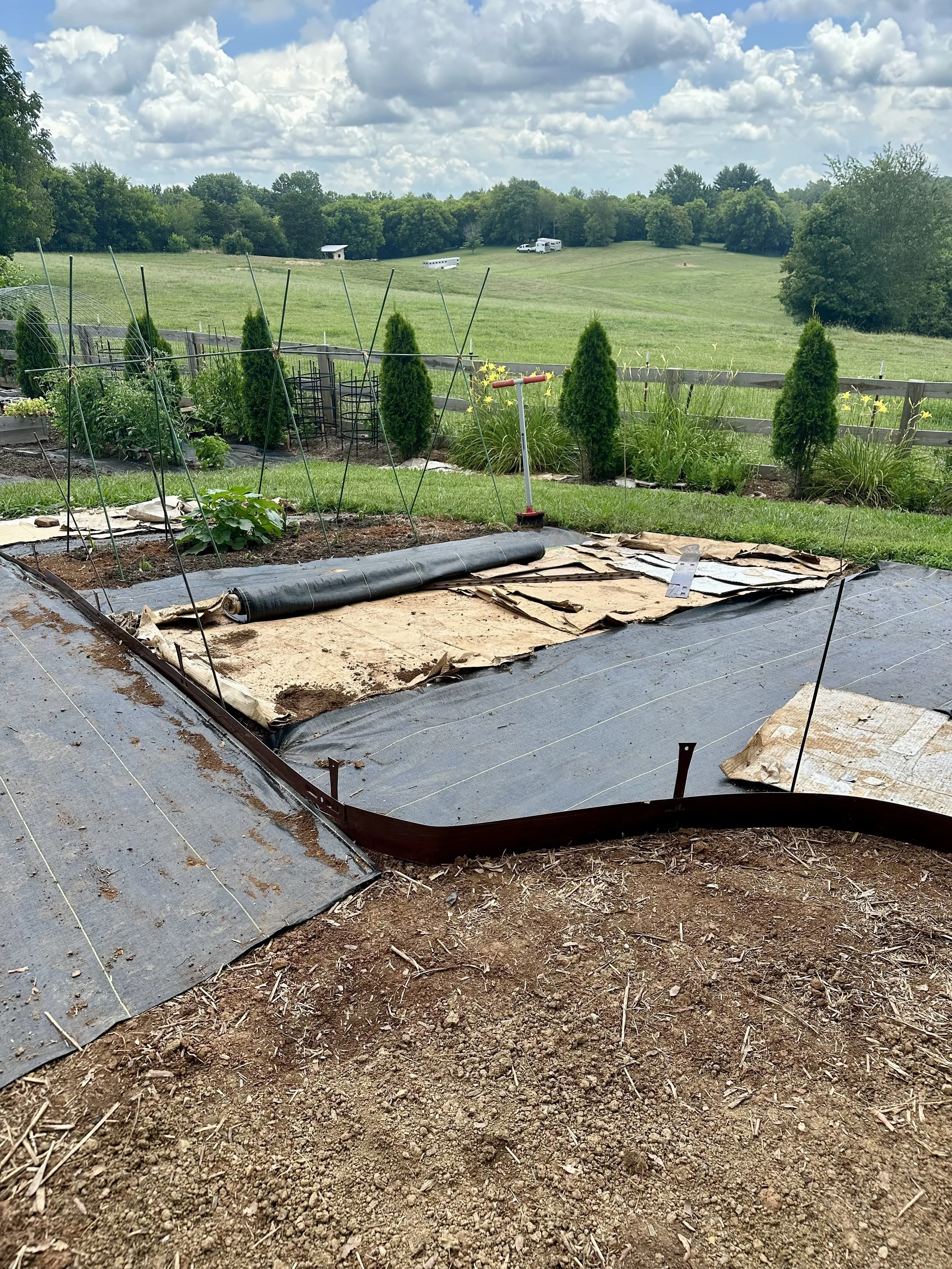
That fence line had long been edged with mature thujas, planted decades earlier. I added more to continue the line, with the intention of keeping them trimmed at seven or eight feet, allowing light and air to move between them. In the spaces between, I began growing vegetables, then flowers — dahlias, ranunculus — and eventually entire beds of seed-grown annuals. The paths were initially wood chips, but over time it became clear that I couldn’t keep up with the weeding. In 2025, I laid landscape fabric with plans to add gravel, accepting that some practical decisions are part of long-term sustainability.
A turning point came after a storm in the spring of 2024 brought down two small trees on the nearby hill. It was the momentum I needed to finally address that area. I hired a landscaper to help relocate hostas beneath the oak and elm trees and began shaping the space so it could be entered and walked through — not just looked at.
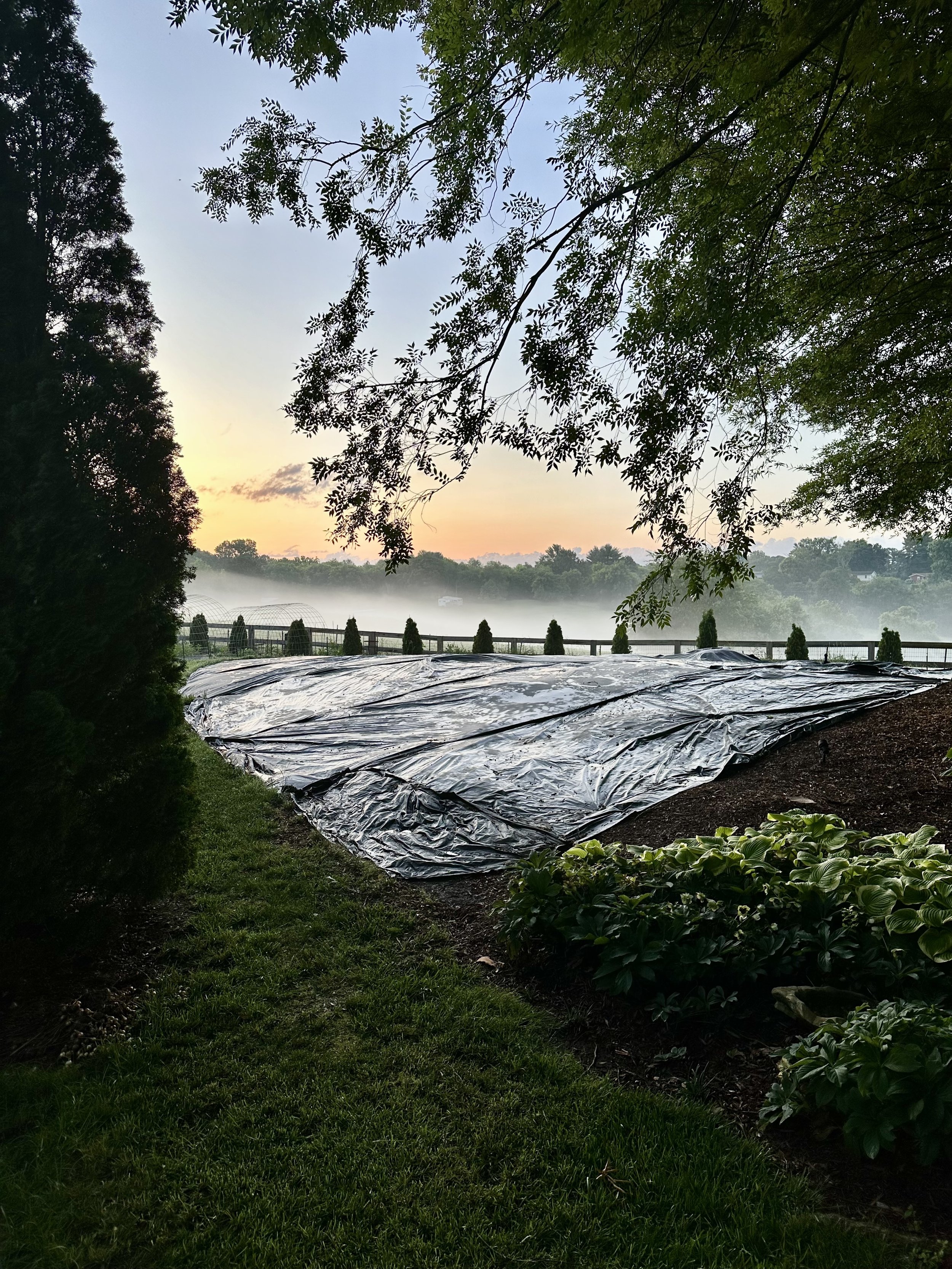
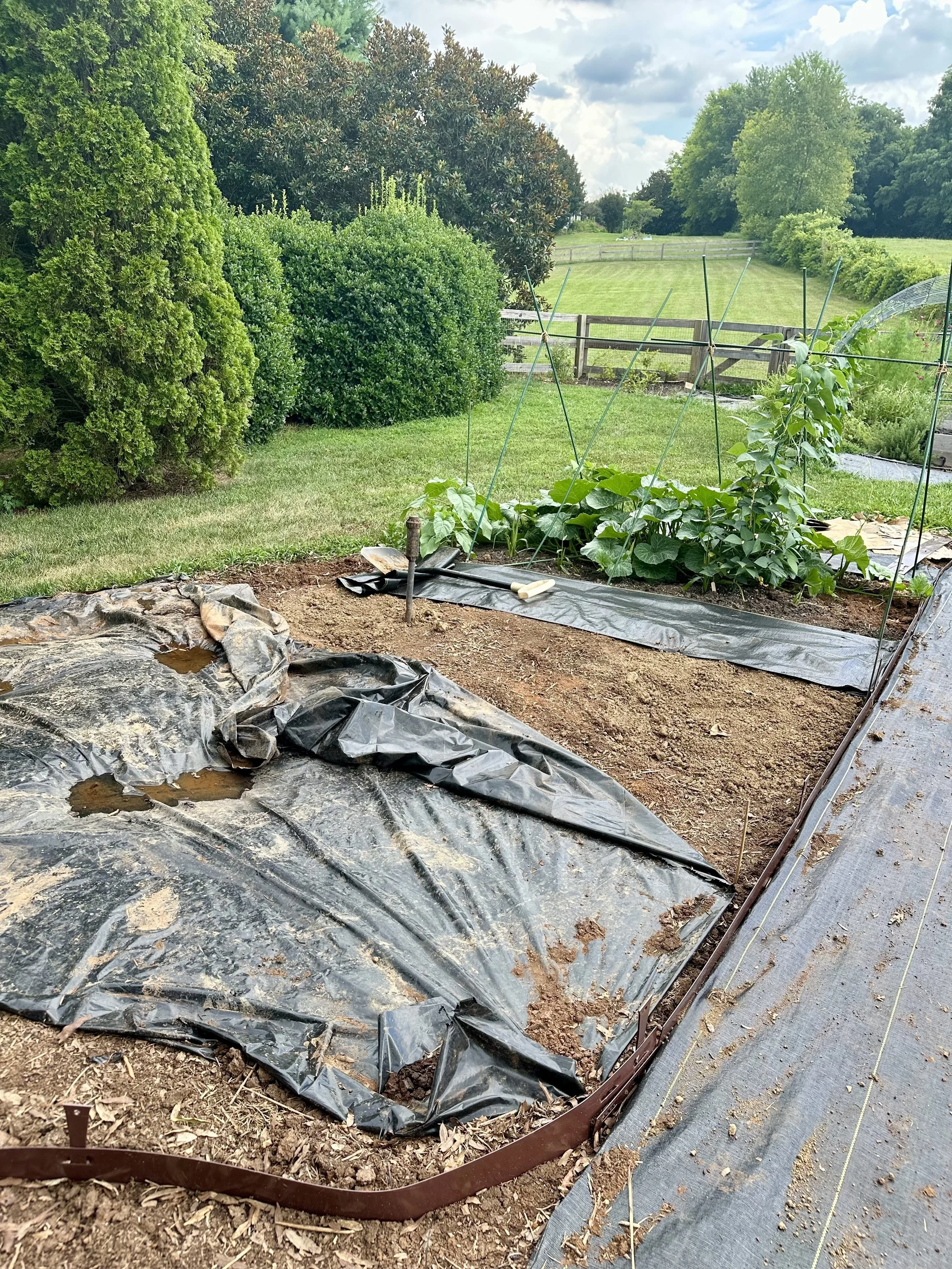
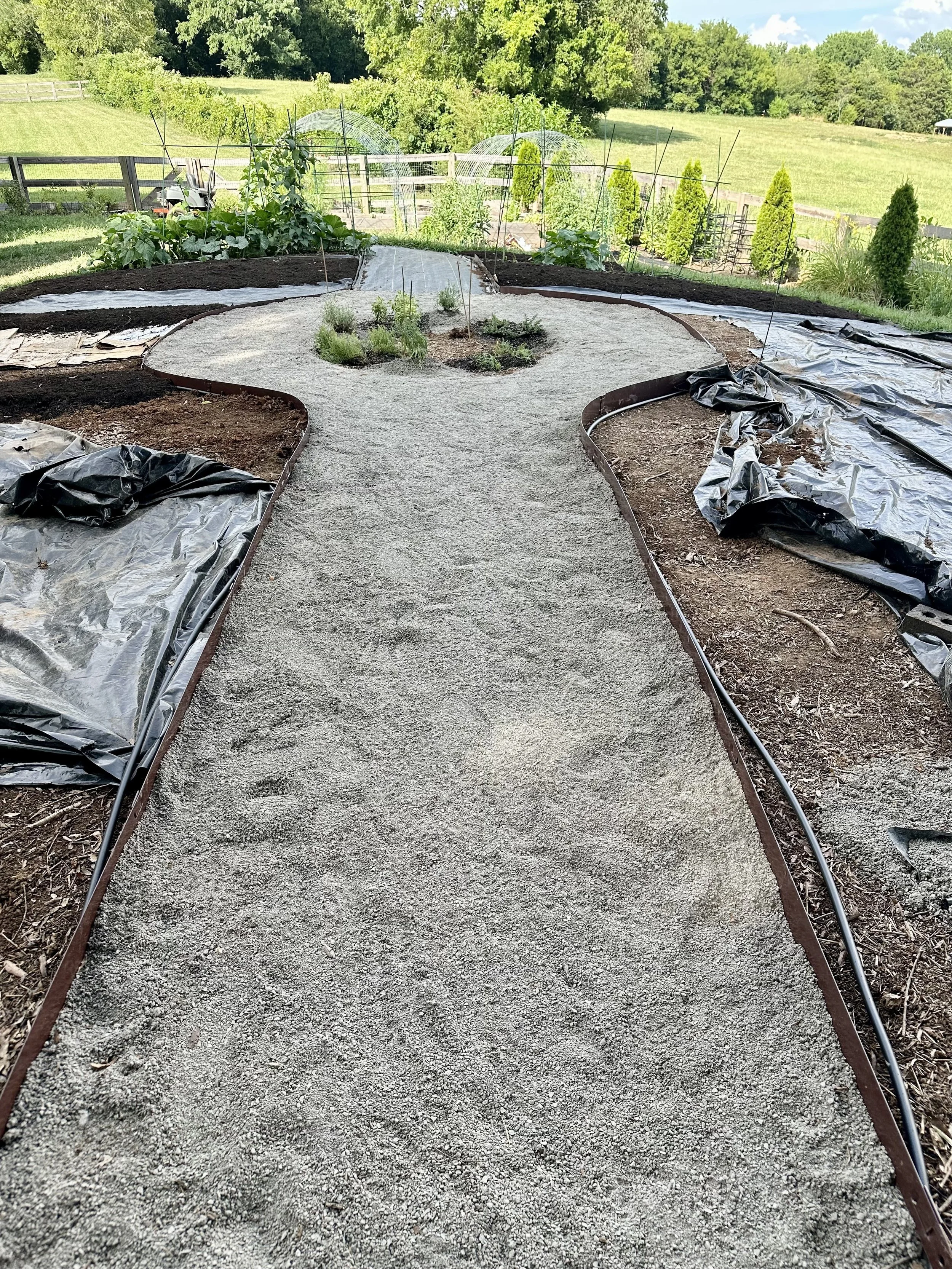
I stopped trying to level the land and decided to work with its natural slope. A path now runs through the center of the hill, dividing it into left and right slopes, leading toward the vegetable garden. Pampas grass was removed, trees were cleared, stumps ground, and black plastic laid down to prepare the soil.
From there, the garden shifted again.
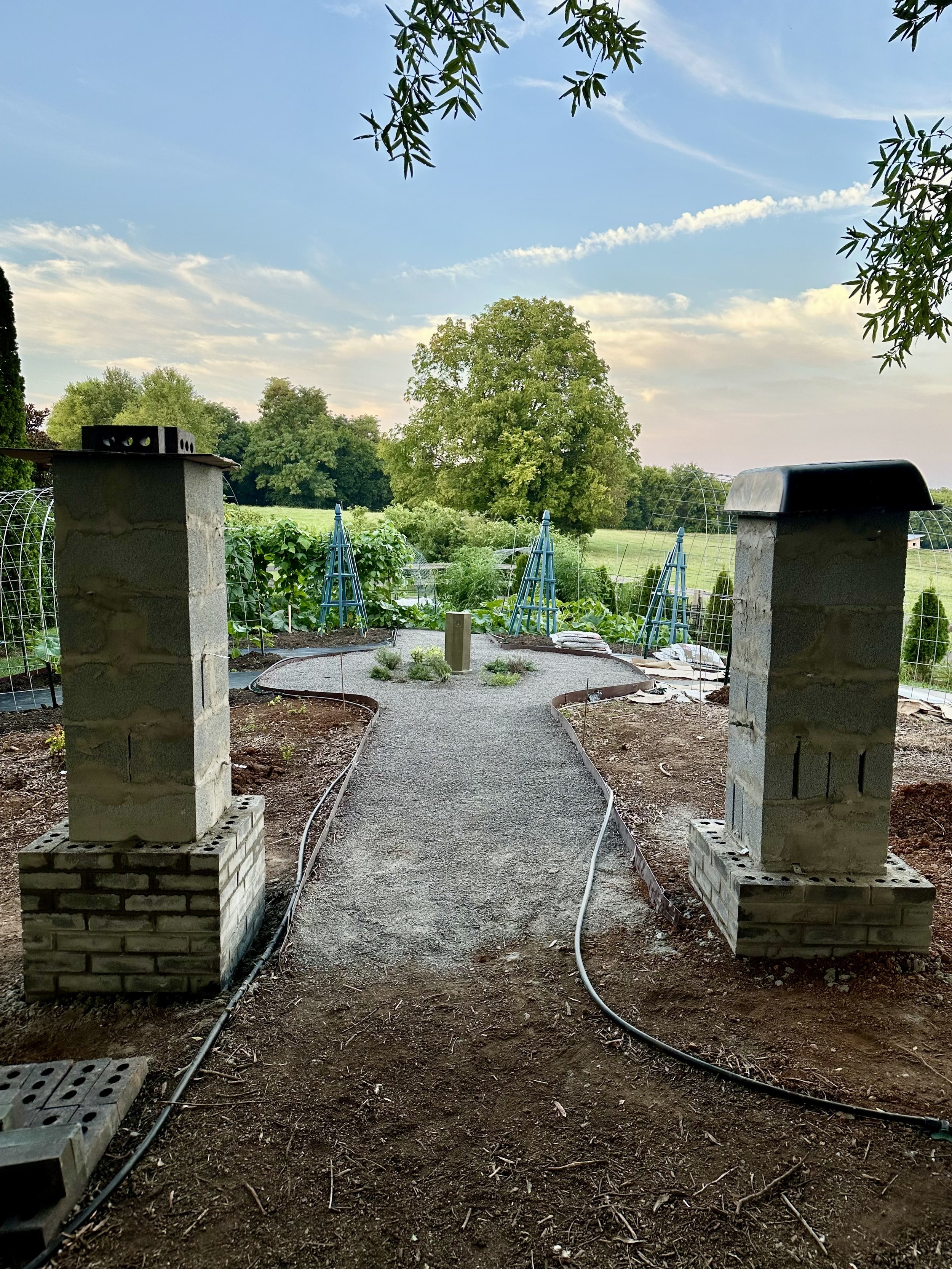
I added beds oriented east to west for cutting flowers, and others oriented north to south for vegetables. Eight long beds now flank the central path, with smaller raised beds tucked nearer the oak. Space was left beneath the tree canopy for a future dining area, and Joe later built two brick columns using leftover brick from the house — creating an entrance that marked the space as something intentional.
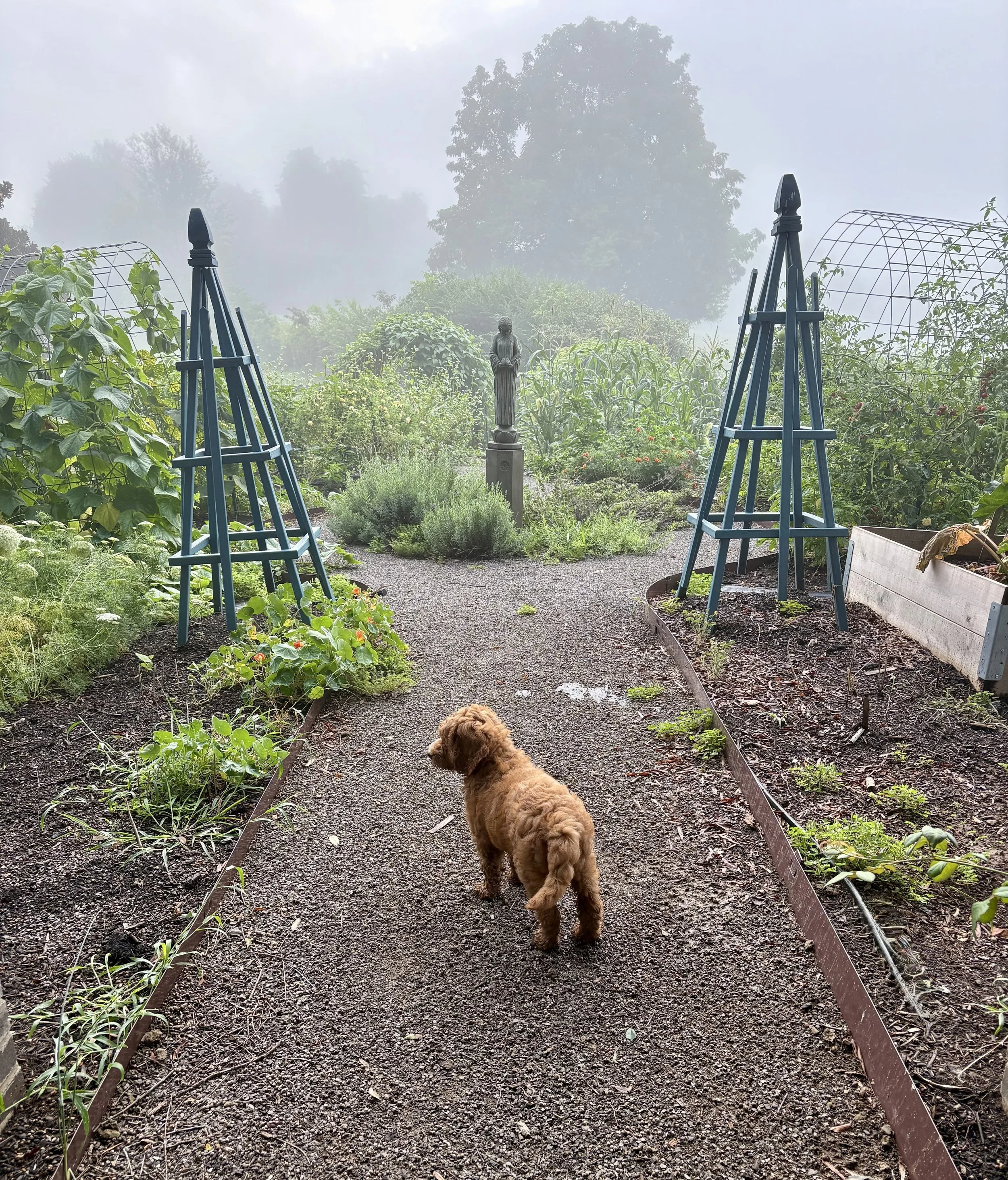
Over time, a yew hedge was planted to frame the potager, slowly defining it as a room rather than a collection of beds. In the center, I created a circular space with a small wooden statue, surrounded by lavender at the cardinal points and herbs planted between them to represent air, fire, water, and earth. When you walk through the brick columns, your eye is drawn straight to that center — a quiet moment of arrival.
This is when the vegetable garden became a potager.
A potager isn’t just utilitarian. Though the word is French, the idea appears throughout English and European gardens: a place where vegetables, flowers, herbs, paths, and structure coexist. It’s productive, but it’s also meant to be beautiful — and to be used.
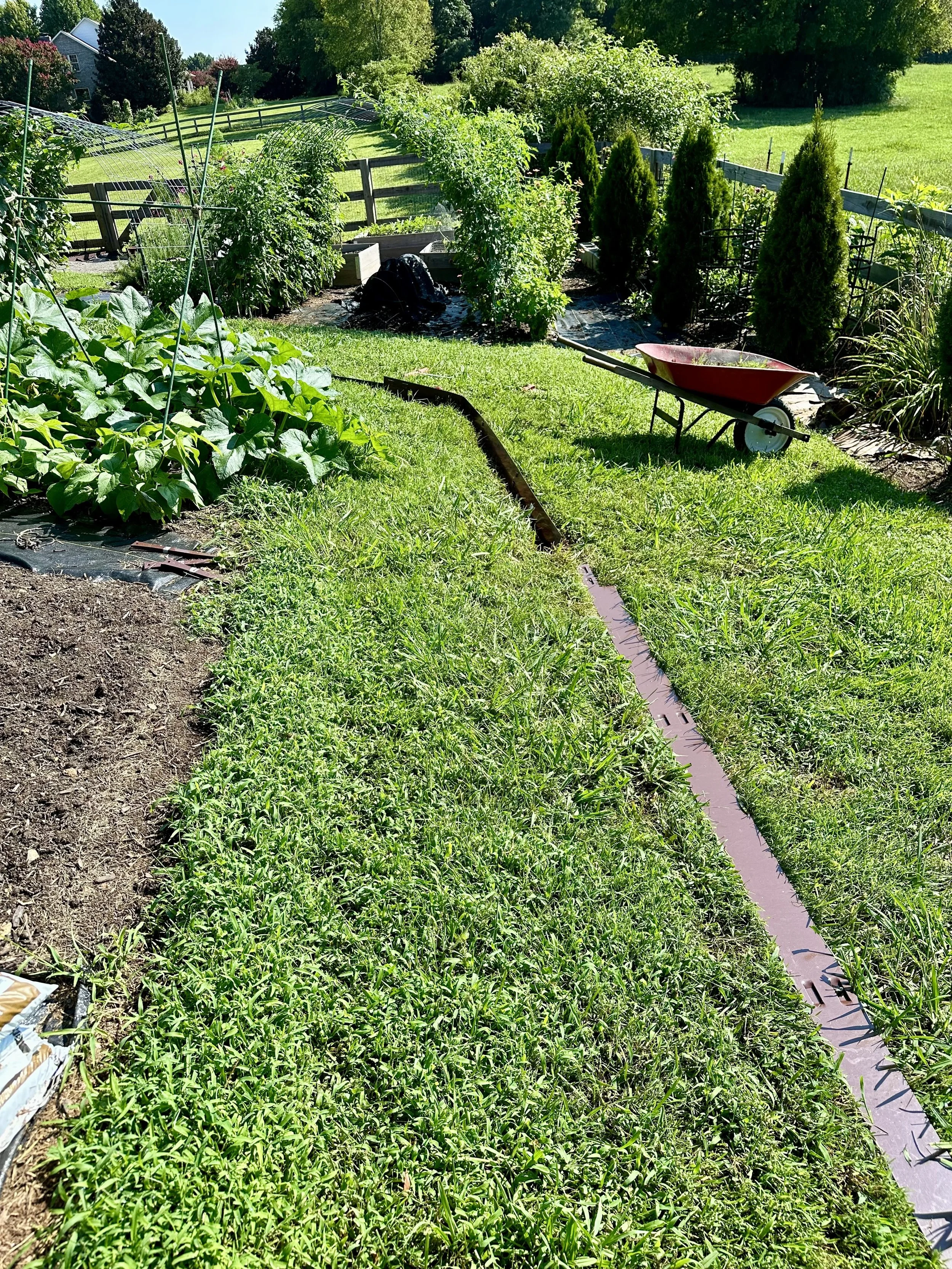
The paths are now graveled, the beds edged and shaped by hand, the garden enclosed in a gentle horseshoe that follows the land rather than forcing it flat. Two tons of gravel went into the main path alone, all laid during the heat of summer. Cow panel arches now stand in pairs for rotating crops. The fence line stretches nearly 130 feet, planted with seed-grown dahlias, zinnias, celosia, and more, eventually connecting to a pollinator strip that deserves its own story.
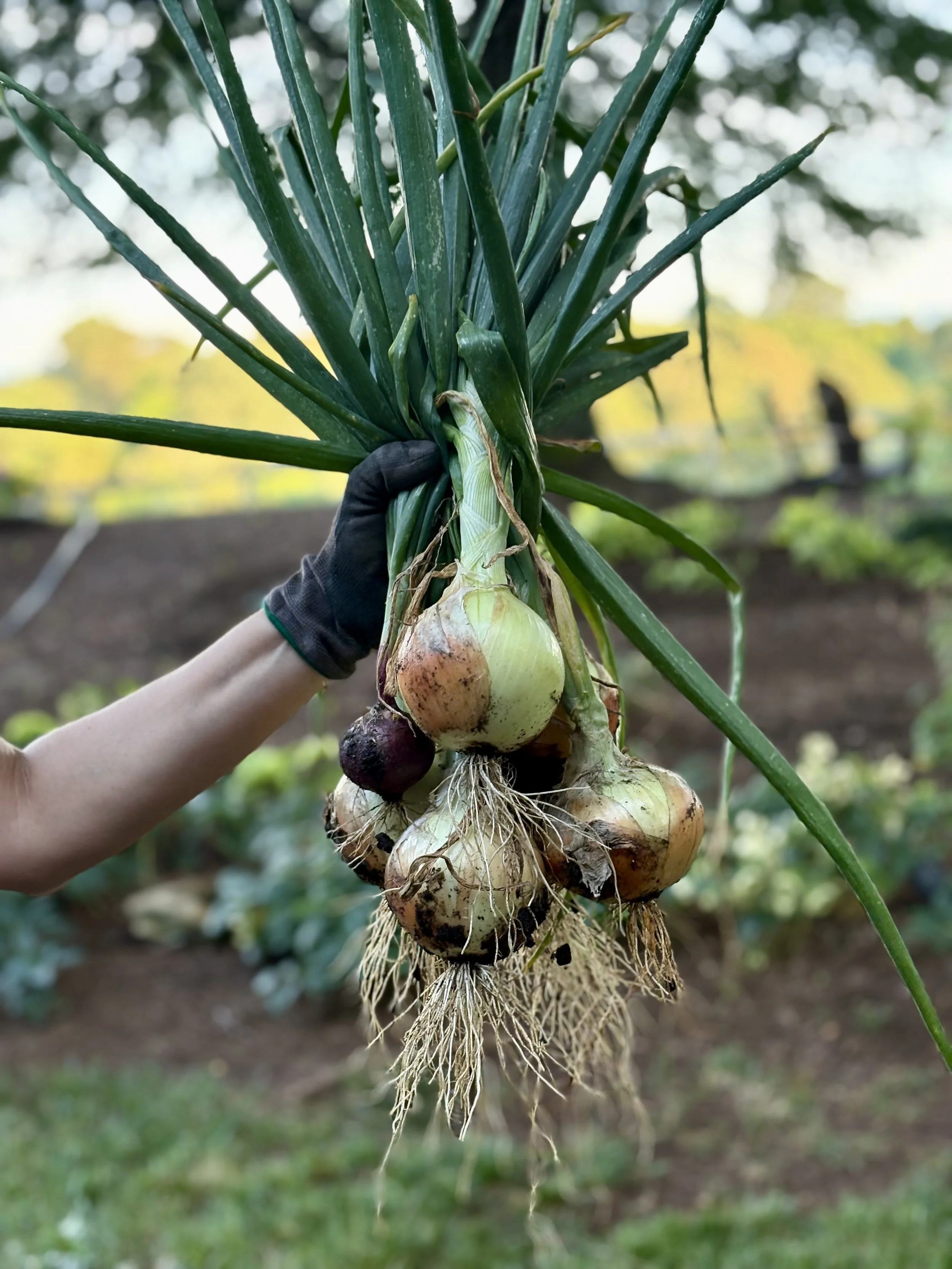
By 2025, the potager was producing at a scale I’d never experienced before. Nearly 175 jars of food were canned that year. I’ve grown dozens of vegetable varieties — from corn and tomatoes to cabbage, cauliflower, and peppers — planting across fall, spring, and summer. With the exception of potatoes and large onions, everything is started from seed.
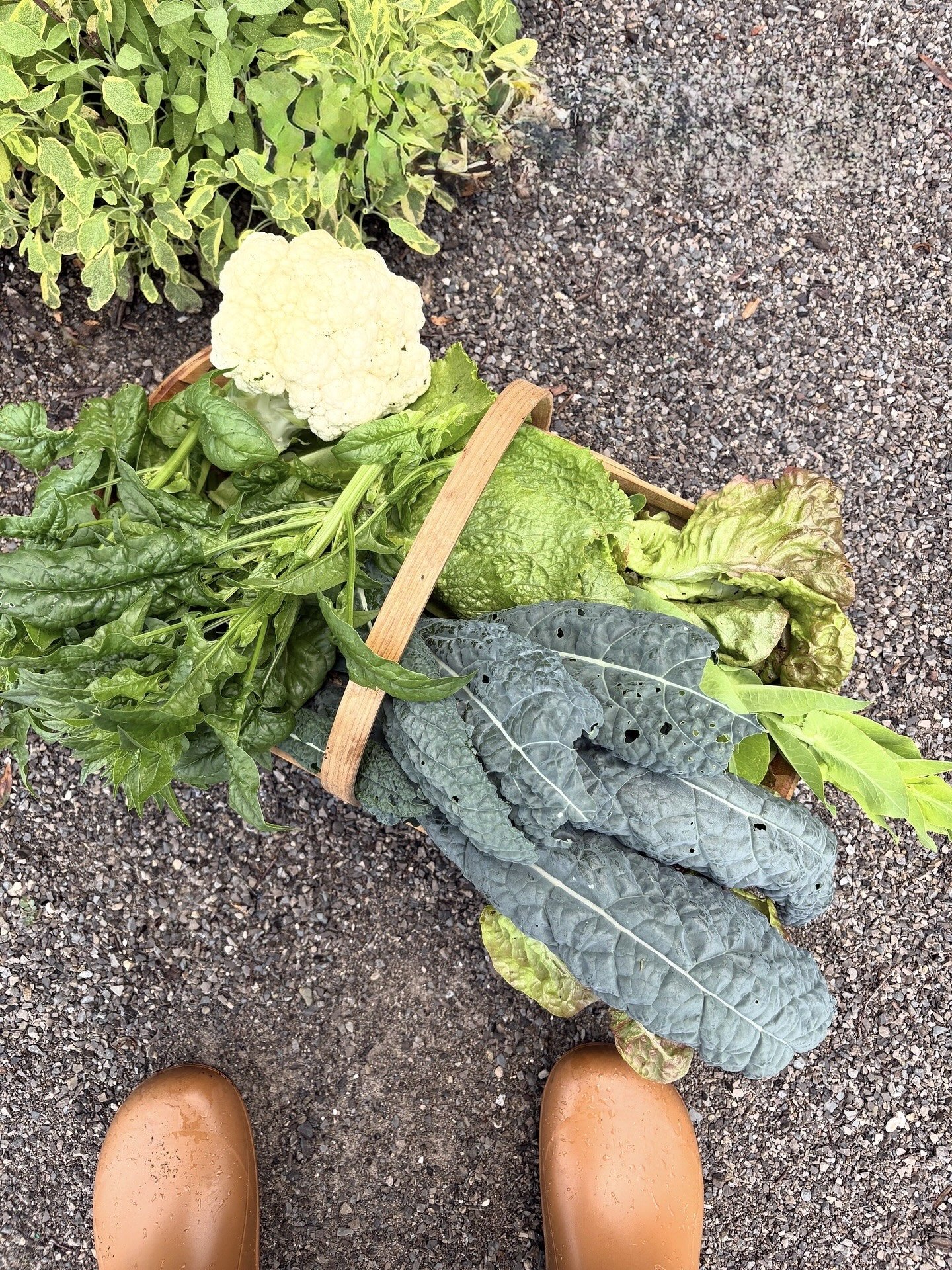
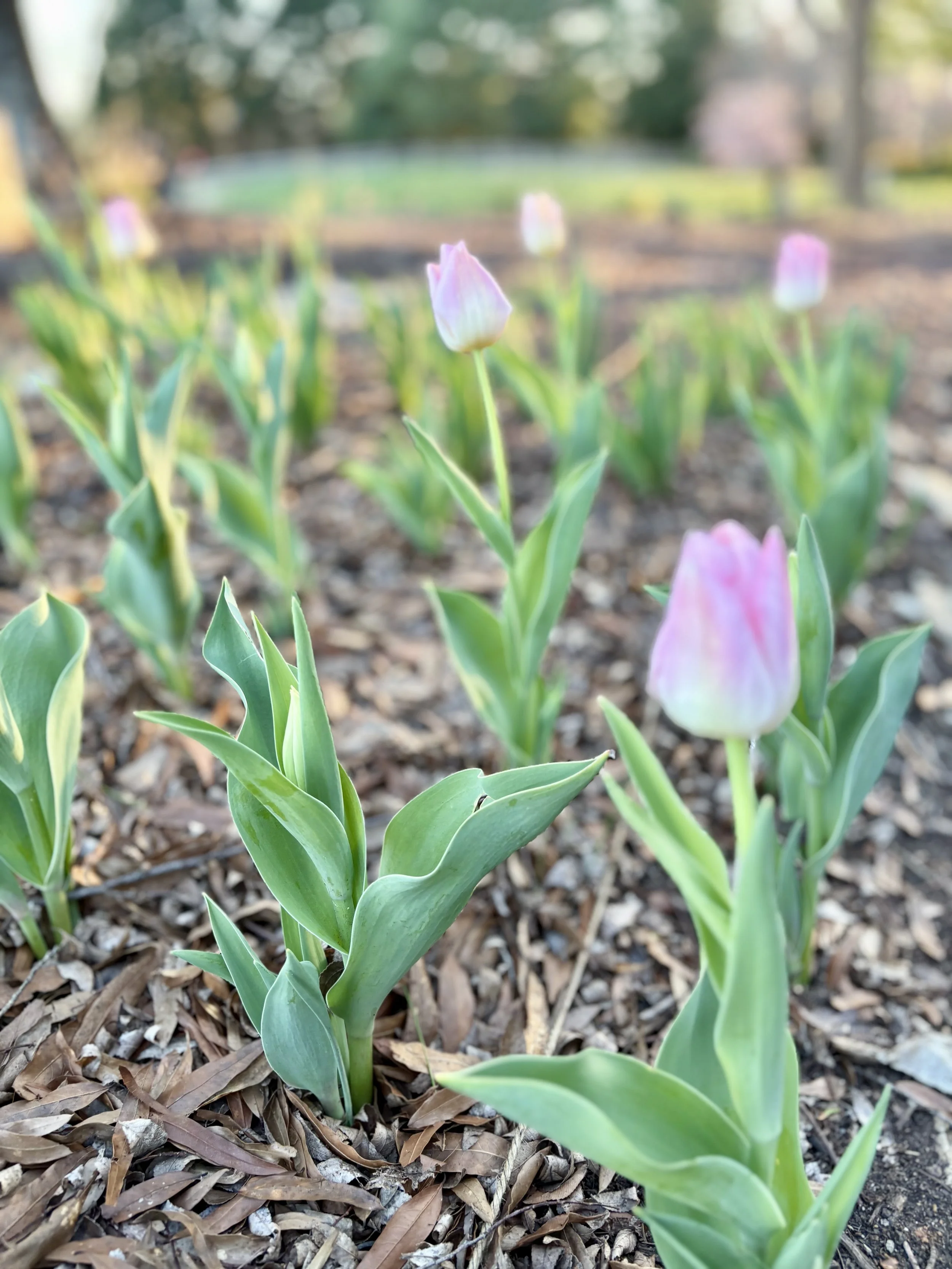
What began as a practical decision has become something deeply fulfilling. Managing this garden through the seasons has changed how I think about food, time, and care. The standing joke at our table now is: What are we eating tonight that came from the garden? My goal is simple — to grow as much of each meal as I can.
The dining table will eventually sit beneath the oak, surrounded by the work that feeds us. And when it does, this garden will feel complete — not because it’s finished, but because it’s fully in use.