Building a White Garden: Perennials First, Seeds Second
When I begin work on a new space, I tend to think of it less as a garden bed and more as an installation. In my mind, it’s closer to an art installation — something with flow and rhythm, something that can be edited and reshaped over time. Plants move. Priorities change. The work evolves.
Before any planting happens, though, there’s always one very real consideration: budget. There’s no way around it. I could never garden at the scale I do without being intentional about where I spend and where I save. I’ve taken advantage of more plant sales than I can count, but the hardest part of starting any new project is narrowing the plant list down to what must come first.
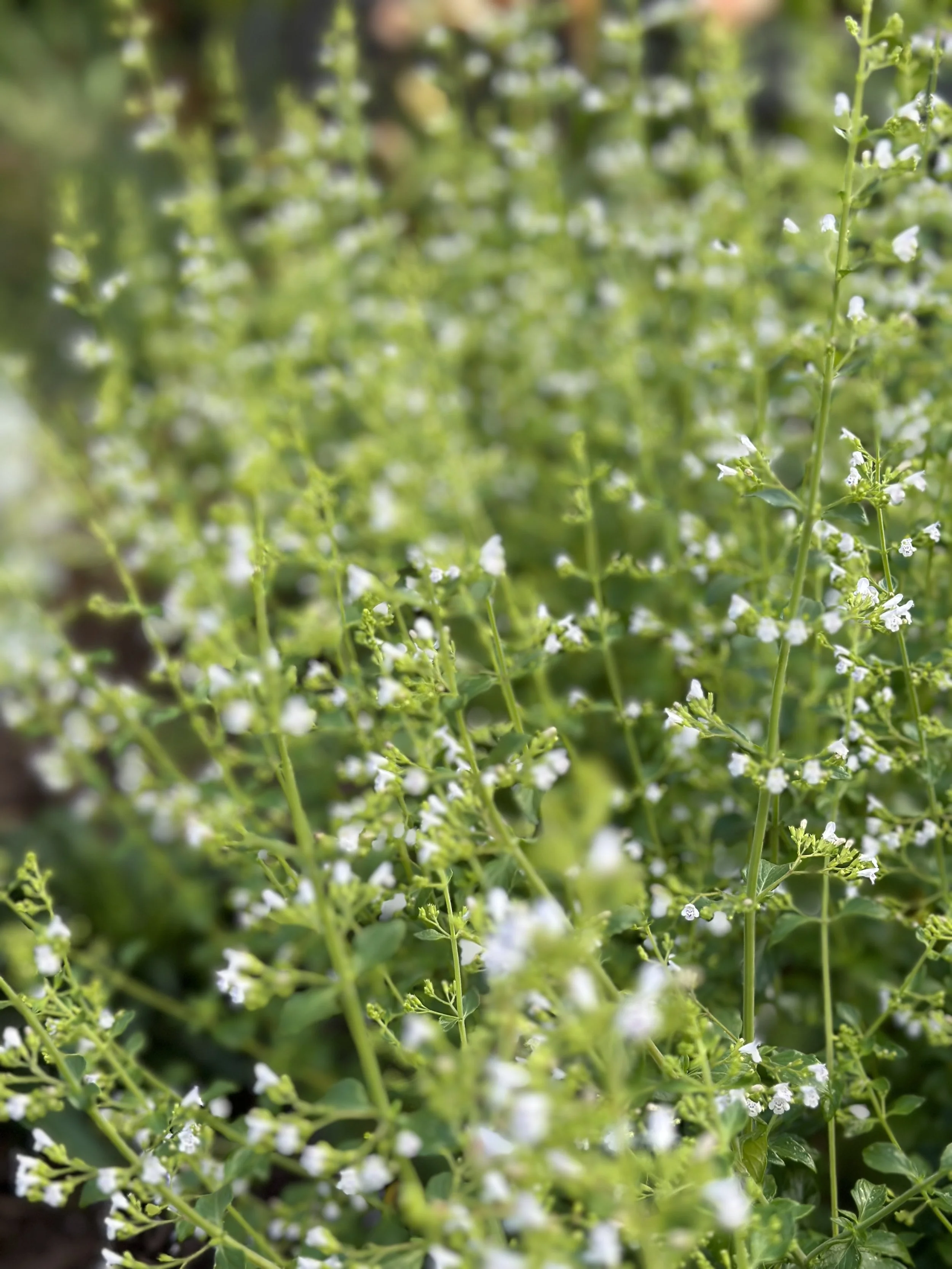
Calamintha nepeta var White Cloud
We see gardens at shows like the Chelsea Garden Show or in magazines that look as though they’ve existed fully formed for a decade. That’s not reality — at least not for anyone I know. A garden takes years. Year one is about structure. Year two is about filling and editing. By year three, you finally begin to see the whole picture come into focus.
For the courtyard, building a white garden meant starting with perennials and foundational plants — the ones that would give the space cohesion even before any flowers appeared.
Cherry laurel, roses, salvia, catmint, iris, thyme, silver thyme, lamb’s ear, ostrich fern, and peonies were non-negotiable. Duchess de Nemours peonies, in particular, were essential — not just for their bloom, but for their scent and reliability. Fortunately, there was already boxwood in place, which gave me something solid to lean on from the beginning.
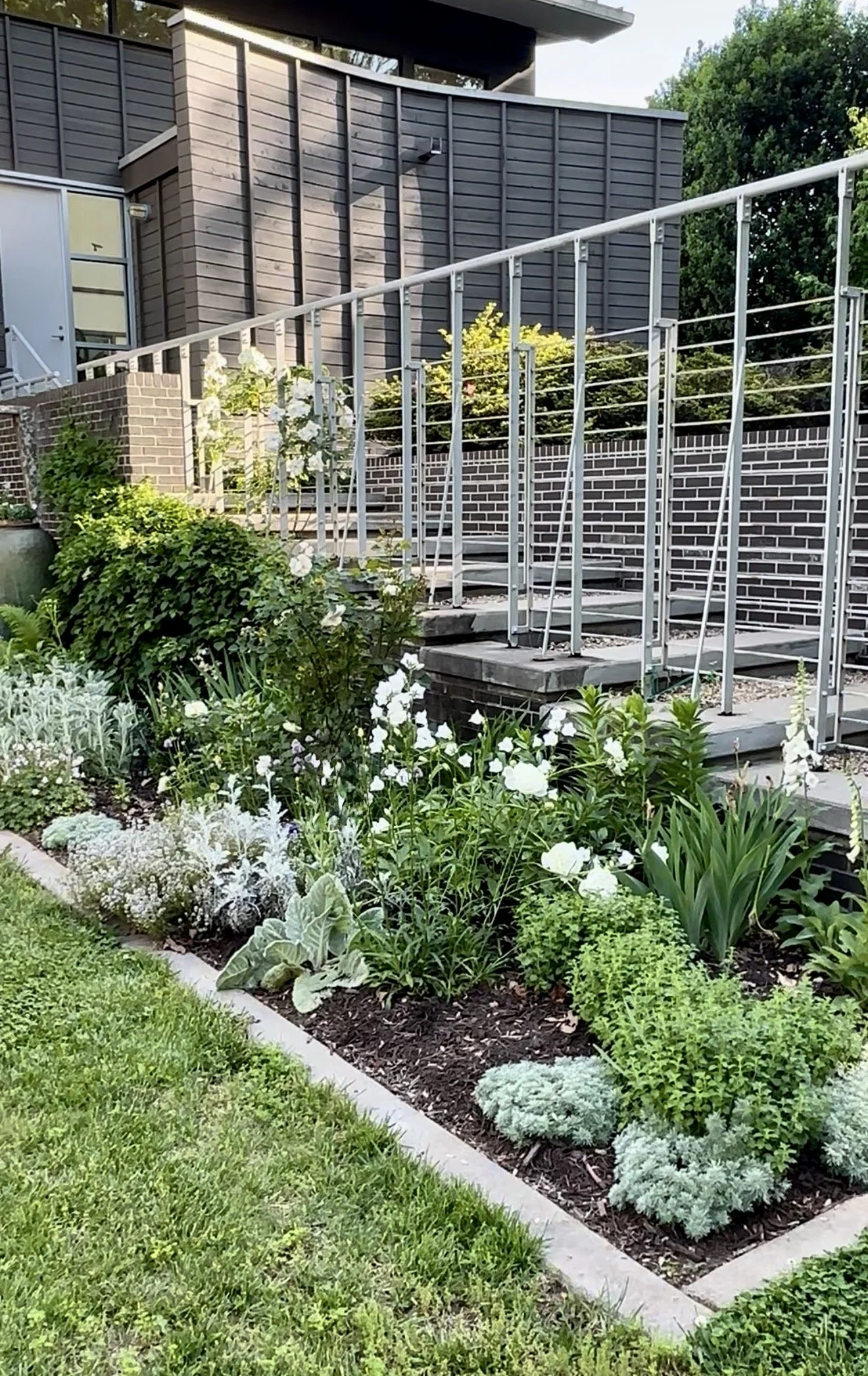
The White Garden at Hilltop circa 2024
Once those bones were set, I could begin asking a different question: What can I grow from seed to bring softness, abundance, and movement into the space?
Foxglove was the first clear answer. Foxglove alba is a classic for a reason — tall, luminous, and remarkably easy to grow. I start it indoors and transplant it out, often in stages, so it blooms over an extended period. I can’t imagine this garden without it.
From there, I added other seed-grown plants that felt natural to the palette and the mood: white nigella, campanula, and culver’s root. Culver’s root has been a little trickier — partly due to enthusiastic dogs — but it’s a native plant I’ve admired for years, and one I see used beautifully overseas.
More recently, I’ve begun layering in annuals like white poppies, nigella, and a shorter, more restrained cosmos — choices made intentionally, with scale and proportion in mind. I want to think that each year brings refinement rather than reinvention.
For me, this is part of the joy of gardening: starting with what’s essential, learning what works in your specific conditions, and allowing a space to become full over time — not through excess, but through intention. A white garden, especially, demands restraint. When done thoughtfully, it rewards you with a sort of buoyancy, texture, and a sense of continuity that feels both settled and alive.