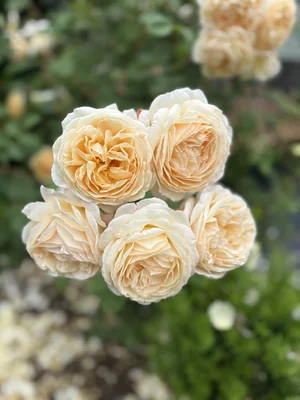
Why I Chose a White Garden
When I first saw the courtyard, I had a very strong opinion about what I wanted there — immediately. That doesn’t always happen for me. In fact, it rarely does.
As much as I admire garden designers who can arrive at a space, absorb it quickly, and produce something that works beautifully for someone else, I know myself well enough to say that kind of pressure would undo me. I need to live with a place. I need time. I have enormous respect for designers like Jo Thompson, who make it look effortless.
But this space was different.
From the beginning, I knew I wanted it to be a white garden.
Part of that decision was practical. The brick on the house is dark and substantial, and white has a way of lifting and lightening a space like that. But white is also one of the hardest colors to use well in the landscape. Your eye is drawn to it immediately, and when it’s used poorly, it can feel harsh or disconnected — like it’s shouting instead of belonging.
When white is paired with strong green structure, texture, and repetition, though, it becomes something else entirely. It settles the eye. It calms the space.
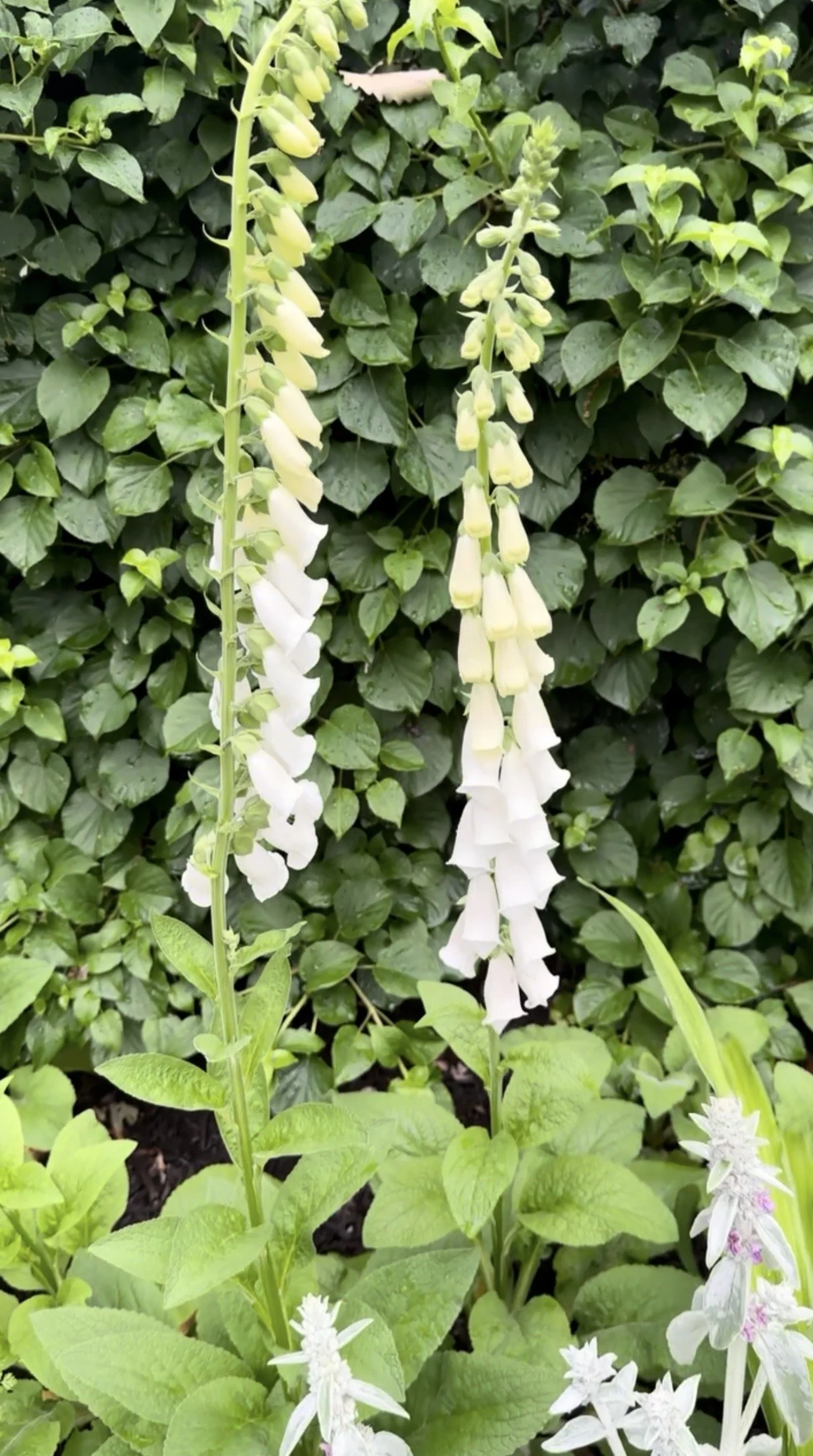
Foxglove var Alba
I first noticed this years ago in Italian gardens. If you’ve ever watched Monty Don’s travels through Italy, you’ve seen it too — that deep green framework, and then the softness of pale flowers moving through it. Long before I ever visited Sissinghurst, that combination stayed with me.
And then I discovered the White Garden at Sissinghurst.
Once I saw what they had accomplished there — the scale, the restraint, the seasonal movement — it confirmed something I already felt. What I admire most about Sissinghurst isn’t just the planting palette, but the way the entire space carries itself through the year. Even when individual beds are in transition, there is always structure, texture, and rhythm holding the garden together.
Gertrude Jekyll famously believed that no single bed could perform perfectly all year long, and I agree with her. But what Sissinghurst achieves — and what I wanted to attempt here — is a garden where the whole space remains interesting, even as parts of it ebb and flow.
This courtyard was one of the first places I began shaping when we moved to Hilltop in 2022, alongside the early work of establishing the vegetable garden and potager.
In the beginning, this garden was built mostly with perennials and foundation plantings. Timing, availability, and experience all played a role. Over time, it evolved to include bulbs, annuals, hardy biennials, and plants grown from seed. That evolution is part of the joy — curating a space, learning what works, moving what doesn’t, and letting the garden teach you as much as you shape it.
I love repetition in gardens, but I don’t love rigidity.
If I had to describe the feeling I’m after here, it would be something like Brigitte Bardot’s hair — classic, elegant, but just a little untidy around the edges. Soft. Romantic. A bit dreamy. Never finished.
That’s what I wanted this white garden to be.
And it’s still becoming that.