Seeds Are Scary
I’ll never forget when my friend Lisa said it.
We were talking about the possibility of her growing a few things from seed. She’d been watching what I was doing in my vegetable garden, noticing how much I was growing from scratch.
“Seeds are scary,” she said.
At first, I laughed. Almost dismissed it. Seeds aren’t scary — they’re tiny, they’re simple, they’re literally the beginning of everything.
But the more I thought about it, the more I realized she was right.
Seeds aren’t scary — but they feel scary. And that’s what actually matters.
It doesn’t matter how many positives you list: that many seeds are easy to grow, that you don’t need a big setup, that some can be direct sown, that seeds give you access to varieties you’ll never find at a nursery or grocery store. None of that matters if, emotionally, seeds feel intimidating.
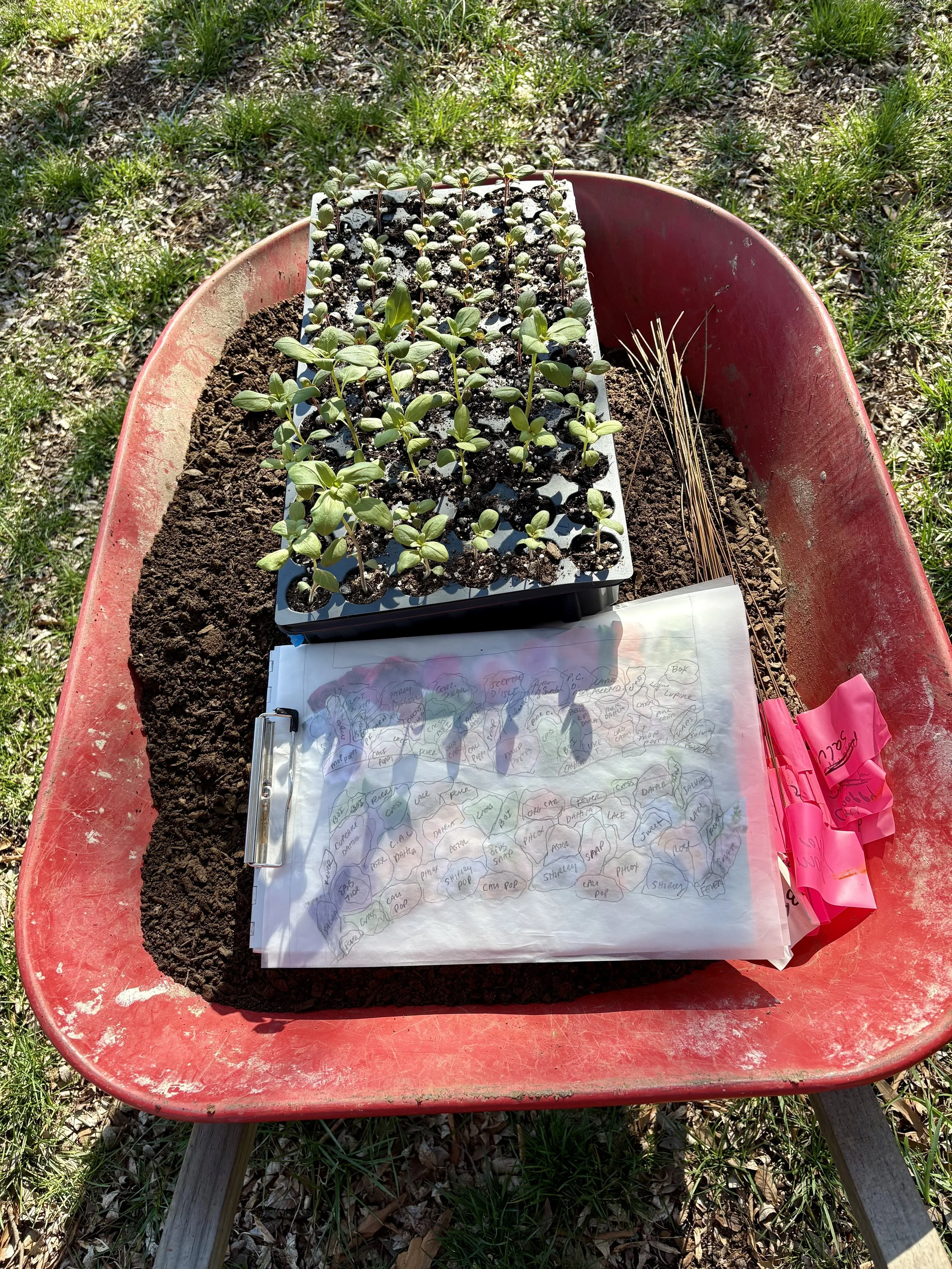
Seedlings on their way to be planted out in the Rose Rondel at Hilltop
So here’s what I’ve learned about why seeds feel scary — and why they’re worth trying anyway.
First: people are afraid of killing plants.
Here’s the truth — you’re going to kill plants. Everyone does. I don’t care how experienced a gardener you are, something won’t thrive. Something will fail. Something will get planted in the wrong place, forgotten, or outpaced by the weather.
You have to get comfortable with that.
If you can keep yourself alive, maybe a pet alive, hold down a job, or care about something consistently — you can keep some plants alive. Let go of perfection. Gardening isn’t a test. It’s practice.
Second: seeds don’t germinate 100% of the time.
You might buy a packet that says 80% germination and only see a handful come up. It happens. It’s not personal. It’s biology.
I’ve seen this happen even to very experienced growers. A friend once bought zinnia seeds — notoriously easy — from a reputable source, and only two germinated. Sometimes seeds just… don’t cooperate.
That doesn’t mean you did anything wrong.
Third: start with seeds you actually want.
Don’t grow food you don’t like. If you hate Brussels sprouts, don’t grow Brussels sprouts. Choose things you’re excited to eat or enjoy seeing in your garden.
Pay attention to your zone. Notice whether a plant climbs, sprawls, or stays compact — and plan accordingly. Before you sow anything, take a few minutes to understand what that plant wants. With the changing weather patterns that is becoming increasingly important.
And start small. Two or three things is plenty.
Some seeds are harder and may require extra tools like heat mats or indoor lights. Others can be pressed into the soil and left alone. There’s no prize for starting with the hardest ones.
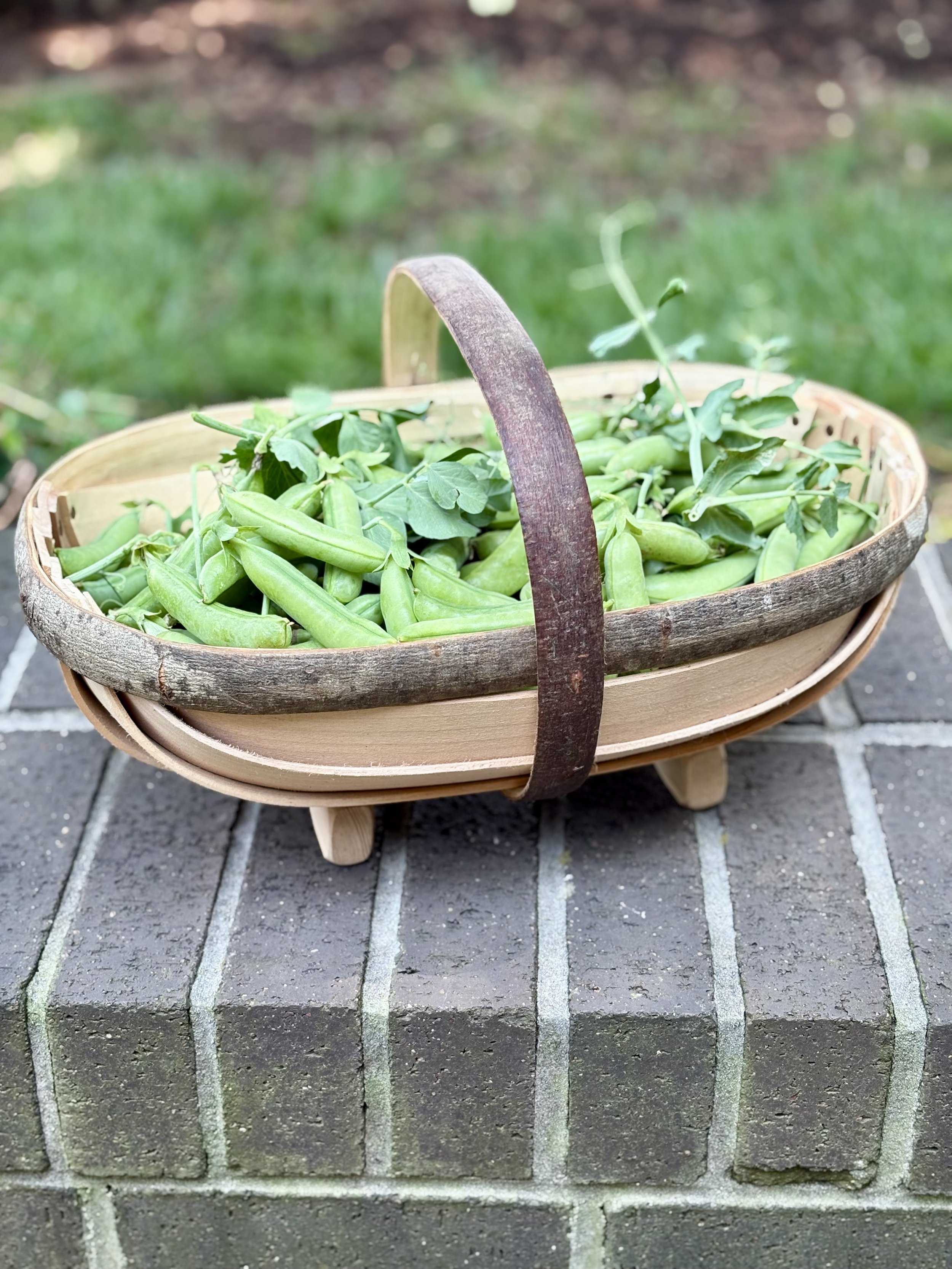
Nairobi snap peas harvested at Hilltop
One helpful rule of thumb: bigger seeds are often easier.
Beans, peas, melons, cucumbers, and sunflowers — these are forgiving and satisfying. Smaller seeds can be trickier, but some do very well outdoors, like radishes, carrots, arugula, nigella, and poppies.
If you want to try something a little more involved, tomatoes are worth the effort. They’re versatile, productive, and deeply satisfying. The biggest mistake people make with tomatoes is starting them too early. In zone 7b, I usually start mine in mid-March and plant them out mid-April to early May — timing matters more than perfection.
For flowers, larger seeds like cosmos and zinnias are wonderful confidence builders. Smaller seeds like snapdragons or foxglove can seem intimidating, but they’re absolutely worth learning.
One practical note: always use a seed-starting mix.
Garden soil is for the garden. Seeds need something light and consistent. There are great commercial options — use what’s accessible to you — but don’t skip this step. Personally, I love Dirtcraft’s Levitation Seedling mix.
And finally, follow the packet.
Some seeds need light to germinate. Some need to be covered. Those little instructions matter more than most people realize.
If there’s one mindset shift that makes seed starting easier, it’s this: treat it as an adventure.
What’s the worst that happens? A seed doesn’t sprout. You try again. What you gain — confidence, choice, variety, and a deeper connection to what you grow — is far greater than the risk.
I also think part of why seeds feel scary right now has less to do with gardening and more to do with the world we’re living in. Our food system is remarkably narrow. Most of what we see in grocery stores comes from a very small number of places, grown for transport and uniformity rather than resilience or flavor. That’s not a moral judgment — it’s just a fact.
When you grow from seed, even in a small way, something shifts. You’re not opting out of the world, but you are opting in to knowing you can participate in feeding yourself. You’re choosing diversity over uniformity, skill over dependency, and steadiness over convenience. And that confidence doesn’t come all at once — it starts with one packet of seeds and the willingness to try.
Seeds aren’t scary.
They just ask you to begin.