Hardy Biennials: The Unsung Heroes of the Garden
Biennials are often treated like an afterthought — neither as exciting as annuals nor as dependable as perennials. But in a real garden, they quietly do some of the most important work.
They bridge seasons.
They fill gaps.
They reward patience.
In Zone 7b, many hardy biennials behave beautifully, especially when you let them live the way they’re meant to: sown one year, overwintered quietly, and flowering with intention the next.
These are the biennials I’ve actually grown here at Hilltop — not a catalog list, but plants I’ve lived with, watched return, and relied on.
Foxglove (Digitalis)
Foxglove is the classic hardy biennial for a reason.
Sown in late spring or early summer, it forms a low rosette its first year and then sends up tall, elegant spires the following spring. Even when not in bloom, the foliage has presence.
In my garden, foxglove self-seeds just enough to keep the cycle going without becoming unruly. I let some seed fall and pull extras where I don’t need them.
It’s one of those plants that makes a garden feel intentional — vertical, calm, and grounded.
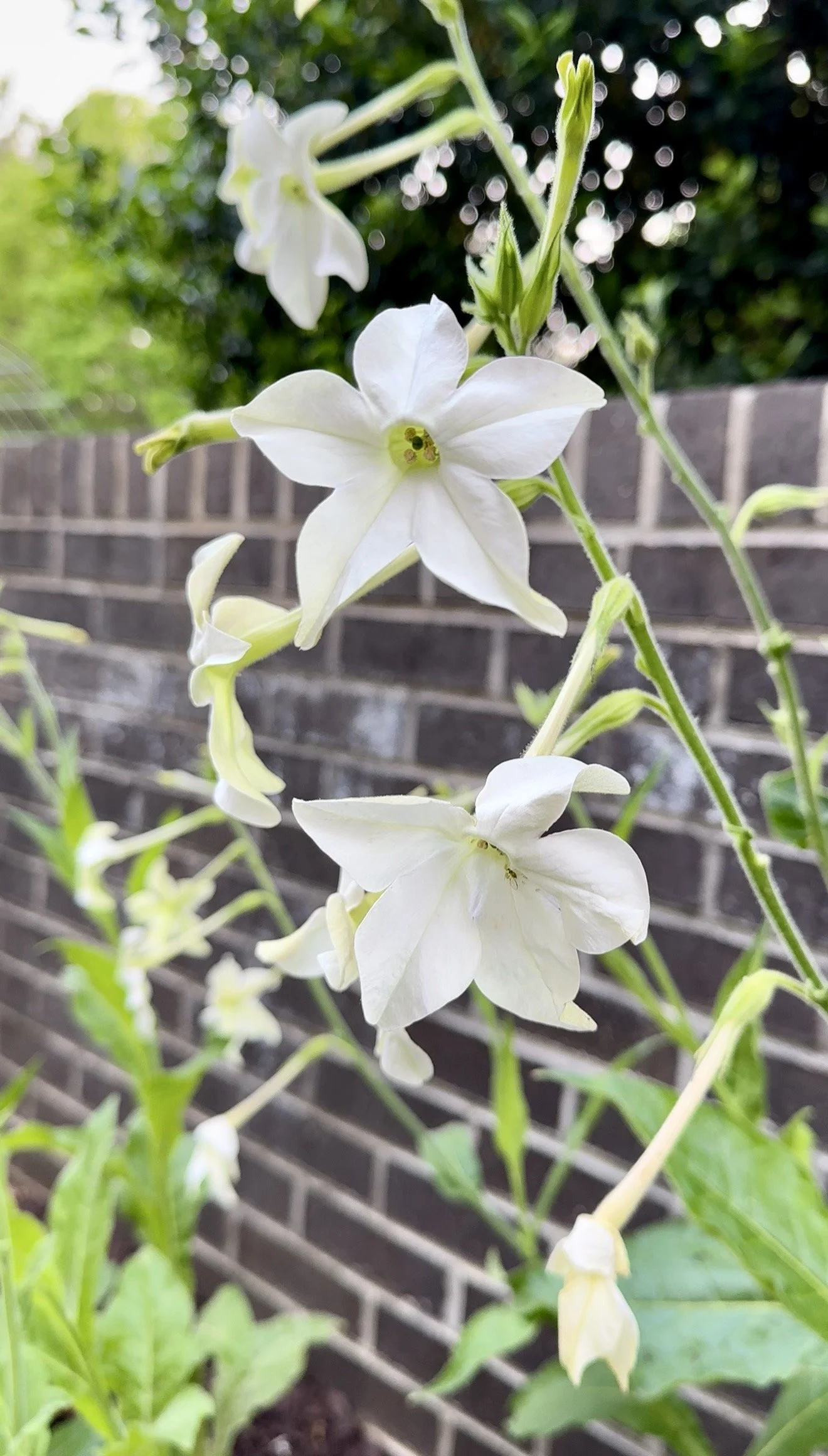
Nicotania at Hilltop
Night-Scented Tobacco (Nicotiana)
Nicotiana lives in the gray area botanically, but in my garden, it behaves like a biennial or short-lived perennial.
Once established, it reseeds gently and returns year after year. I count it because functionally, it fills the same role: continuity, presence, and reliability.
It’s also one of those plants that proves gardens are meant to be experienced — not just looked at. It has a lovely soft scent, particularly in the evenings. And my favorite pairing is with my Foxglove Alba against a dark brick wall, where it seems to handle the heat from the wall and part-sun exposure very well.
Wallflowers (Erysimum cheiri)
Wallflowers are a newer addition for me, and I think they’re deeply underrated in the U.S.
Traditionally grown as hardy biennials, they overwinter as compact plants and bloom early — often when very little else is happening. Their scent alone justifies their place.
I’ve tucked them into the cutting section of the potager, where structure matters as much as flowers. They bring early color, yes, but more importantly, they carry the garden from winter into spring. This will be their first year in bloom here, and I’m looking forward to cutting them generously for bouquets.
Canterbury Bells (Campanula medium)
Canterbury bells are a true biennial and worth the wait.
They need good drainage and a bit of patience, but when they bloom, they feel timeless. Old-fashioned in the best way.
I think of them as structural flowers — not filler. They’re excellent in gardens that value form as much as abundance. I have them placed in the White Garden at present, but there is a nice variety of colorful selections to choose from as well.
Canterbury bells are sometimes described as spreaders, but in my experience, they’re quite well-behaved. They don’t run or creep — any increase comes only from seed. Much of their reputation comes from confusion with Campanula rapunculoides, a completely different species that spreads aggressively by underground runners.
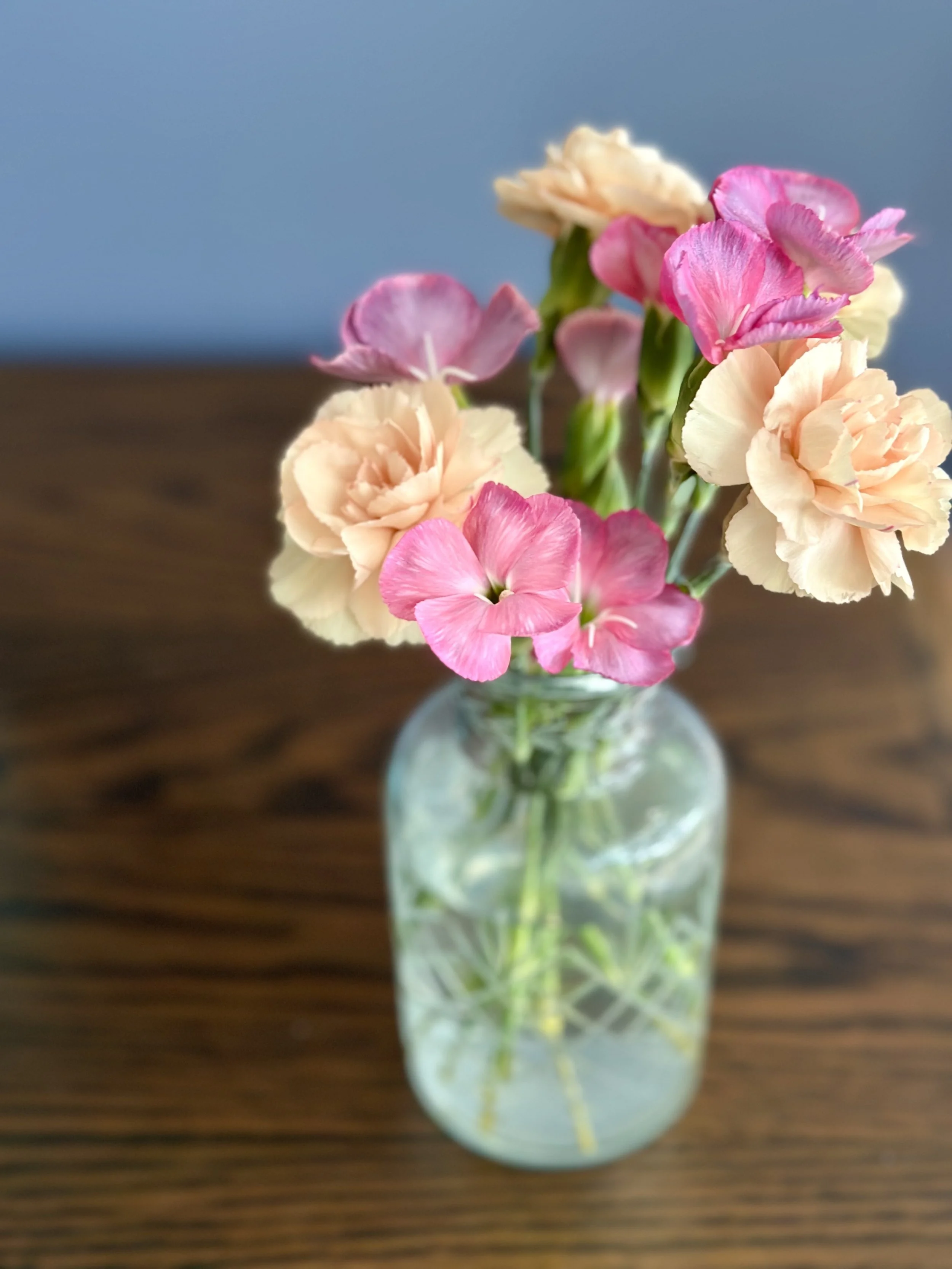
Dianthus Chabaud la France
Sweet William / Dianthus (including LaFrance / Chabaud types)
Sweet William sits in that in-between space between biennial and short-lived perennial, depending on strain and conditions.
I’ve grown florist-style strains like the LaFrance series as hardy biennials, overwintering the foliage and letting them bloom heavily in their second year. They’re tough, unfussy, and reliable.
They also play well with other biennials — dense enough to hold their own without overwhelming nearby plants. And I love them as accents in a larger floral display or paired with other delicate flowers. I find them best in a small cutting garden rather than in a border.
Parsley (Petroselinum crispum)
Parsley surprises people, but it’s a true biennial.
The first year is all foliage and the best time to harvest for eating. The second year, it flowers, feeding pollinators and adding unexpected structure to the garden. I don’t always let it bolt, but when I do, it earns its place among ornamentals. It’s a reminder that usefulness and beauty don’t have to be separate categories.
I also think it’s surprising how interesting and useful it actually is in a border. It’s like this ferny punctuation mark. And surprisingly green even through the winter weather. And in a pinch, you can use the tougher year two foliage for making stocks.
Hardy Stock (Matthiola incana)
This is not night-scented stock, but the traditional florist stock grown historically as a hardy biennial.
Sown in summer and overwintered, it blooms in late spring with incredible scent and substance. Many modern growers treat it as an annual for convenience, but its biennial nature is part of what gives it strength.
When grown this way, it feels substantial — not disposable. I am growing this variety in the cutting garden, and I look forward to harvesting these plentiful (and unfussy) stems.
Biennials ask for patience, but they give something annuals rarely do: a sense of rhythm.
They remind you that not everything needs to perform immediately. Some things are meant to be grown with time in mind.
And once you start planting them intentionally, you realize how much of a garden’s quiet strength comes from what was planned a year ago.