Why Making Things Changes How You Live at Home
I want to be really clear about something from the start: when I talk about self-reliance, I do not mean self-isolation. I don’t mean withdrawing from the world, cutting myself off from other people, or refusing to buy things that someone else has made with care and skill. And I think that distinction matters.
It’s probably why I never felt fully drawn to the homesteading movement, even though on the surface it shares a lot of values I care about. So much of that world revolves around the idea of total independence—doing everything yourself, producing everything yourself, relying on no one. It’s a beautiful idea in theory, but in practice it feels both exhausting and unrealistic. Humans have never lived that way. We’ve always survived by sharing labor, skills, stories, and care. We are, at our core, communal creatures.
I actually find it deeply moving that every person carries some kind of gift. Some people know how to grow food. Some know how to make furniture. Some know how to cook, sew, build, repair, teach, design, or tell stories. I don’t need to master all of those skills—and I don’t want to. There’s real beauty in letting other people do what they do well, and in valuing that work enough to support it.
For example, I don’t want to make my own dishes. I would love to buy a few beautiful new plates this year, and I’m genuinely grateful for the person who spent years learning how to throw clay, glaze it well, fire it properly, and create something that will live in my home for decades. I’m also grateful for the grocery store. As complicated and flawed as our food system is, I’m thankful that I can buy a bag of flour without having to grow wheat, harvest it, and take it to a mill. The idea of trying to produce every single thing we consume—our food, our furniture, our clothes—is neither feasible nor desirable.
But what is desirable is reclaiming the things that do fit naturally into daily life—the things that can be made without turning your world upside down. That’s where making comes in for me.
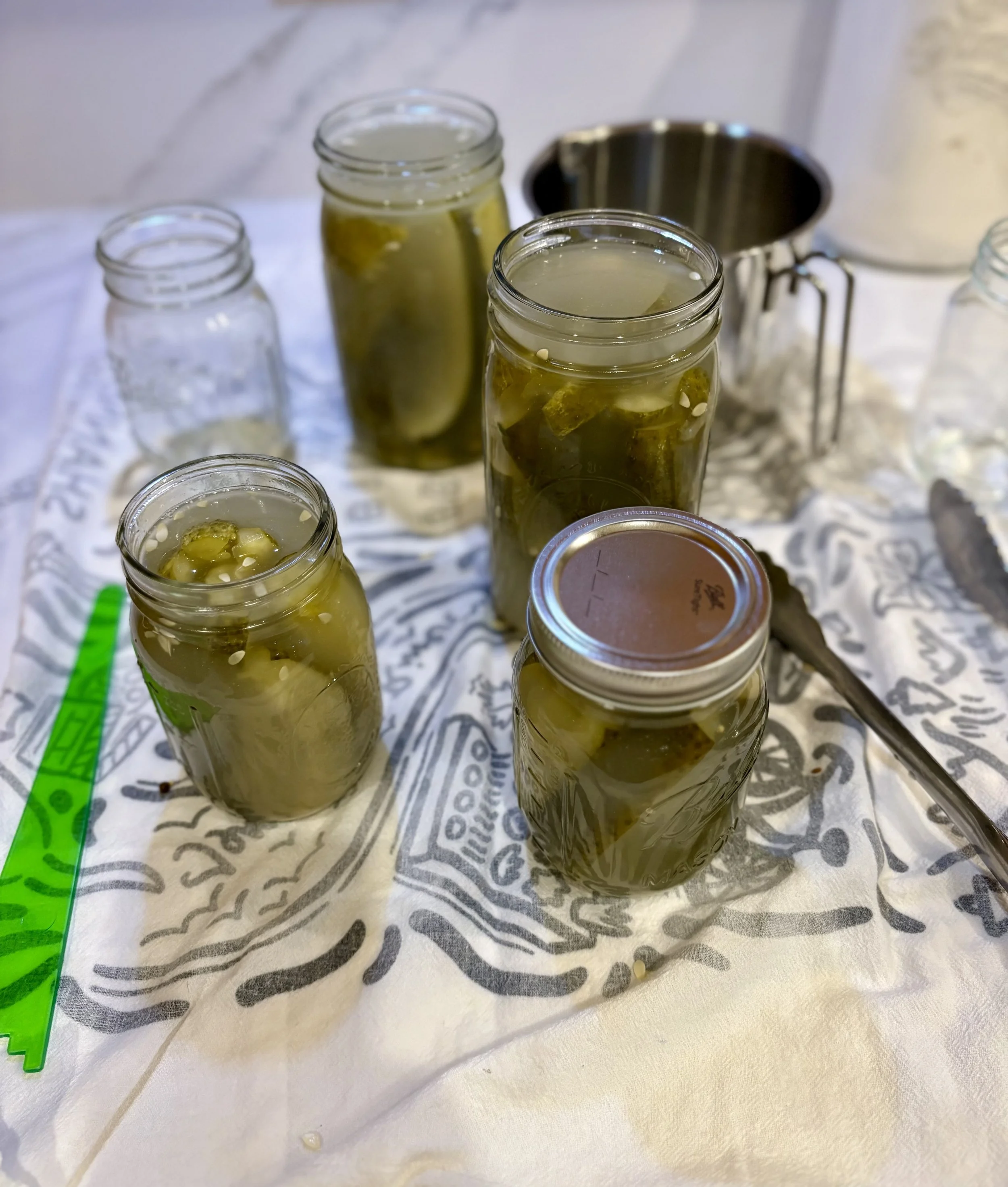
Fermented pickles in process — one of the simplest ways I began bringing making back into daily life.
Making things at home isn’t about proving anything. It’s about curiosity. It’s about noticing that something you use every week—bread, sour cream, yogurt, a jar of pickles—might actually be simpler than you were led to believe. It’s about trying, not because you have to, but because you want to see if you can. And when something works, it doesn’t feel like a performance. It feels like capability settling into your bones.
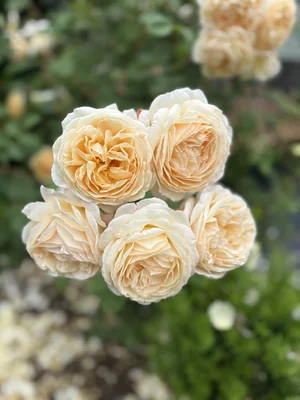
Over time, those small acts start to change how a home functions. Food begins to move through it differently. Flowers from the garden don’t feel precious or fragile—they feel meant to be cut and brought inside. A jar of something you preserved becomes a gift instead of an afterthought. A loaf of bread on the counter carries the memory of effort, learning, and repetition.
Making also has a funny way of pulling people together. When you give someone something you grew or made, it opens a door. Often they want to share something back—something they know how to do, something they’ve made, something they’ve learned. I’ve felt that most clearly with seedlings. Passing along a plant you started from seed isn’t just practical; it’s an invitation. It says, this can be part of your life too.
And that’s where the shift really happens.
A home where things are made—even in small ways—feels different. You notice waste more. You respect labor more, including your own. You become more patient with process, with imperfection, with the fact that learning takes time. You stop seeing convenience as the highest value and start seeing steadiness, usefulness, and care as something worth cultivating.
So yes, I believe in self-reliance—but not as a closed loop. I believe in caring for yourself while staying connected. In learning skills that enrich your days without pretending you can—or should—do everything alone. Making things doesn’t shrink your world. It expands it. It changes how you live in a home because it reminds you that you’re part of something larger: a network of people, practices, and shared knowledge that has always been how humans make life work.