
Making Sour Cream (and Reclaiming the Ordinary)
I was standing in the grocery store, getting ready to buy ricotta cheese to make an eggplant dish for my niece who was visiting. As I picked up the container, I noticed something printed right on the lid: three ingredients.
Three.
I remember thinking, There’s no way. Ricotta feels like one of those things that must be complicated — something you buy, not something you make. But I took it home anyway, looked it up, and nearly fell over at how simple the process actually is.
That moment set off a chain reaction.
If ricotta only has three ingredients, I wondered, then how do you make sour cream? And if you can make sour cream… what about butter?
Because here’s the thing: to make sour cream, you need cream and buttermilk. And suddenly I found myself asking, Wait — can you make buttermilk? Or is that another thing I’ve been conditioned to buy?
Turns out, yes. You can make it. You just make butter.
I know — everyone has that elementary school memory of shaking cream in a jar until it turns into butter. My daughter told me all about it when she did it in class. But as adults, we don’t tend to revisit those ideas. We don’t ask ourselves, Could this actually be easy for me to do now?
I grew up in the 1970s, when we were well past the post-war food shift of the 1950s — the era that taught us food should be instant, packaged, and convenient. Microwaves arrived. Grocery stores grew bigger and less specialized. We moved away from green grocers and butchers and toward everything-under-one-roof shopping. Gardening became optional. Making things at home became unnecessary.
So realizing that I could make sour cream — real sour cream — in my own kitchen, with almost no effort, felt oddly earth-shifting.
It wasn’t about rejecting the grocery store. It was about recognizing how many things I’d been led to believe were complicated or inaccessible, when they weren’t.
What followed was a quiet cascade: sour cream, butter, buttermilk, crème fraîche, ricotta, yogurt. (Ironically, yogurt came before sour cream — but that’s a story for another day.)
And while each of those has its own rhythm, sour cream remains the one that still surprises me most — because of how easy it is.
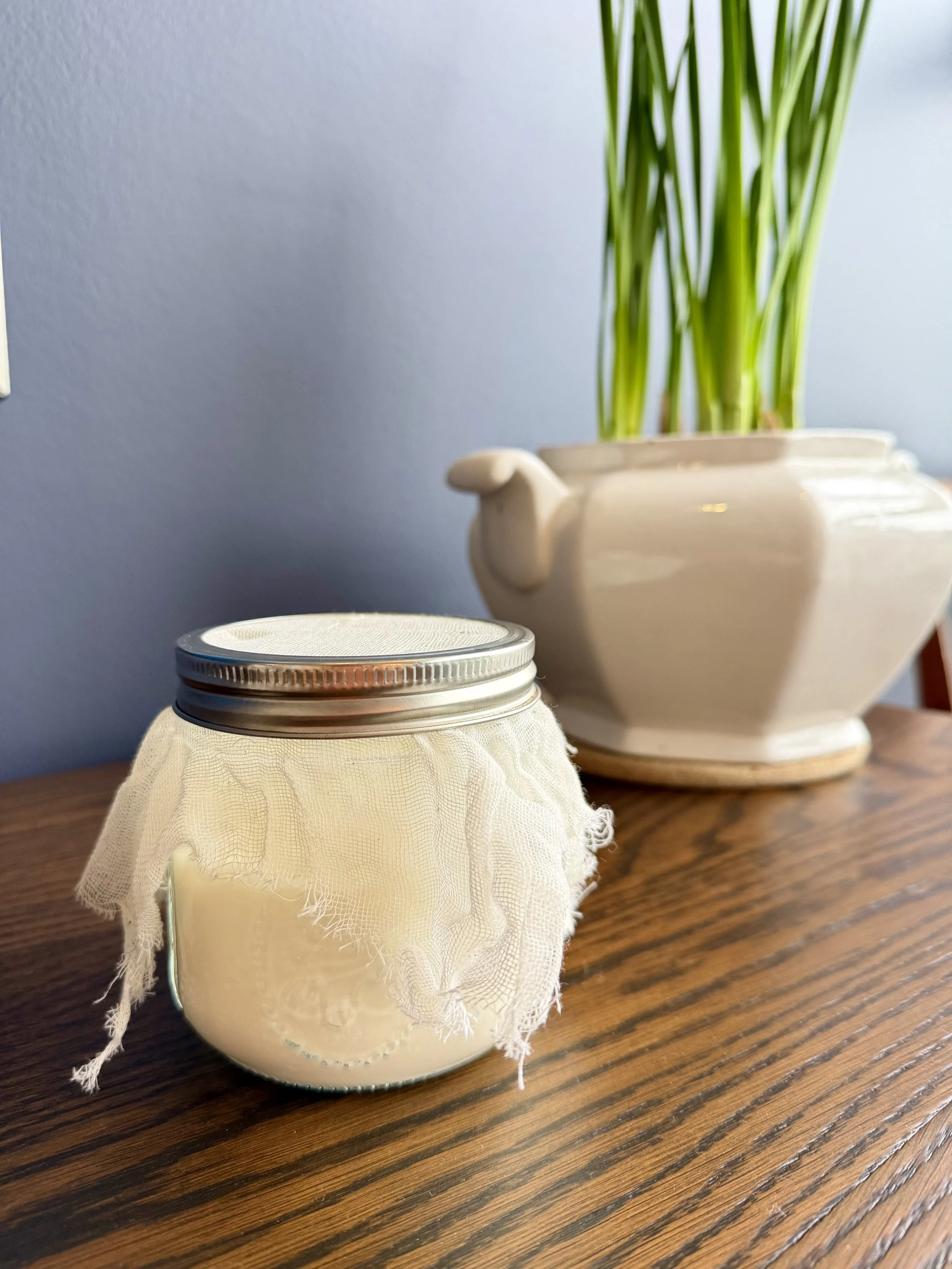
Homemade sour cream during the setting process
A Few Practical Notes (Because Fermentation Is Alive)
One thing I’ve learned about cultured foods — sourdough, yogurt, sour cream, cultured butter — is that temperature matters.
In warmer months, this is almost effortless. In winter, you just need to be a little more intentional.
Here’s what works for me:
Pour your cream into the jar you plan to use and let it sit on the counter for 30 minutes to an hour to come to room temperature.
If your kitchen runs cool (70°F or below), heat a mug of water in the microwave for two minutes.
Place the jar of cream (covered with cheesecloth and a banded lid) in the microwave with the warm mug.
Don’t turn the microwave on — just let it sit together for about an hour.While the cream warms, take your buttermilk out of the fridge so it isn’t cold.
Once everything is at room temperature:
Stir the cream and buttermilk together.
Cover.
Let it sit on the counter for 12–24 hours.
Shorter = thicker sour cream.
Longer = thinner, tangier crème fraîche.
Before refrigerating, I like to give it a gentle stir. Then let it chill and settle.
Each batch is a little different — thicker or thinner depending on your starter and temperature — and that’s part of the joy. It keeps for about a week, sometimes a little longer, but use your judgment.
And truly — the active time here is about two minutes.
You pour cream.
You add buttermilk.
You wait.
The next day, you have sour cream.
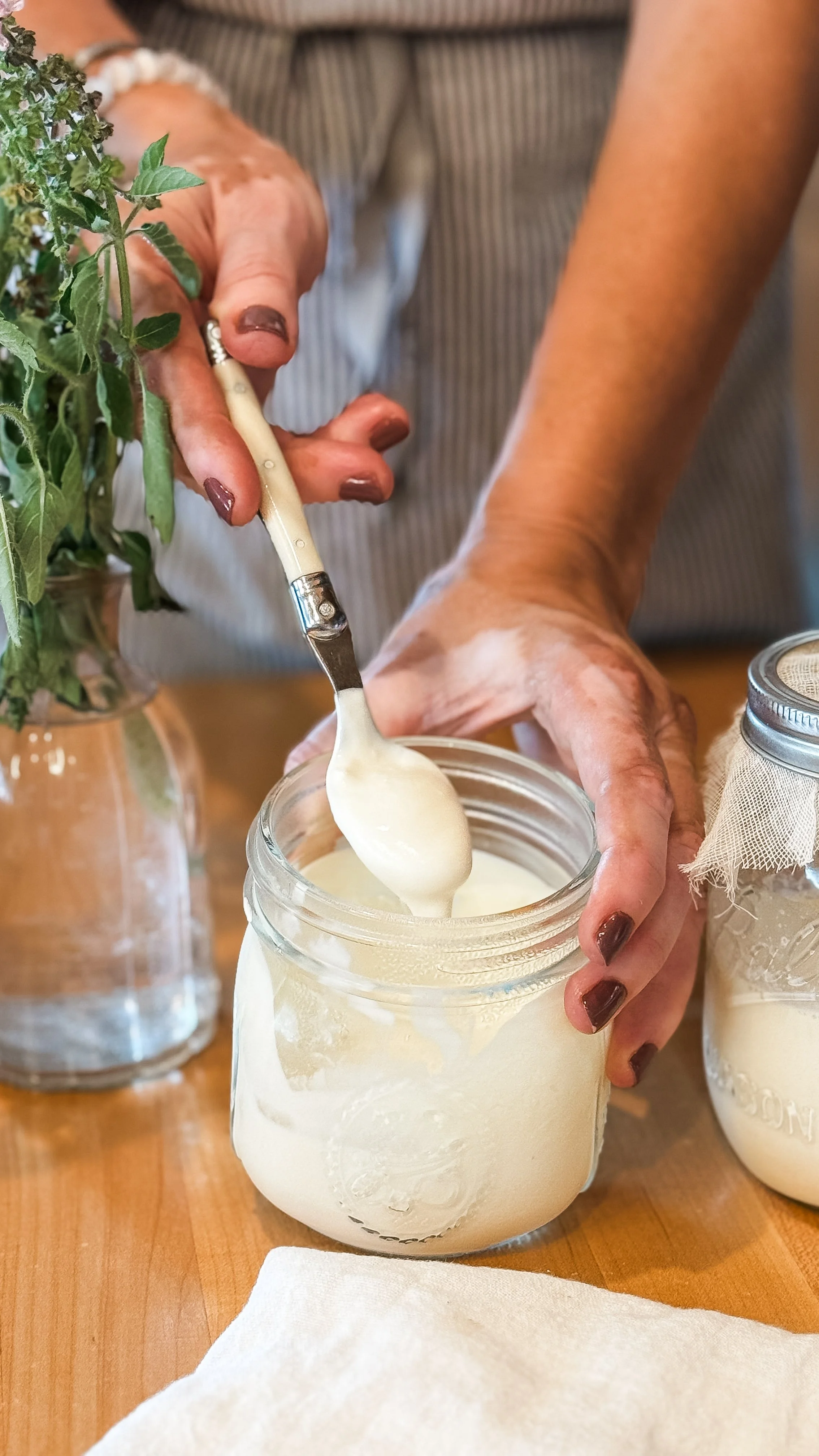
Finished homemade sourcream
Why This Matters (At Least to Me)
This isn’t about being precious or purist. I’m grateful for the commercial food industry — it has its place.
But there’s something deeply grounding about reclaiming the ability to make ordinary things. About realizing you don’t need ten varieties of sour cream on a shelf. About understanding that the quality of what you eat starts with the quality of what you choose to bring home — in this case, cream.
Buy the best cream you can. Or don’t. Either way, you get to decide.
You can make a small amount or a lot. Enough for a quiet week, or enough for a table full of friends and a bowl of ranch dip. You scale it to your life.
And in doing so, you step a little closer to ownership — of your food, your kitchen, and the quiet confidence that comes from knowing how to do something for yourself.
That, to me, is proper useful (and proper delicious).
Recipe
1 cup room temperature cream
1 tbsp buttermilk OR 2 tsp buttermilk + 1 tsp yogurt room temperature
Mix cream & buttermilk together
Rest on the counter for 12-24 hours
Refrigerate after it has set to your desired thickness (will thicken more in the fridge)
Good for 7 days
I use a small Ball jar with a metal screw lid and cheesecloth to cover the cream while “curing”. Replace the cheesecloth with a metal lid once it is done.