The Annual Seeds I Return to Every Year
There’s really no way for me to fully express how grateful I am for seeds.
Learning how to sow them — understanding their different needs, their timing, their quirks — has been one of the most grounding and fascinating parts of gardening for me. Seeds have a way of surprising you. They appear where you didn’t expect them. They thrive when conditions seem wrong. They quietly remind you that life wants to grow.
There are a handful of annuals I find myself returning to every single year, in nearly every garden I’ve ever had. They’re reliable without being boring, generous without being demanding, and each brings something essential to a garden that’s meant to feel lived-in rather than staged.
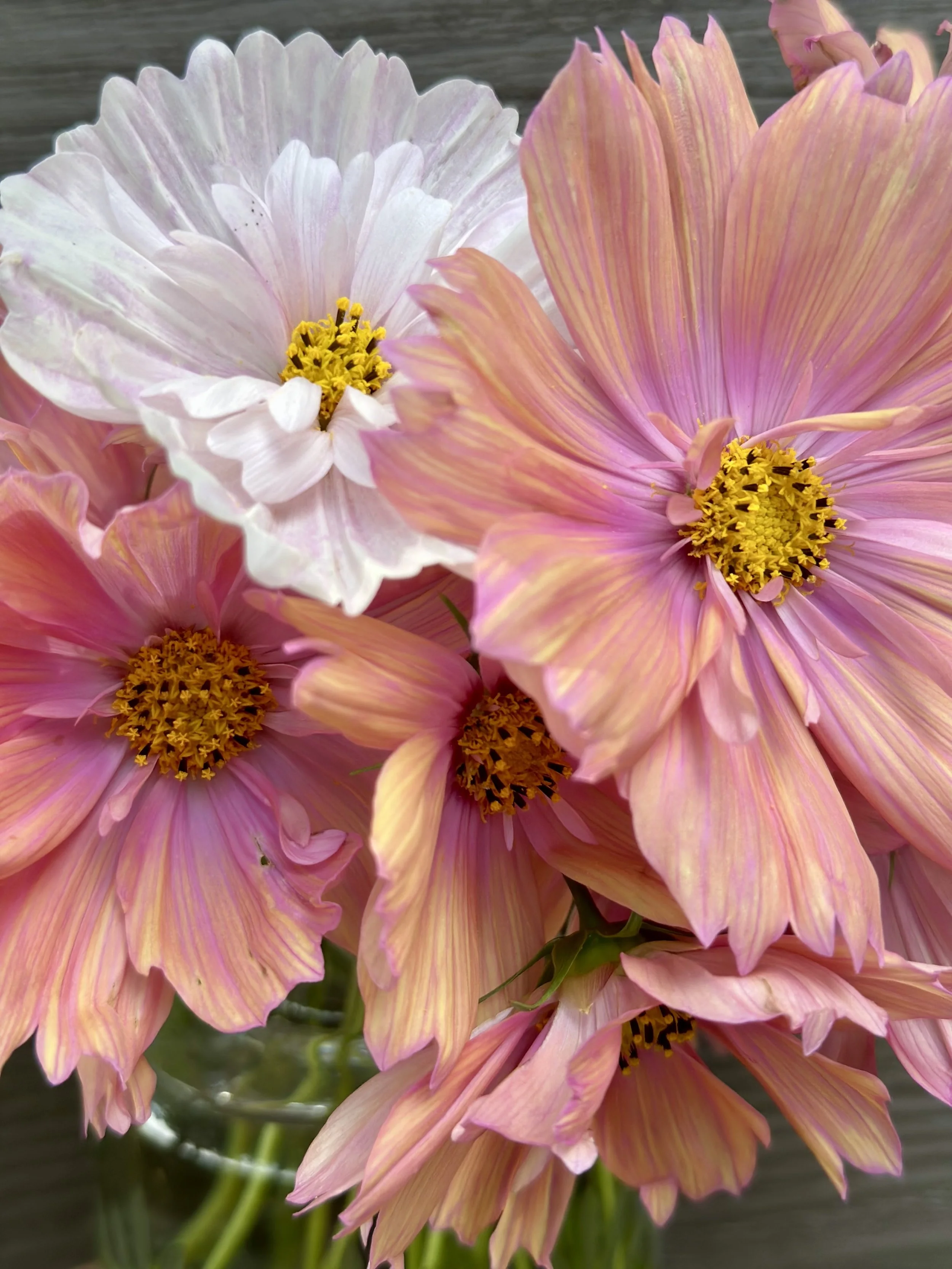
Cosmos apricotta
Cosmos
If you’ve never sown seeds before, cosmos are where I would start.
They’re incredibly forgiving. They germinate quickly, grow fast, and somehow manage to look delicate while being surprisingly tough. I’ve seen cosmos seedlings pushing through mulch in February, long before it seems reasonable for a heat-loving plant to exist.
I usually direct sow them once the soil is workable, but I’ve also started them indoors to get a head start. The key is not starting them too early — they grow fast and can become leggy if they don’t have enough light. Most varieties will take you by surprise with how tall and expansive they become. Give them room. They’ll reward you for it.
Zinnias
I can’t help myself — I will always plant zinnias.
They’re easy, generous bloomers with an astonishing range of forms and colors. One variety that completely stole my heart in 2025 was Queenie Red Lime. The name doesn’t do it justice. It’s not red. It’s not lime. It’s a burnished, muted mauve with the faintest green edge — subtle, complex, and quietly beautiful.
Zinnias are perfect for direct sowing, but I often start them in 72-cell trays so they can bulk up before planting. They appreciate good airflow and may need support as they grow taller, but they’re otherwise unfussy. They self-seed just enough to feel like a gift, not a problem.
Poppies
Poppies feel almost unreal.
They’re delicate, ethereal, and somehow tough enough to handle cold sowing and less-than-perfect conditions. I’ve grown many kinds — California poppies, breadseed poppies, and everything in between — and I love them all.
They prefer to be sown where they’ll grow, either in fall or late winter. When they emerge, it feels a little magical every time. They’re fleeting, yes, but that’s part of their charm.
Nigella
Nigella is one of my favorite quiet performers.
It’s easy to sow, self-seeds freely without becoming invasive, and works beautifully as a mid-level filler. Cosmos and zinnias bring height, but nigella weaves through a planting in a softer, more natural way. It fits just as comfortably in a cottage garden as it does in something more structured.
And the seed pods — those alone are worth growing it for.
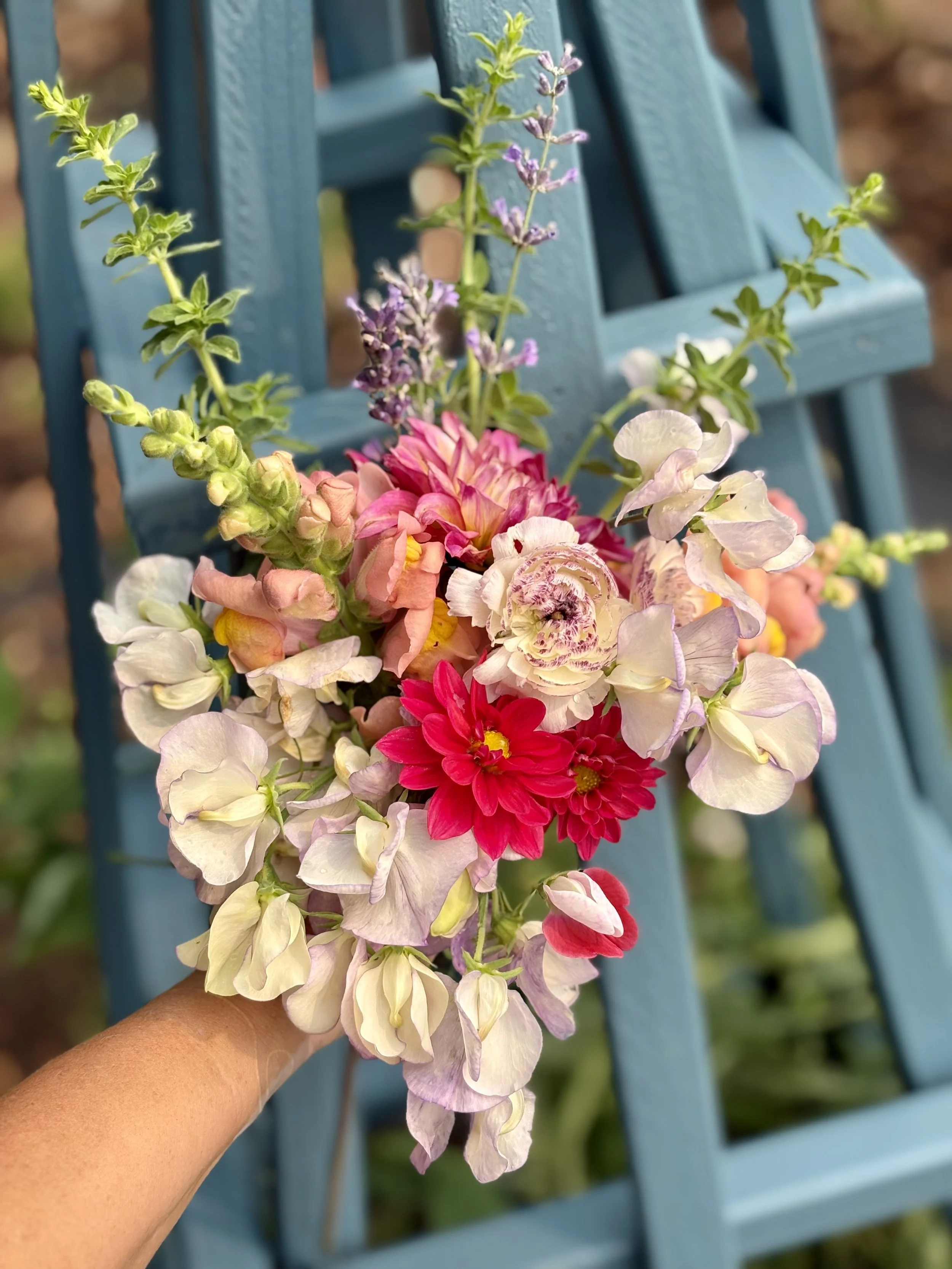
Mixed floral arrangement: sweetpeas, snapdragons, dahlia, ranunculus, lavender
Snapdragons
Snapdragons require a bit of commitment, but they’re worth it.
Forget the ones you see at the garden center. There are extraordinary varieties out there, with nuanced colors and different blooming classes — early, mid, and late season. With a little support, they’ll stand tall, but they’re just as happy to sprawl and find their own way.
I’ve had snapdragons started from seed in fall that were still alive and green well over a year later. They’re tougher than they look and incredibly rewarding.
Foxglove (A Necessary Addition)
Foxglove isn’t technically an annual — it’s a hardy biennial — but I think about it the same way because I sow it every year without fail.
The seeds are tiny, but easy to start. They self-seed just enough to feel generous, and they can be moved and edited as needed. Foxglove brings height, rhythm, and a sense of romance to a garden that I simply wouldn’t want to be without.
Foxglove absolutely deserves its own post — and it will get one.