The Courtyard Garden, Phase One: Clearing, Removing, and Beginning
The courtyard was the first place I chose to work.
From the moment we moved to Hilltop, it was impossible to ignore. You can see it from multiple vantage points inside the house — from the upper level looking down toward the koi pond, and again from the lower level where you can step directly into it. It already had a sense of enclosure and quiet magic, as if it were tucked into the house rather than simply attached to it.
Technically, it was a beautiful space. There was a koi pond with moving water, brick walls, and a feeling of privacy that made it feel special. But it wasn’t a place you entered. It was a place you looked at. You could admire it from a distance, but it didn’t invite you to sit, wander, or linger.
I knew almost immediately that I wanted this space to become a white garden.
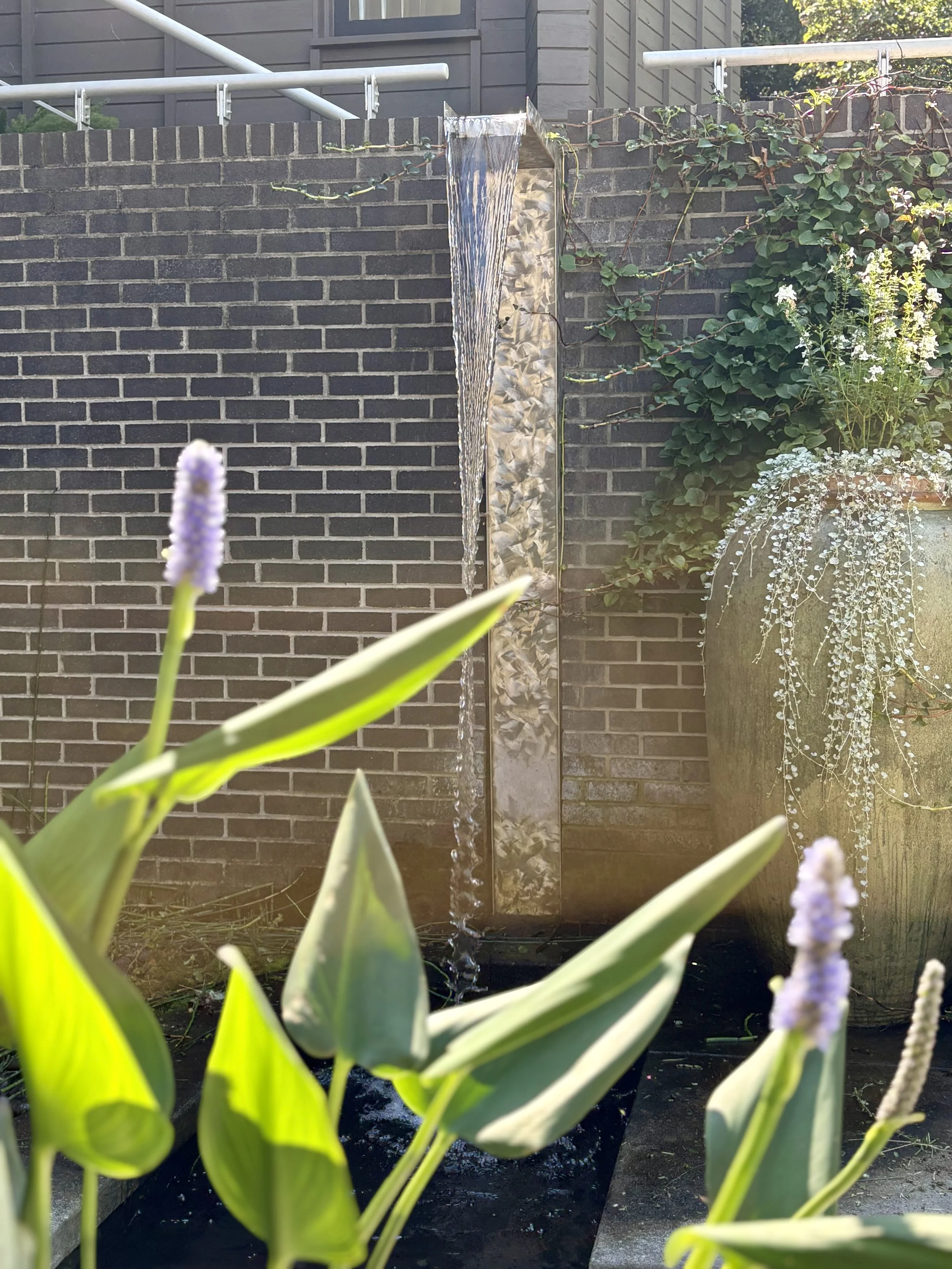
The waterfall filling the Koi pond at Hilltop
I believe deeply in living with spaces before making big decisions, but this was one place where my vision was clear from the beginning. The planting that was there — installed by a commercial landscaping company years earlier — wasn’t wrong, exactly, but it lacked intention and personality. It didn’t align with how I wanted to live in or experience the garden. And because the courtyard is so visible from inside the house, it felt important to begin here.
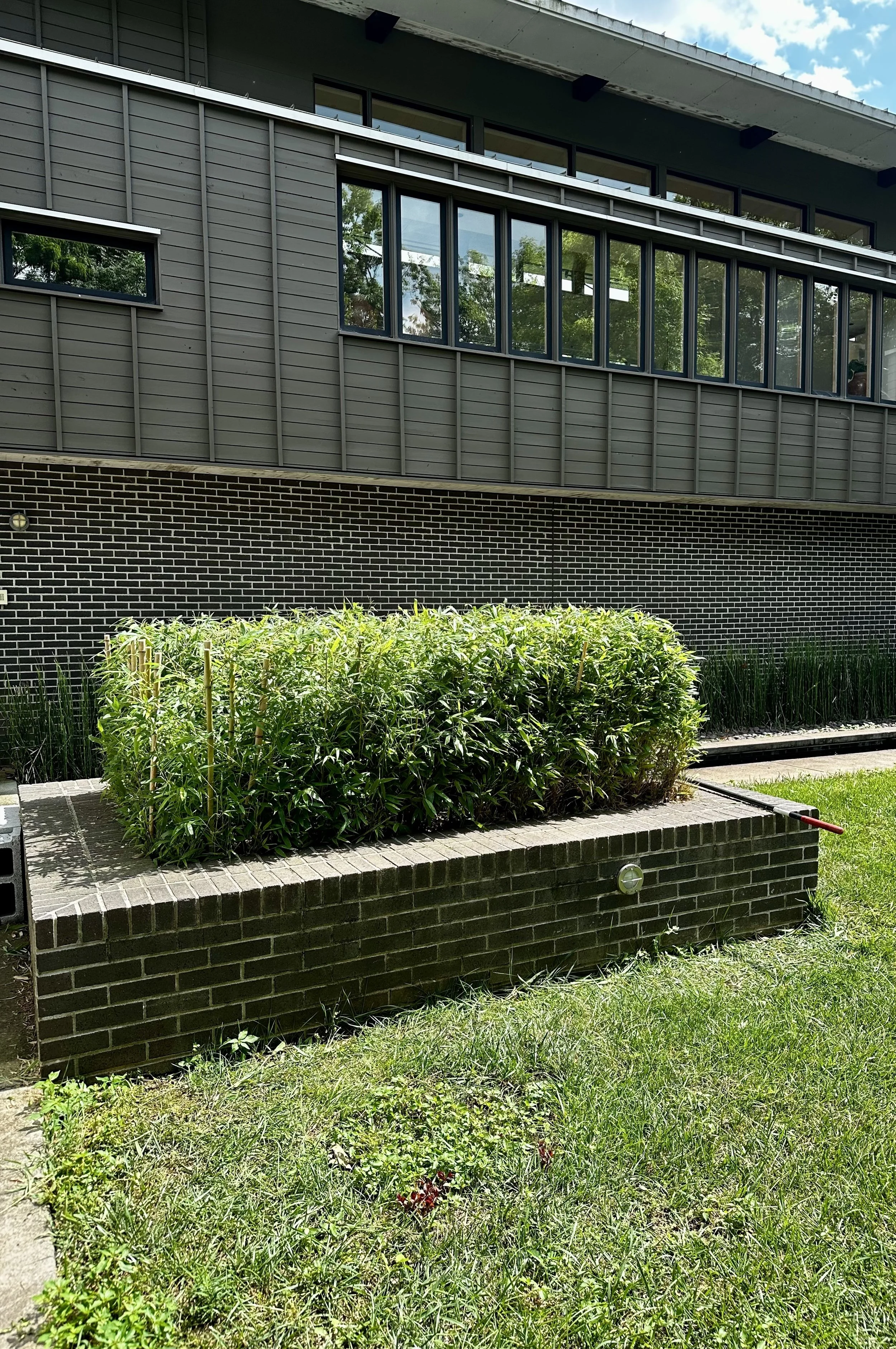
The courtyard is anchored by the koi pond and waterfall, which provide sound and a sense of calm. Along one side, a large custom brick planter had been built, and clumping bamboo had been planted there. Because it was clumping bamboo, I wasn’t immediately concerned about it spreading, but it had grown tall — nearly to the second story of the house. One of the first things we did was trim it back so it wouldn’t interfere with the sightline from the front door and upper level. I wanted to preserve the movement and texture of the bamboo without it overwhelming the space or obstructing views.
The main planting bed in the courtyard was surprisingly sparse. It held a mix of blue, yellow, and white flag iris — beautiful plants — along with a peach-colored daylily. There was also a climbing hydrangea on one wall, and above it, a metal structure that ran along a set of steps leading to another part of the yard, though nothing was climbing it at the time. A five-foot brick wall was topped with a mature run of boxwood, which I wanted to keep.
Along the house itself, where brick transitions to wood, the space felt especially heavy. There was a dense mix of overgrown nandina, viburnum, and other shrubs whose names I no longer remember. They crowded the area visually and physically, and the planting blurred into another part of the yard. Once we moved in, we also needed to install a black aluminum fence to keep our dog contained, which made it clear that this area needed to be rethought entirely.
The first real step was removal.
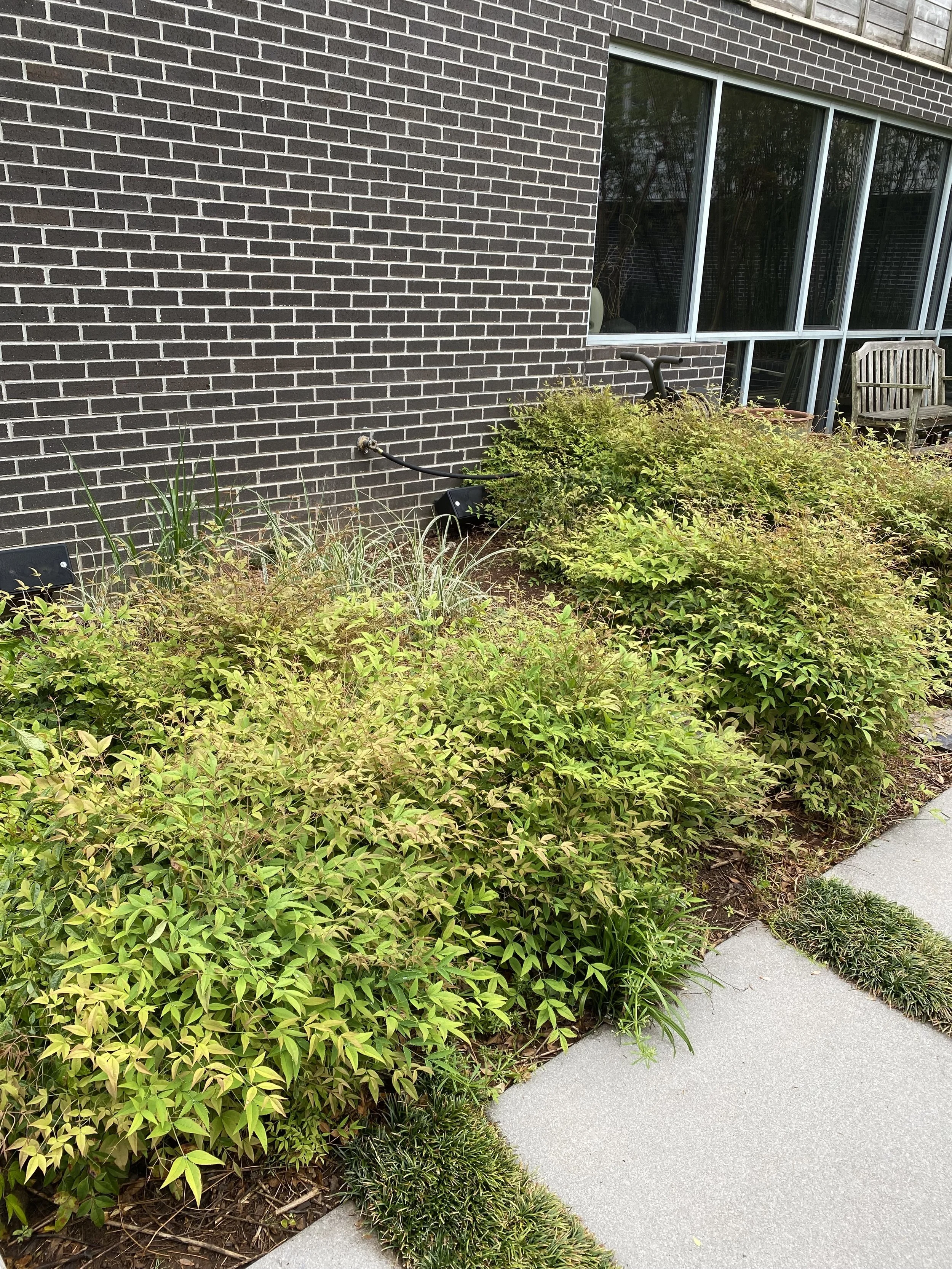
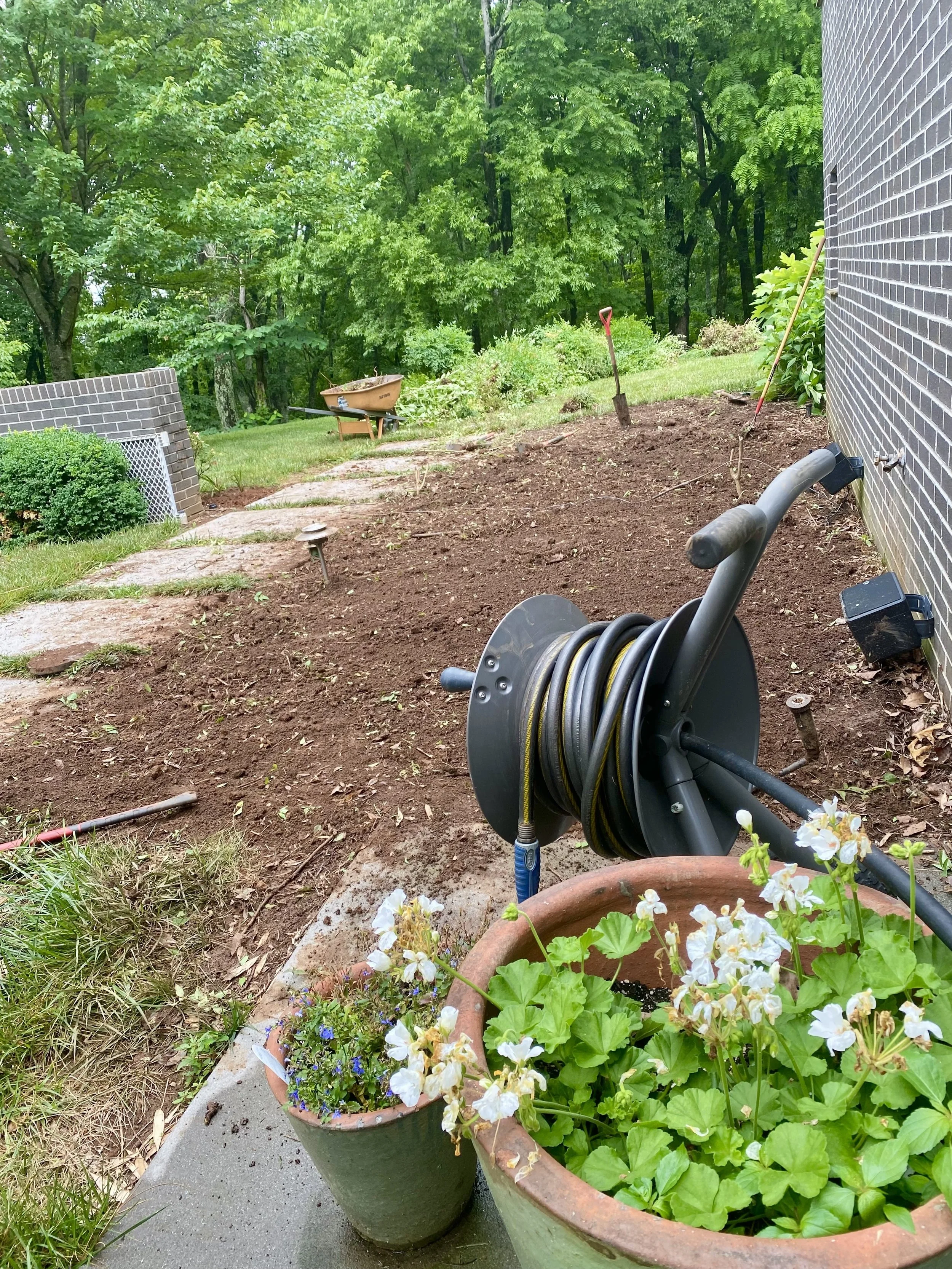
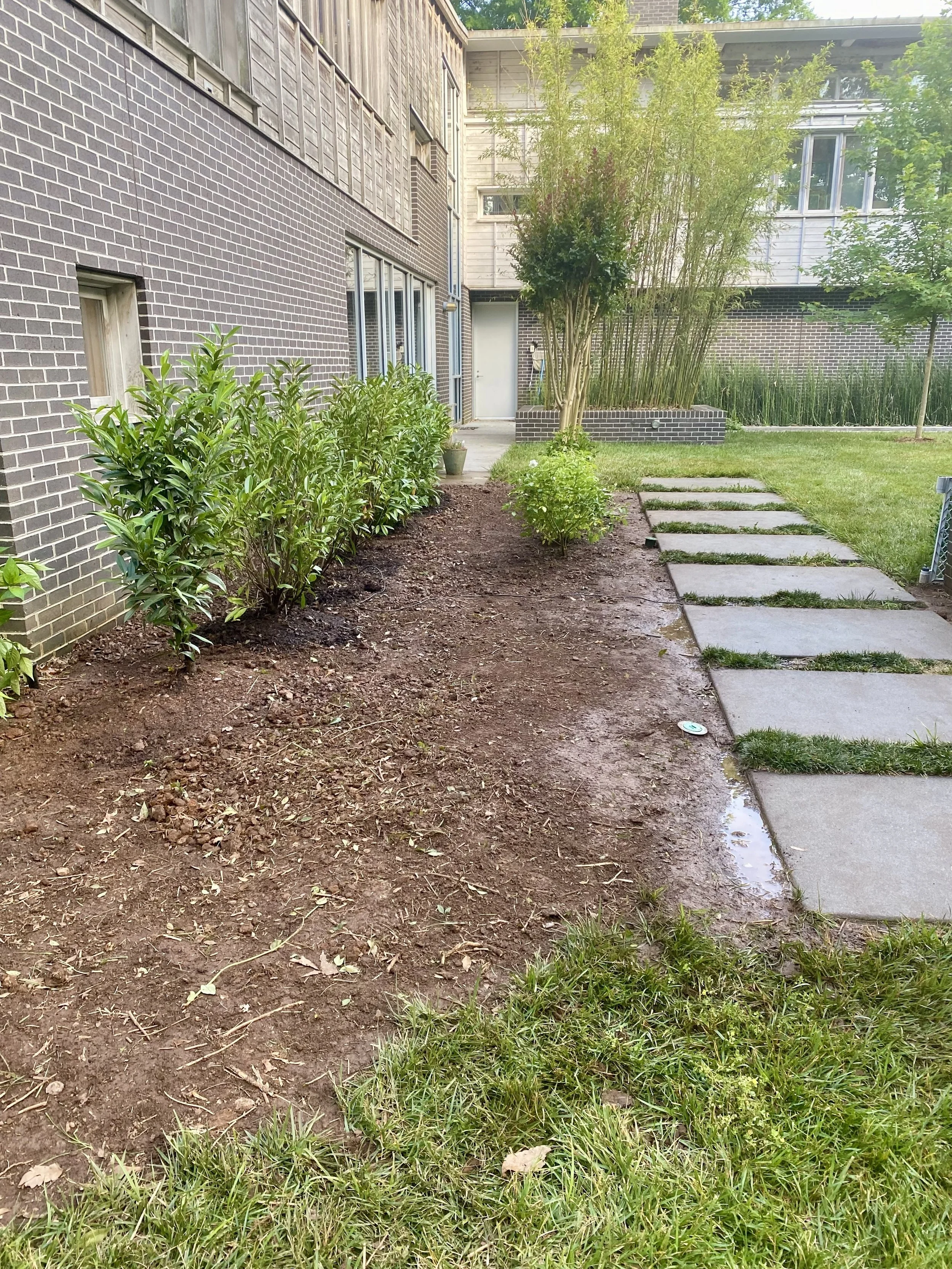
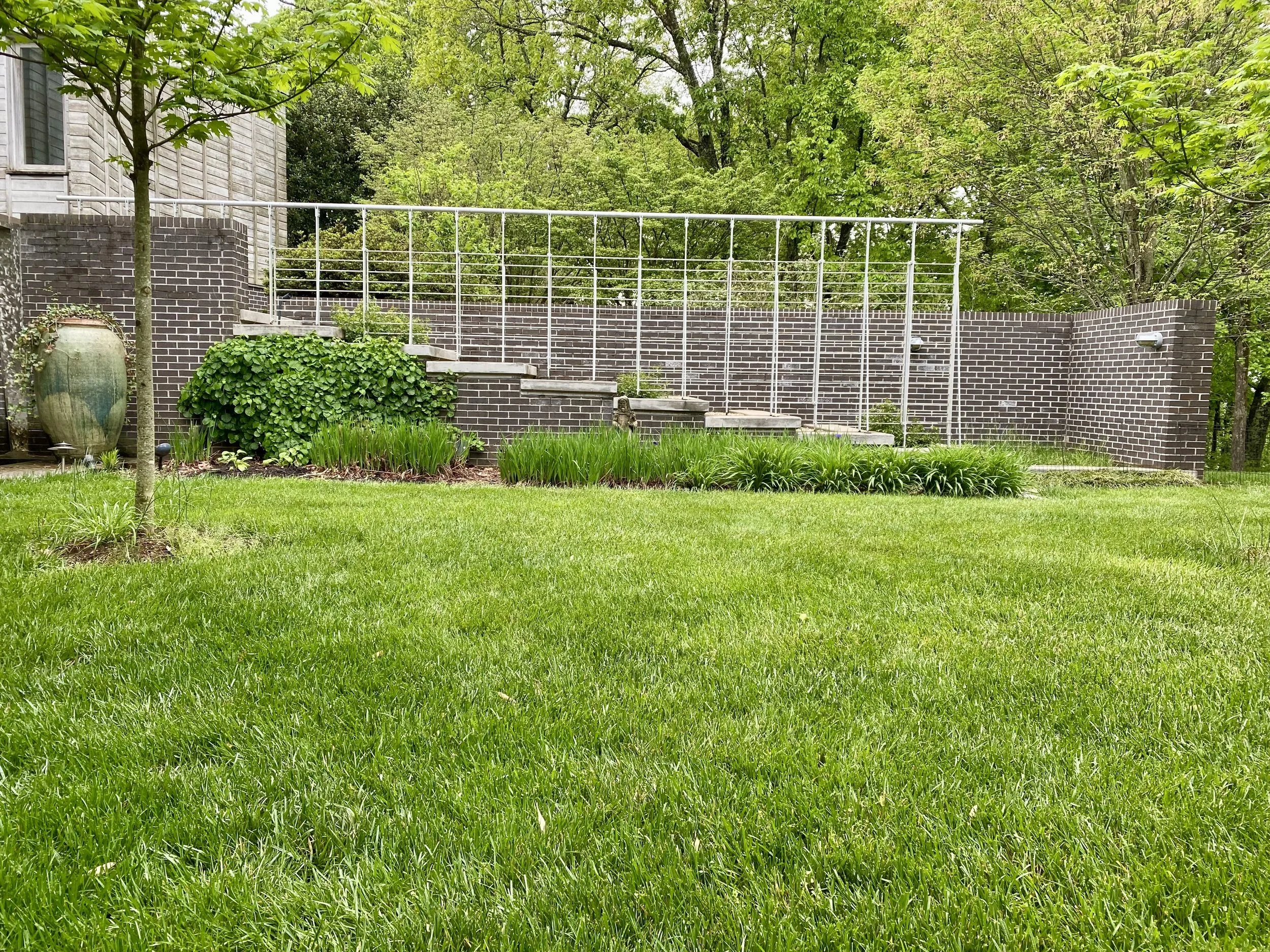
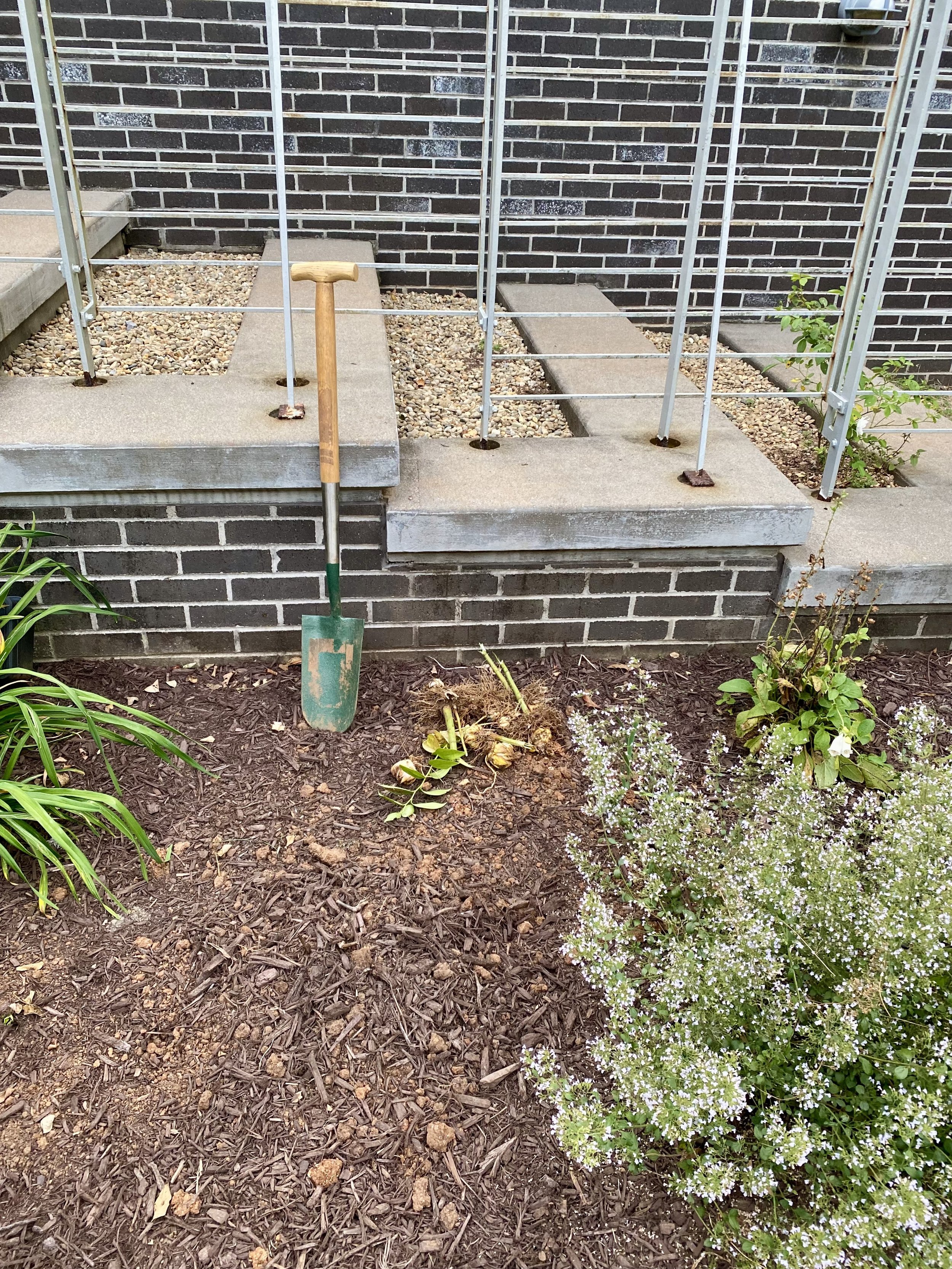
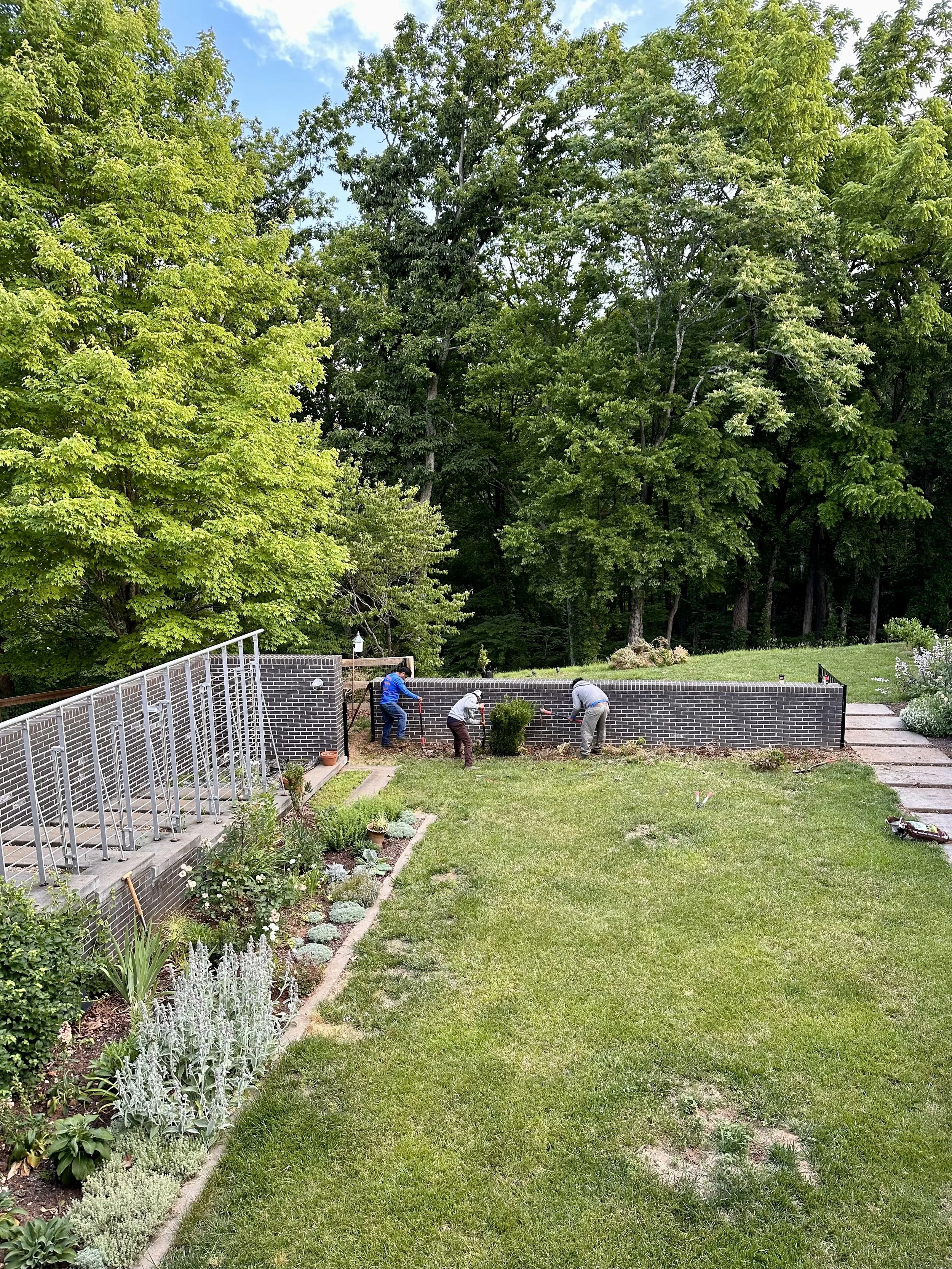
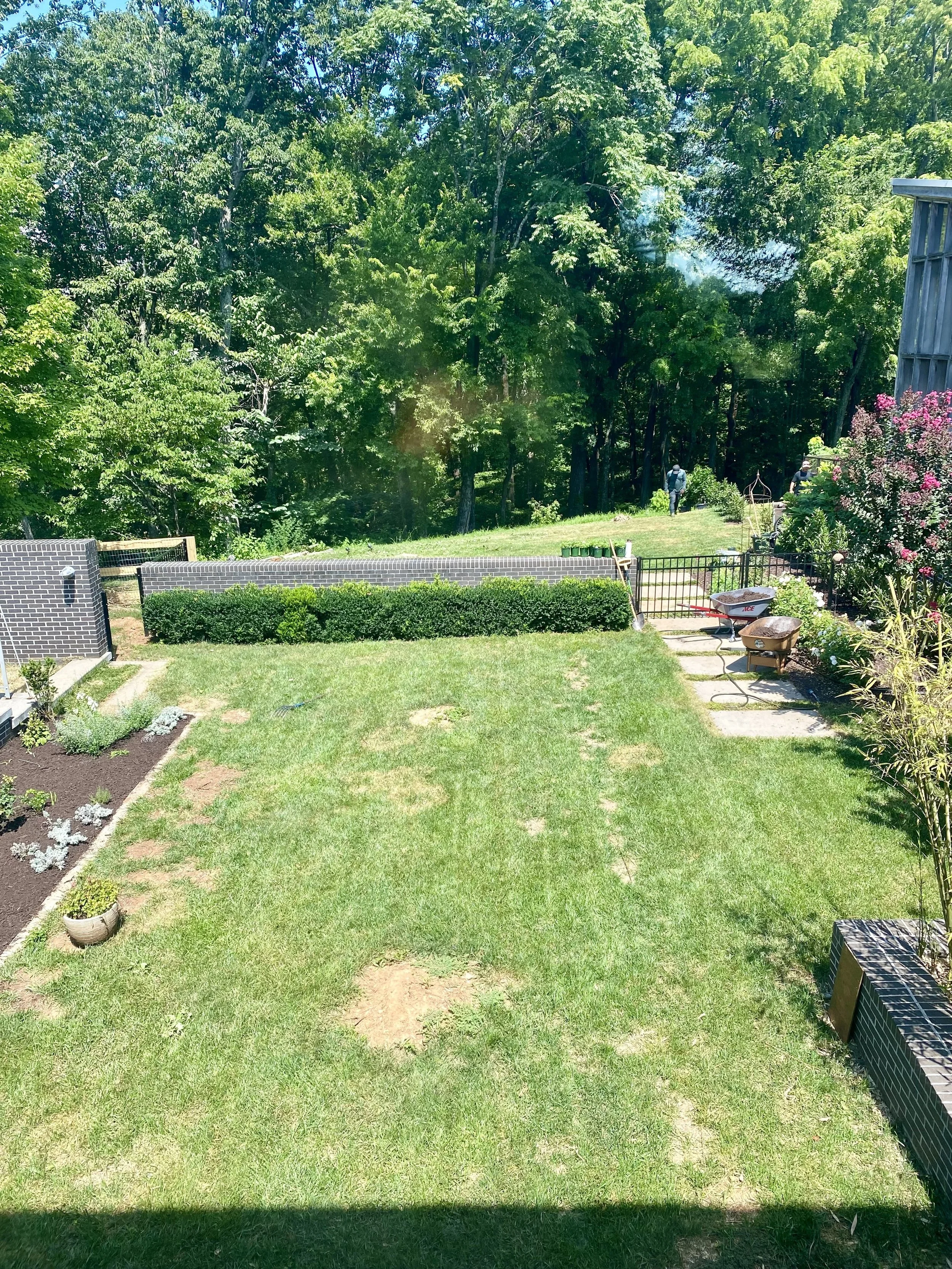
I hired a landscaper I’d worked with before to help remove the large, established shrubs — especially the nandina, which is notoriously difficult to dig out by hand. While his crew handled the heavy work, I focused on carefully lifting and relocating the iris and daylilies to other parts of the property where they could continue to grow and be enjoyed.
The main bed — roughly twenty feet long and six feet deep — was completely cleared. The grass in the center of the courtyard was left intact for the time being. The bamboo was trimmed back. The overgrown shrubs came out. Suddenly, the courtyard felt open and breathable, even before anything new was planted.
At this early stage, availability was limited. It wasn’t the right season to find many of the plants I had in mind, but I didn’t want to wait entirely. One of the first things I always do when moving into a new home is find a place for herbs. They’re among the most expensive items at the grocery store, yet some of the easiest and most rewarding plants to grow. I began by planting silver thyme, grounding the space with something practical and fragrant.
I also tucked an ostrich fern into a quieter corner at the back of the bed, where I knew it wouldn’t receive too much light. I wasn’t worried about how large it might get — if it thrived, it would add softness and movement. If not, I would learn something. That, at this stage, was enough.
This first phase wasn’t about completion. It was about making room — physically and mentally — for what the courtyard could become.
As the clearing finished, the courtyard finally felt ready to receive plants.
In the main bed, I began bringing pieces of my old garden with me — plants that already held memory and familiarity. I transplanted lamb’s ear from my previous home, knowing its softness and silvery tone would work beautifully in a restrained palette. I planted a rose called Emily Brontë, who would later be moved once it became clear she wasn’t happy in that position, but at the time she felt right for the space. I also tucked in a white iris I had brought with me — a variety whose name I’ve lost, but whose form and color felt essential.
I added catmint for its softness and movement, and over the winter I planted bulbs: tulips, anemones, and alliums. Those early bulb choices helped bridge the seasons and gave the space a sense of anticipation — something quietly building beneath the surface.
Across the courtyard, where the nandina had once crowded the wall, I planted a row of cherry laurel that ran the full length of the brick and continued beyond the black gate. I wanted a line of continuity — something that visually tied the courtyard together and softened the weight of all that brick. In front of the laurel, following advice from a California rose grower, I planted a hedge of white ‘Iceberg’ roses, and layered white salvia at their feet.
The Icebergs, as it turns out, would cause me a bit of grief later on — but the concept itself still holds. That rhythm of structure, repetition, and softness remains central to how the space is evolving.
Beyond the gate, I loosened the rules slightly. I wasn’t as concerned with maintaining a strictly white palette in that section during the first year. I planted ‘Husker Red’ penstemon, more white salvia, transplanted white peonies from elsewhere on the property, and added Lady of Shalott climbing rose to an obelisk. That area will have its own story later — for now, it was enough to give it intention and direction.
By the spring of 2023, something had shifted.
The courtyard was no longer just a space you looked at. It had begun to feel like a garden — imperfect, young, and still finding itself, but undeniably alive. There was structure. There was scent. There were moments of pause and promise.
In the first year, color crept in — a peach daylily I hadn’t noticed, a few purple irises that resurfaced, foxglove that bloomed pink before I had fully committed. That first season became an act of editing as much as planting, and over time the palette settled into the white garden it is now.
Phase One wasn’t about polish or completion. It was about clearing, choosing, and committing — making room for a vision that would take years to fully unfold. By May of 2023, the courtyard had crossed an important threshold. It had become a place with momentum, and that made all the difference.