Giant Bellflower

$4.00

Campanula latifolia var. macrantha ‘Alba’

PRE-ORDER: Ships approximately mid-March 2026

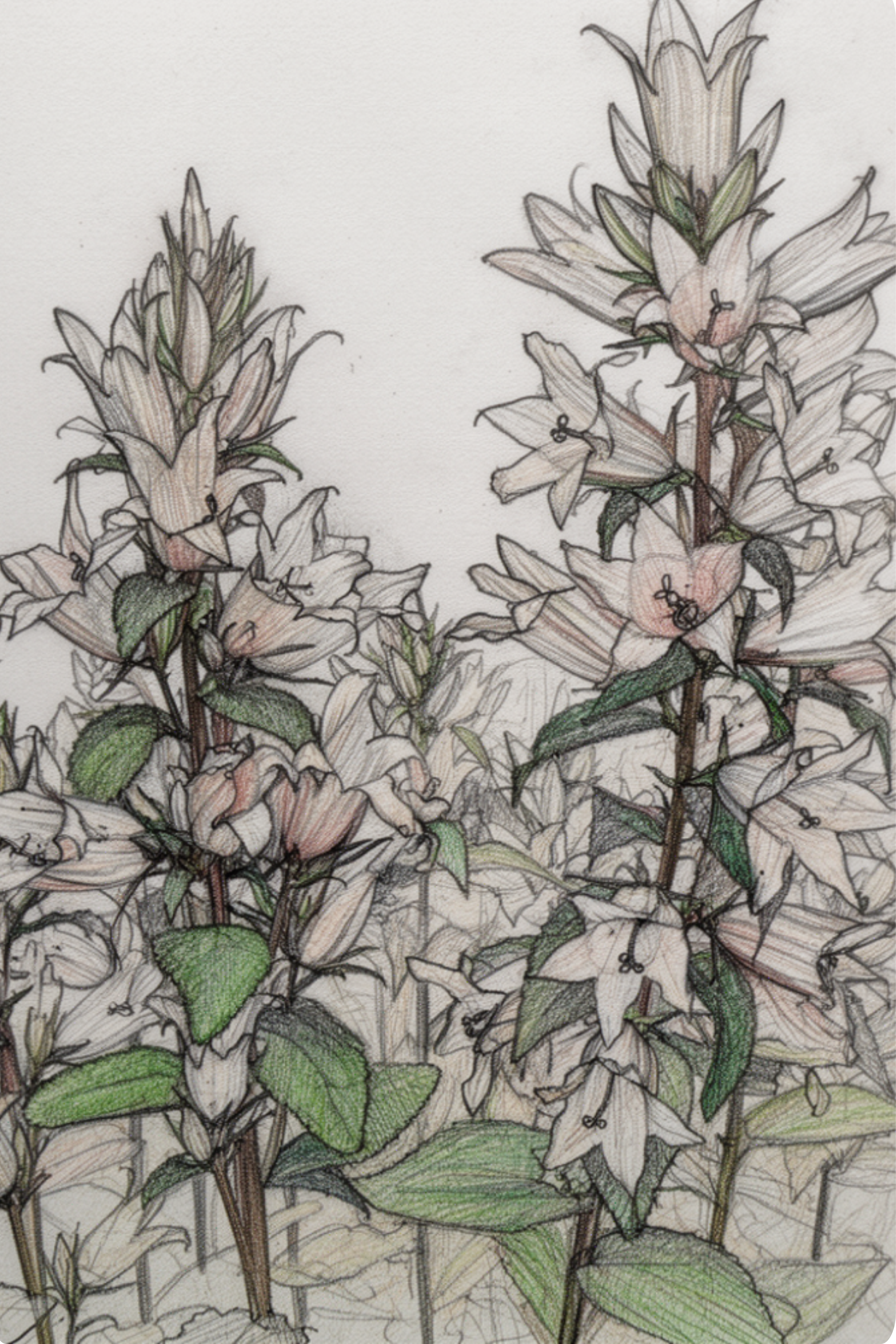
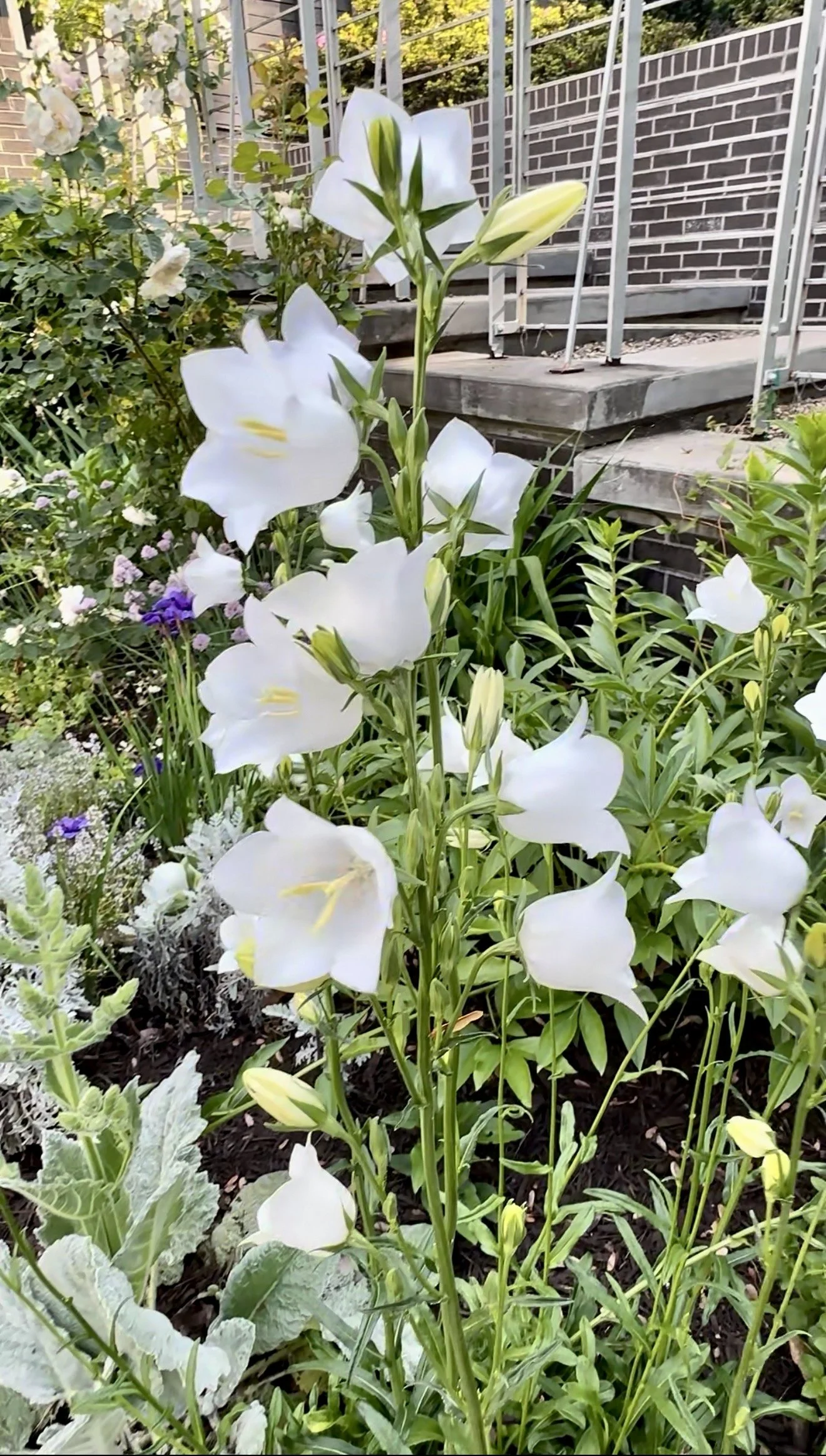
Campanula latifolia var. macrantha ‘Alba’ is a stately, long-lived perennial valued for its tall, upright stems lined with large, pure white bell-shaped flowers. Native to Europe and long established in traditional borders, it brings structure, height, and quiet drama to early summer gardens.

Broad, deep green foliage forms a substantial base, supporting strong flowering spikes that reach 3–4 feet tall. The generous white bells open along the stems and are especially striking against dark shrubs, woodland edges, and shaded borders. In evening light, the flowers seem to glow, making this an excellent choice for moon gardens and reflective planting schemes.

This campanula thrives in moist, fertile soils and benefits from some afternoon shade in warmer regions. Where well sited, it will gently self-sow, producing decorative round seedpods that add interest beyond bloom. The sturdy stems are well suited for cutting, offering a refined yet architectural element in garden-style bouquets.

Seeds will gather in your Trug until you’re ready to check out.

Campanula latifolia var. macrantha ‘Alba’

PRE-ORDER: Ships approximately mid-March 2026

Campanula latifolia var. macrantha ‘Alba’ is a stately, long-lived perennial valued for its tall, upright stems lined with large, pure white bell-shaped flowers. Native to Europe and long established in traditional borders, it brings structure, height, and quiet drama to early summer gardens.

Broad, deep green foliage forms a substantial base, supporting strong flowering spikes that reach 3–4 feet tall. The generous white bells open along the stems and are especially striking against dark shrubs, woodland edges, and shaded borders. In evening light, the flowers seem to glow, making this an excellent choice for moon gardens and reflective planting schemes.

This campanula thrives in moist, fertile soils and benefits from some afternoon shade in warmer regions. Where well sited, it will gently self-sow, producing decorative round seedpods that add interest beyond bloom. The sturdy stems are well suited for cutting, offering a refined yet architectural element in garden-style bouquets.

Seeds will gather in your Trug until you’re ready to check out.

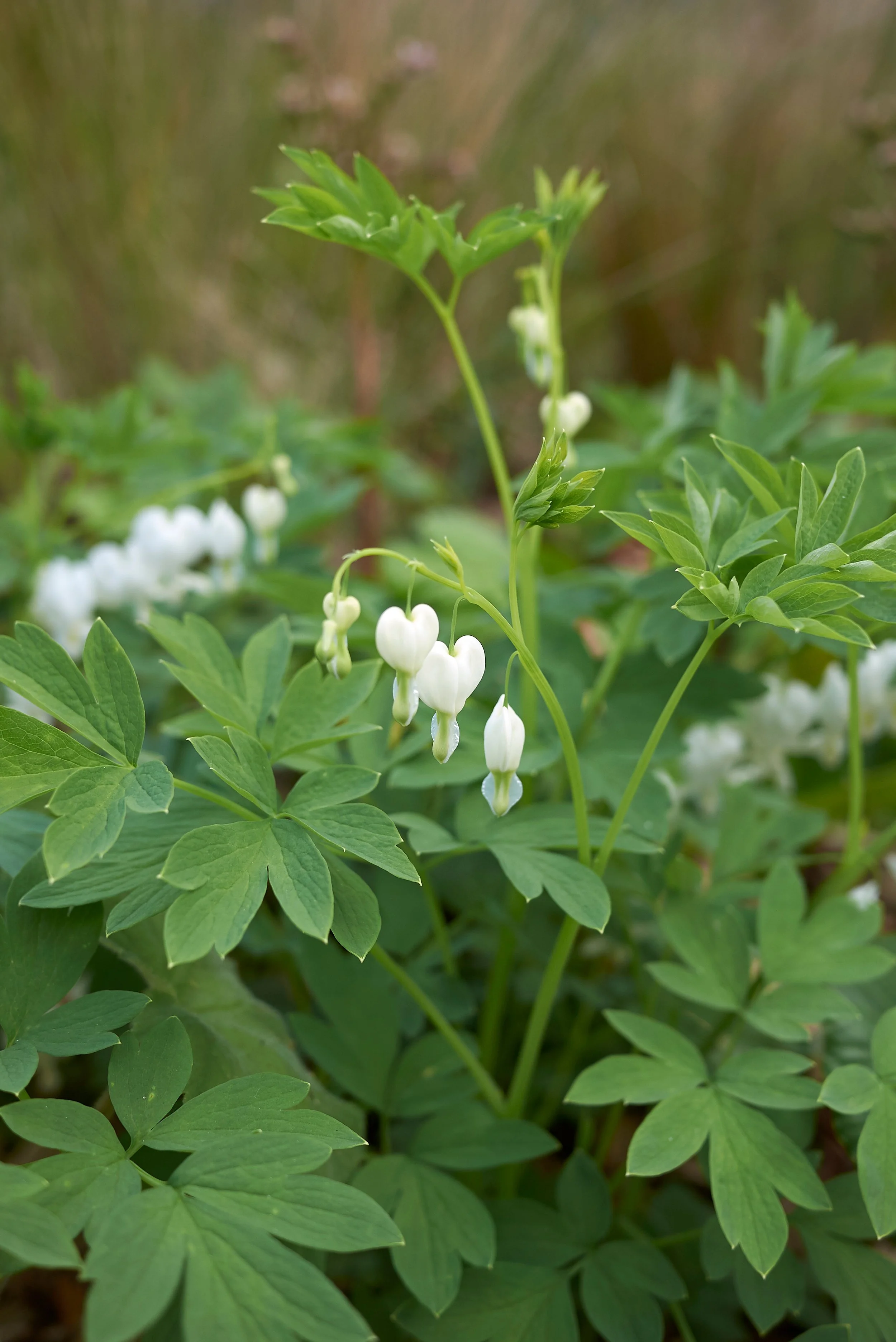
Dicentra Spectabilis 'Alba' Dicentra Spectabilis 'Alba' Dicentra Spectabilis 'Alba'
Bundle Size:
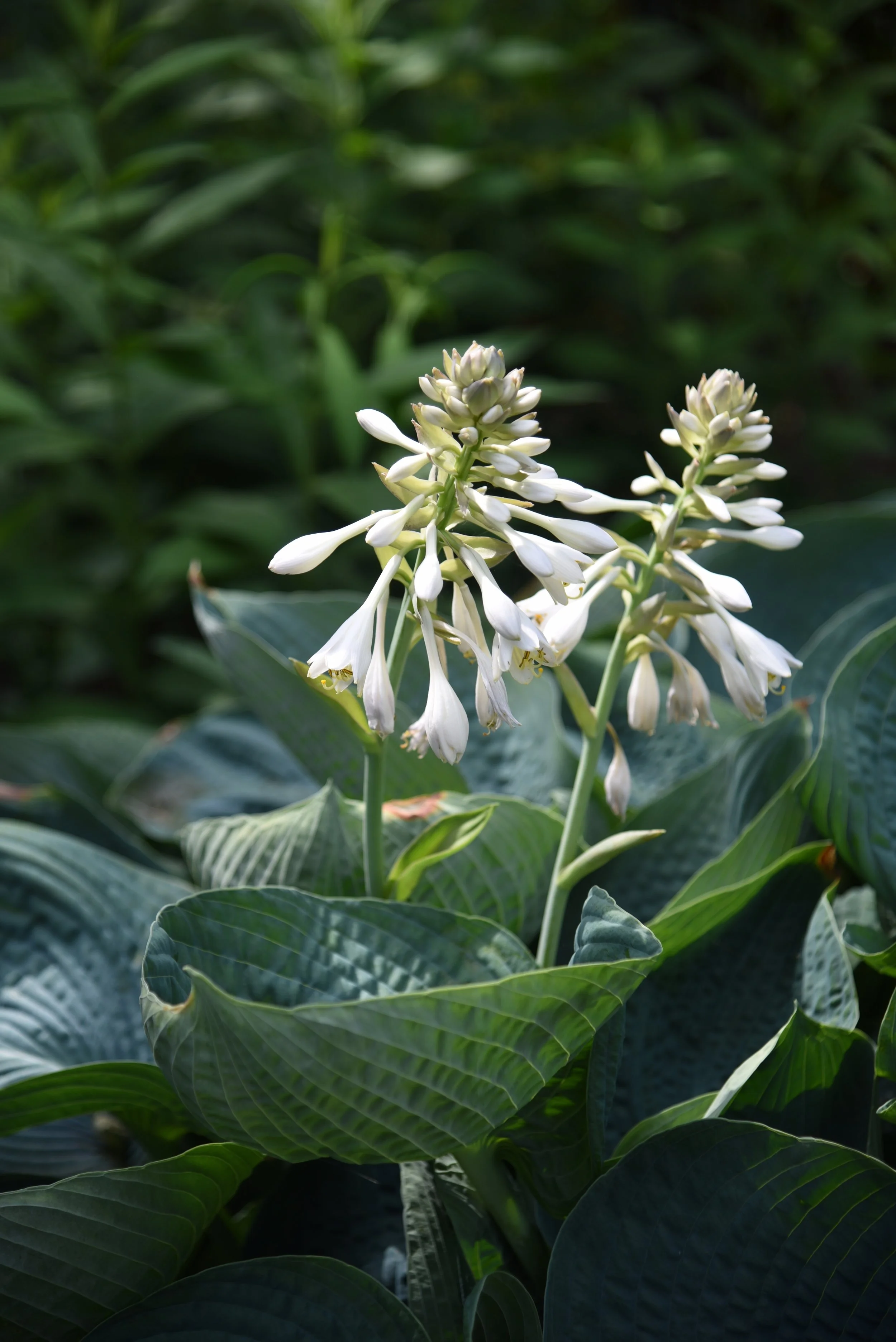
Hosta ‘Abiqua Drinking Gourd’ Hosta ‘Abiqua Drinking Gourd’ Hosta ‘Abiqua Drinking Gourd’ Hosta ‘Abiqua Drinking Gourd’
Bundle Size:

Product Details

  • Lifecycle: Perennial

  • Hardiness Zones: 4–8

  • Mature Size: 3–4 ft tall × 2 ft wide

  • Sun: Full sun to partial shade

  • Soil: Regular to rich, moist, well-drained

  • Bloom Season: Summer

  • Flower Color: Pure white

  • Approximate Seeds Per Packet: 150

USDA Hardiness Zones: 4–8 (perennial)

  • Reliably overwinters in Zones 4–8

  • Forms a durable clump that returns each spring

  • In warmer regions (Zone 8), afternoon shade and consistent moisture improve longevity

  • In colder climates (Zone 4), mulch lightly after the ground freezes to protect crowns

  • Prefers cool to moderate summer climates and performs best where soil remains evenly moist

Growing Guide

Sowing Depth:
Surface sow and gently press seed into the soil. Light is required for germination.

Germination Time:
14–21 days

Starting Indoors:
Sow in late winter into a fine germination mix and lightly cover with vermiculite. Maintain temperatures around 68°F. If germination does not occur within 3–4 weeks, provide cold stratification at 30–40°F for 2–4 weeks, then return to warmth.

Starting Outdoors:
Direct sow from spring through midsummer in a nursery bed for transplanting the following spring. Thin seedlings to 6–8 inches apart once true leaves appear.

When to Set Outside:
Transplant in spring after the danger of frost has passed.

Placement & Cultivation

Best placed toward the back of borders, along woodland paths, or near shrubs where its height and white flowers can be fully appreciated. Afternoon shade is beneficial in warmer climates. Mulch to retain soil moisture and keep roots cool; stake only if grown in very open or windy sites.

Campanula latifolia is naturally woodland-edge adapted in Europe. That means:

  • It tolerates partial shade better than C. persicifolia

  • It appreciates moisture but not soggy soil

  • It dislikes hot, dry, southern exposures

Final Spacing:
18–24 inches

Water Requirements:
Moderate — approximately 1 inch per week.

Soil pH:
Neutral to slightly alkaline

Fertilizer:
Incorporate compost before planting and top-dress annually.

Pests & Diseases:
Protect young plants from slugs and snails using iron phosphate pellets, crushed eggshells, or diatomaceous earth.

Cut Flower Use:
Harvest stems when roughly half the flowers on a spike have opened for the longest vase life