Hardy Biennials I Wouldn’t Garden Without
At the very top of my list of hardy biennials is foxglove. Any foxglove. All foxgloves.
I love them in every color — white, soft pink, peach, those deep caramel and tawny tones like ‘Harold Gelber’. They feel essential to the kind of garden I want to live in. I don’t think you can have a true cottage-style garden without foxglove. Honestly, I think it’s a crime.
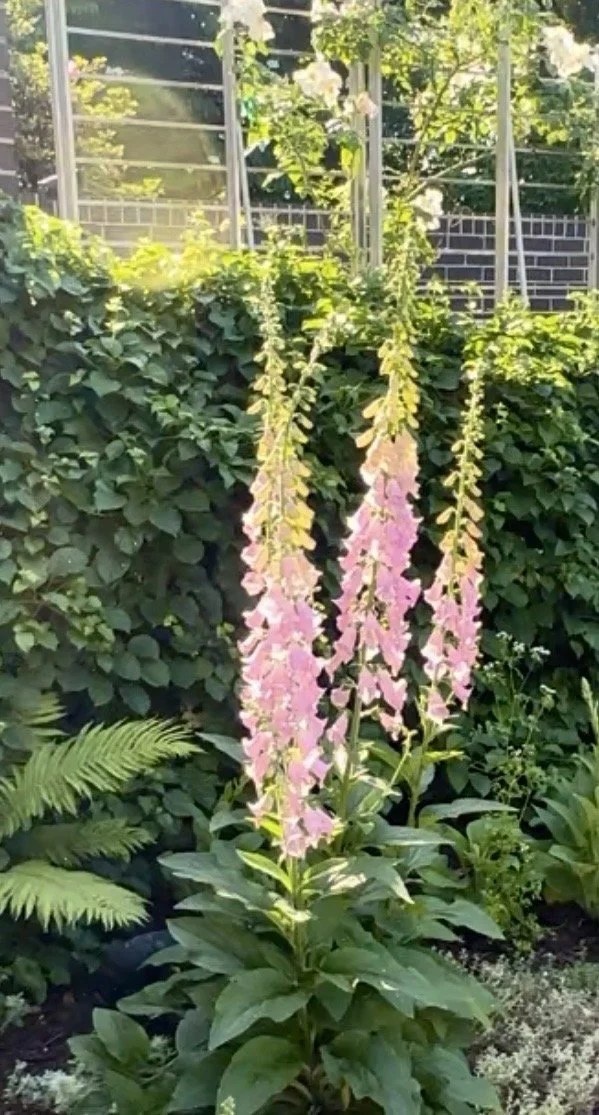
Foxglove var Camelot pinnk
They’re remarkably adaptable. I’ve grown them in full sun, part sun, slightly dry soil, and soil that stays a bit wetter. They seem to thrive wherever I put them. One day, my goal is to have them towering six feet tall like you see in English cottage gardens, weaving through roses and shrubs with complete confidence.
Foxglove is also very easy to grow from seed. The seeds are tiny, but they’re cooperative. I usually sow mine around the Fourth of July so they’re ready to plant out in October. Recently, I’ve also started sowing another batch in January to see if I can plant them out in April, which lets me stagger bloom times and experiment with different varieties and colors throughout the year.
They do need light to germinate, so follow the packet instructions and don’t bury them deeply. Once you’ve grown foxglove from seed a few times, you’ll wonder why you ever hesitated.
Another hardy biennial I’ve grown and truly enjoy is Dianthus. I’m especially fond of the Chabaud (often called “Chabaud Giant”) types and some of the older, more traditional forms. Dianthus hasn’t been the most vigorous grower for me, but it has been reliable. And the scent — that clove-like fragrance — makes it completely worth the space.
They also make excellent cut flowers and deserve far more attention than they’ve received in recent years. I think Dianthus is due for a quiet comeback.
One plant I grow alongside foxglove that blurs the line between biennial and short-lived perennial is Nicotiana sylvestris — flowering tobacco. It’s lightly scented, especially in the evening, and an absolute workhorse in the back of the border.
In my garden, it starts blooming around May and just keeps going. It’ll pause, then come back again, often lasting into September or October. The flowers are more tubular and relaxed than foxglove, so I like pairing the two together — foxglove brings structure, nicotiana brings movement.
In 2025, I planted Wallflowers for the first time, and I’m genuinely excited to see how they perform. They’re a classic in European gardens, long-blooming, richly scented, and deeply underused here in the U.S. I expect they’ll earn a permanent place.
One that surprises people is parsley.
I grow parsley from seed primarily for the vegetable garden, but if you let it live into its second year, it flowers — and when it does, it becomes a magnet for pollinators. Swallowtail butterflies, in particular, rely on plants like parsley as host plants for their caterpillars. Letting a few plants go to flower feels like a small but meaningful act of generosity in the garden.
Lastly, a newer one I’m experimenting with is stock, specifically Matthiola incana. Many growers treat stock as an annual, but it can behave like a hardy biennial under the right conditions. It’s known for its beautiful fragrance, and some varieties are much easier to grow than others. This is one I’m still learning, but it feels promising.
There are plenty of other hardy biennials worth growing — forget-me-nots, lunaria, violas — but these are the ones I’ve actually lived with. They’ve earned their place through reliability, beauty, and the way they quietly stitch seasons together.
Hardy biennials reward patience. They ask you to think ahead, trust the process, and accept that some of the most beautiful things in a garden are the result of waiting.