Sea Holly 'Miss Willmott'

$5.50

Eryngium giganteum

PRE-ORDER: Ships approximately mid-March 2026

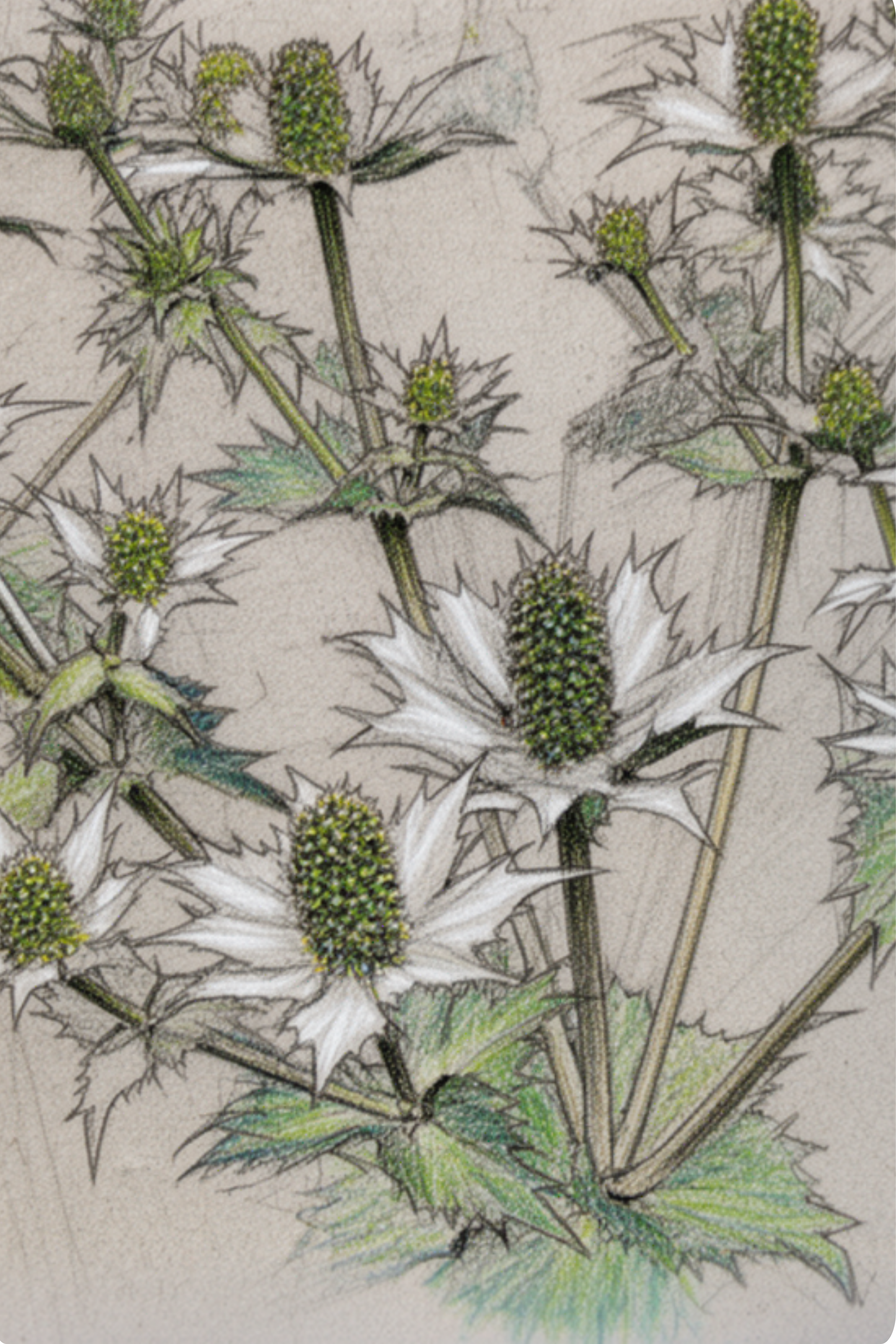
Eryngium ‘Miss Willmott’s Ghost’ is one of those plants that carries both beauty and legend. Tall, architectural stems rise above the border in shimmering silver-white, each cone encircled by spiny, luminous bracts that seem almost frosted. In evening light, they glow.

The name comes from the formidable English gardener Ellen Willmott (1858–1934), who was said to scatter seeds of this eryngium in the gardens of friends without telling them. The following year, the silvery plants would appear — an elegant surprise. Whether entirely true or slightly embellished, the story suits the plant perfectly.

This is technically a biennial, forming a strong rosette the first year and flowering dramatically the second. It may gently self-sow where happy. Stems are excellent for cutting fresh or drying, and the seedheads are as beautiful as the blooms.

Germination can be slower and slightly more variable than many annuals. A period of cool conditioning often improves results. It asks for a bit of patience — but the reward is a plant unlike anything else in the garden.

Seeds will gather in your Trug while you continue to shop.

Eryngium giganteum

PRE-ORDER: Ships approximately mid-March 2026

Eryngium ‘Miss Willmott’s Ghost’ is one of those plants that carries both beauty and legend. Tall, architectural stems rise above the border in shimmering silver-white, each cone encircled by spiny, luminous bracts that seem almost frosted. In evening light, they glow.

The name comes from the formidable English gardener Ellen Willmott (1858–1934), who was said to scatter seeds of this eryngium in the gardens of friends without telling them. The following year, the silvery plants would appear — an elegant surprise. Whether entirely true or slightly embellished, the story suits the plant perfectly.

This is technically a biennial, forming a strong rosette the first year and flowering dramatically the second. It may gently self-sow where happy. Stems are excellent for cutting fresh or drying, and the seedheads are as beautiful as the blooms.

Germination can be slower and slightly more variable than many annuals. A period of cool conditioning often improves results. It asks for a bit of patience — but the reward is a plant unlike anything else in the garden.

Seeds will gather in your Trug while you continue to shop.

Peony 'Duchess de Nemours' Peony 'Duchess de Nemours' Peony 'Duchess de Nemours' Peony 'Duchess de Nemours' Peony 'Duchess de Nemours'
Bundle Size:
Phlox 'David' Phlox 'David' Phlox 'David' Phlox 'David'
Phlox 'David'
from $21.00
Bundle Size:

PRODUCT DETAILS

  • Lifecycle: Biennial

  • Hardiness: Zones 4–8

  • Mature Size: 2–3' h x 1–2' w

  • Sun: Full sun

  • Soil: Well-drained, average to lean soil

  • Season: Early to midsummer

  • Color: Silvery white bracts with steel-blue cone

  • Approximate Seeds Per Packet: 25–30

USDA Zones: 4–8

  • Overwinters reliably in Zones 4–8

  • In Zones 9+, it may struggle with heat and humidity

  • In Zones colder than 4, winter protection may be needed

GROWING GUIDE

Sowing Instructions

Depth:
Surface sow and press firmly into soil; light aids germination.

Sprout Time:
14–28 days (may be irregular)

Starting Indoors:
Sow 8–10 weeks before last frost at 65–70°F. If germination is slow after 3–4 weeks, provide a 2–4 week cold period at 35–40°F, then return to warmth.

Starting Outdoors:
Direct sow in late spring or early summer. In mild climates, late summer sowing allows overwintering rosettes.

When to Set Outside

Transplant after danger of hard frost once seedlings are established. Handle gently to avoid disturbing the taproot.

Placement & Cultivation

Prefers full sun and sharply drained soil. Avoid overly rich conditions, which can reduce stem strength. Drought tolerant once established. Leave some seedheads in place if natural reseeding is desired.

Final Spacing

18–24"

Water Requirements

Low to medium once established.

Watering Details:
Allow soil to dry slightly between waterings; avoid soggy conditions.

Soil pH

Neutral to slightly alkaline preferred.

Fertilizer

Little to none required. Avoid high nitrogen feeds.

Diseases & Pests

Generally trouble-free. Excellent deer resistance.

When to Cut for Bouquets

Cut when bracts are fully colored and firm. Excellent fresh and exceptional dried.